Salon signage ideas are easy to collect on Pinterest, but the signs that earn their place are the ones that answer a client's question at the exact moment they ask it. From the street: what is this place, and is it open? At the door: can I walk in or do I need to book? At the front desk: where do I wait, how much does it cost, how can I pay? At the chair: what else can I add today? A salon with good signage answers all of these without a word from the staff, which keeps the front desk calm and turns curiosity into appointments.
This guide walks through fifteen signs, from the sidewalk to the restroom, and explains what each should say, which material suits it and which postings the law expects you to display. The examples come from nail salons, spas and lash studios, but the same thinking works for any small storefront business.
In this article
- What good salon signage does
- Plan signage along the client's path
- Outdoor signage ideas
- Door and window signage
- Front desk and waiting area
- Service menu and price signage
- Policy and payment signs
- Wayfinding, rooms and staff
- Postings the law may require
- Seasonal and event signage
- A photo wall clients want to share
- Design rules for readable signs
- Choosing materials
- Bilingual signs
- Keep signs and online profiles consistent
- Where to start on a small budget
- Mistakes to avoid
- How Dreamer helps
- Frequently asked questions
What good salon signage does
Signage has three jobs. First, it helps people find you: a driver should recognize the salon from the road, and a walker should see from across the street that you are open. Second, it guides people once they are inside: where to check in, where to wait, where the restroom is, which room is for waxing. Third, it sells: a clear wall menu, an add-on card at the station or a gift card display at checkout suggests services clients did not plan to buy.
Signs that do none of these jobs are clutter. A door covered with old stickers, a handwritten note taped to the glass and three different fonts on the same wall tell clients that details are not a priority, and in a business built on details that is an expensive message. Good salon signage looks like it came from one designer, uses the same name, colors and phone number everywhere, and stays up to date.
Plan signage along the client's path
Before ordering anything, walk the path a new client takes and note every moment where they might hesitate. Stand across the street, then at the door, then at the front desk, then in a pedicure chair, then at the checkout counter. Each pause is a place where a sign could help.
| Where | Client's question | Sign that answers it |
|---|---|---|
| Street and parking lot | What is this place? | Storefront sign, A-frame, banner |
| Door and windows | Are you open? Can I walk in? | Hours decal, window graphics |
| Front desk | Where do I check in? How do I book next time? | Welcome sign, QR desk stand |
| Waiting area | What do you offer, and how much? | Wall menu, roll-up banner |
| Stations | What can I add today? | Add-on cards, table tents |
| Hallways and rooms | Where is the restroom? Is this room free? | Room and wayfinding signs |
| Checkout | How can I pay? Do you sell gift cards? | Payment and policy sign, gift card display |

The table becomes your signage plan. Most salons already have some of these pieces; the gaps show you where to invest first.
Outdoor signage ideas
Outdoor signs work hardest and get judged fastest. A driver passing at 30 miles per hour has a second or two to read your name, so keep the message short and the contrast high.
1. A storefront sign people can read from the car
Your main sign, usually a lightbox or channel letters above the door, is built and installed by a sign company and normally needs approval from the landlord and a permit from the city. Even so, the design decisions are yours. Make the business name large, add one word that explains the service, such as "Nails", "Spa" or "Lash & Brow", and skip phone numbers and long slogans that nobody can read at speed. Lighting matters: in winter many clients pass after dark, and an unlit sign makes an open salon look closed.
2. A sidewalk A-frame with a changing message
An A-frame sign on the sidewalk catches walkers who would never look up at the main sign. Use one side for a constant message, your name, "Walk-ins welcome" and the hours, and the other side for something that changes: a seasonal design, a new service or a gift card reminder. Short messages work best, such as "Fall colors are here" or "Gift cards for teachers". Bring the sign in at night, weigh it down on windy days and check whether your city requires a sidewalk permit; many do, and some limit size and placement so the walkway stays clear.
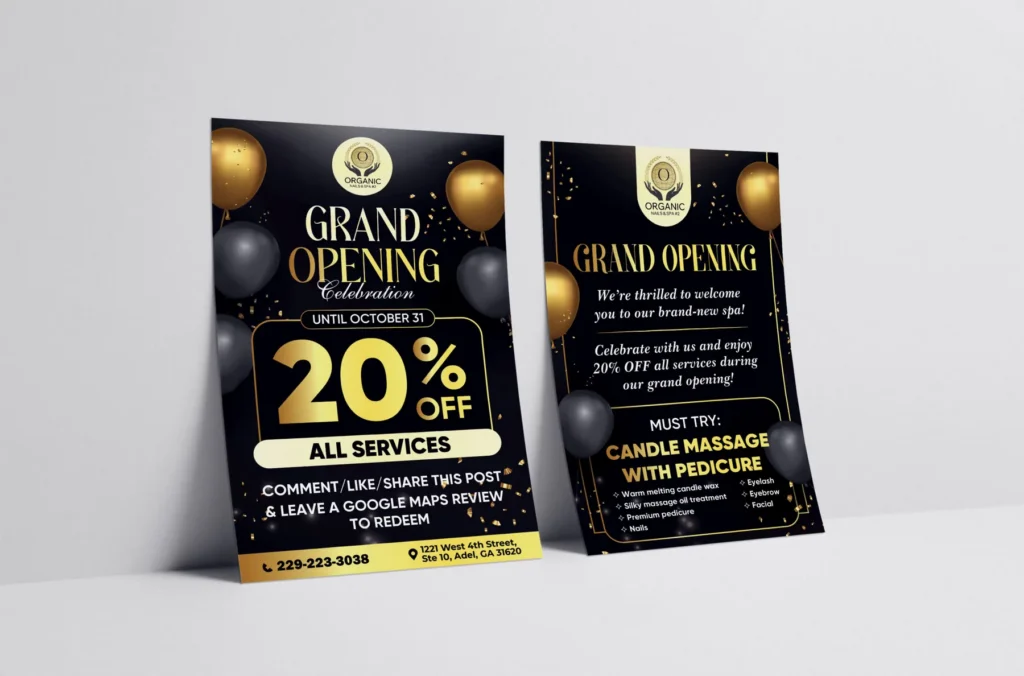
3. Banners for openings and big moments
A vinyl banner is the fastest way to announce something big: a grand opening, new owners, a remodel, extended hours or "Now hiring nail technicians". Banners are meant to be temporary, and many cities limit how long a temporary banner may stay up, so plan a start and end date and take it down on time. A banner that has faded in the sun for two years sends the opposite of the message you wanted.
4. Yard signs and car magnets
If your salon sits deep in a shopping center, a yard sign near the entrance to the parking lot, placed with the landlord's permission, can point drivers in the right direction. Car magnets turn the owner's car into a moving ad around town and in the school pickup line. Keep both simple: name, one service word and a website or phone number large enough to read from a few car lengths away.
Door and window signage
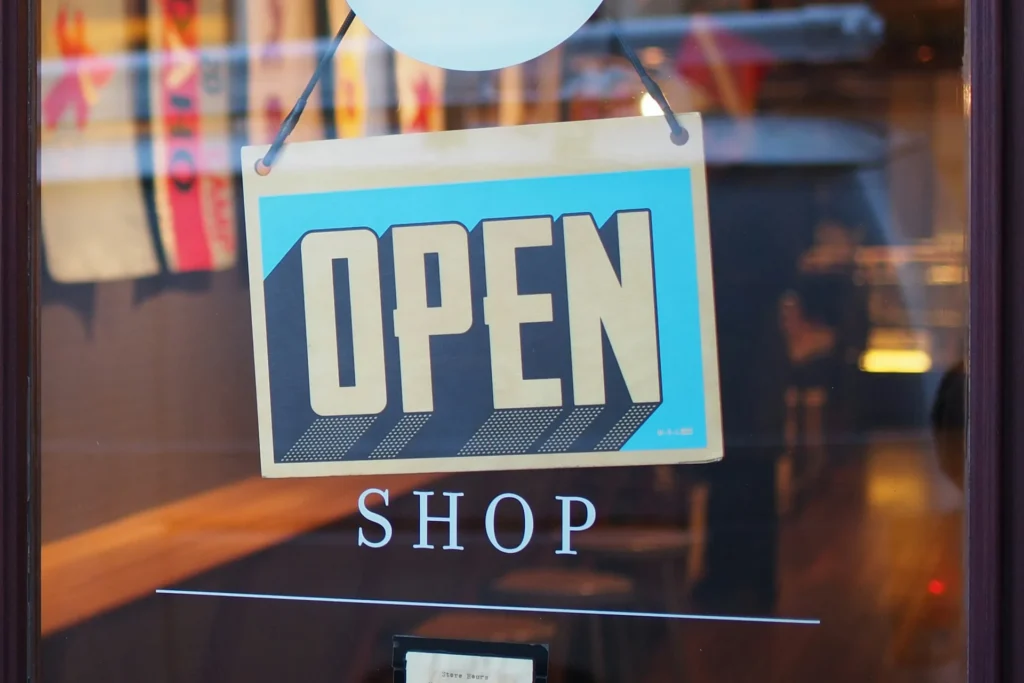
The door is where a curious walker decides whether to come in, and the first thing many people check is the hours.
5. Hours, phone and booking QR on the door
A clean glass decal on the door with your hours, phone number, website and a booking QR code answers the most common questions before anyone opens the door. Keep the hours identical to your Google Business Profile, your website and your booking page. Mismatched hours frustrate clients and can make Google less confident about your listing, which matters if you want to rank higher on Google Maps. When hours change, update the decal and the online profiles the same day.
6. Window graphics that show what you do
Windows can carry your name, a few service words and a photo or two while leaving enough clear glass for people to see a bright, clean salon. Frosted film at seated height gives pedicure clients privacy without blocking light. We cover materials, layouts and measuring in detail in our guide to salon window graphics, so here is the short version: fewer words, larger letters and nothing that looks expired.
Front desk and waiting area
Inside, signage takes over many of the questions the front desk would otherwise answer again and again.
7. A welcome and check-in sign
A small sign at the desk, "Welcome! Please check in on the tablet" or "Please have a seat, we will be with you shortly", tells a first-time client exactly what to do, even when every technician is busy. If you use a tablet or kiosk for check-in, a sign beside it explains the steps; our guide to a salon check-in system explains how the walk-in list and the appointment book work together.
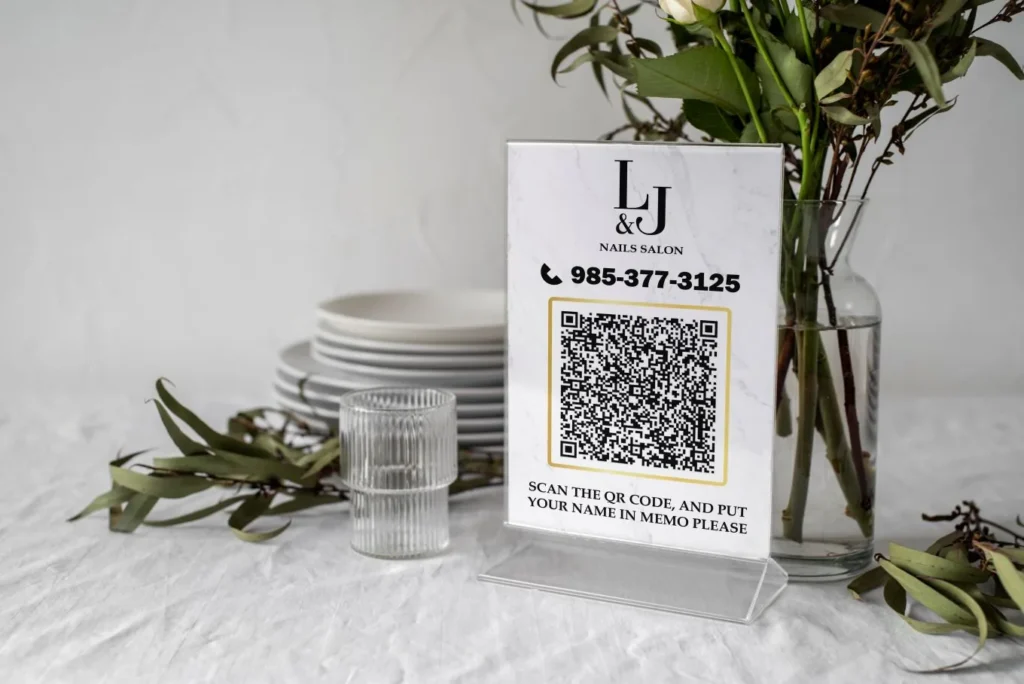
8. An acrylic desk stand with QR codes
An acrylic table stand on the counter is small but useful. Put one or two QR codes on it with a clear label for each: "Book your next visit", "Follow us on Instagram" or "Leave us a Google review". If you ask for reviews, ask every client equally and never offer a discount, gift or prize in exchange; our guide to Google reviews for salons explains the rules. Point each code to a short, permanent link you control so you can change the destination without reprinting. We explain how to create, test and track codes in our guide to QR codes for salons.
9. A roll-up banner for the current promotion
A roll-up standee in the waiting area or near the entrance is the right size for one strong message: holiday gift cards, a new service such as structured gel, a membership program or a bridal package. Because it stands on its own, you can move it to the window in December and back to the corner in January. Order a new print for each campaign and store the old ones in their bags so they stay flat and clean for next year.
Service menu and price signage
Clients like knowing prices before they sit down. A clear menu reduces awkward questions at checkout and gently sells upgrades.
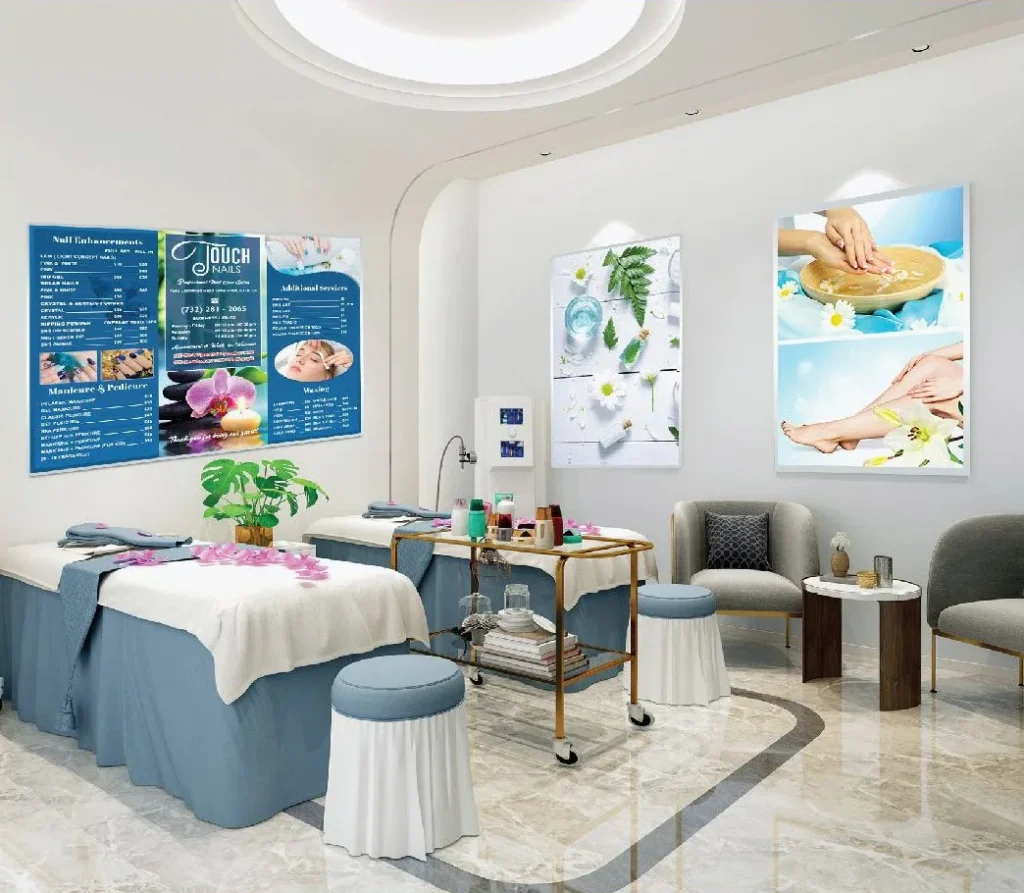
10. A wall menu clients can read from the chair
A wall menu works best when it is organized the way clients think: manicures, pedicures, enhancements, add-ons, waxing, lashes. Use one line per service with the name, a short description where helpful and the price, written as "from $" when the final price depends on length or design. Make the type large enough to read from the waiting area, and hang the menu where clients actually look, near the entrance or above the polish wall. Our guide to nail salon menu design explains layouts, pricing language and how often to update. When prices change, reprint the menu promptly; a sticker over an old price looks careless.
11. Add-on cards at each station
A small tent card or acrylic sign at each station can suggest one or two add-ons that fit the service: paraffin wax with a pedicure, gel removal with a new set, nail art for a special occasion. Keep it to a short line and a price. Technicians can point to the card instead of making a sales pitch, which many clients appreciate.
Policy and payment signs
Clear policies prevent arguments, and arguments are what clients remember.
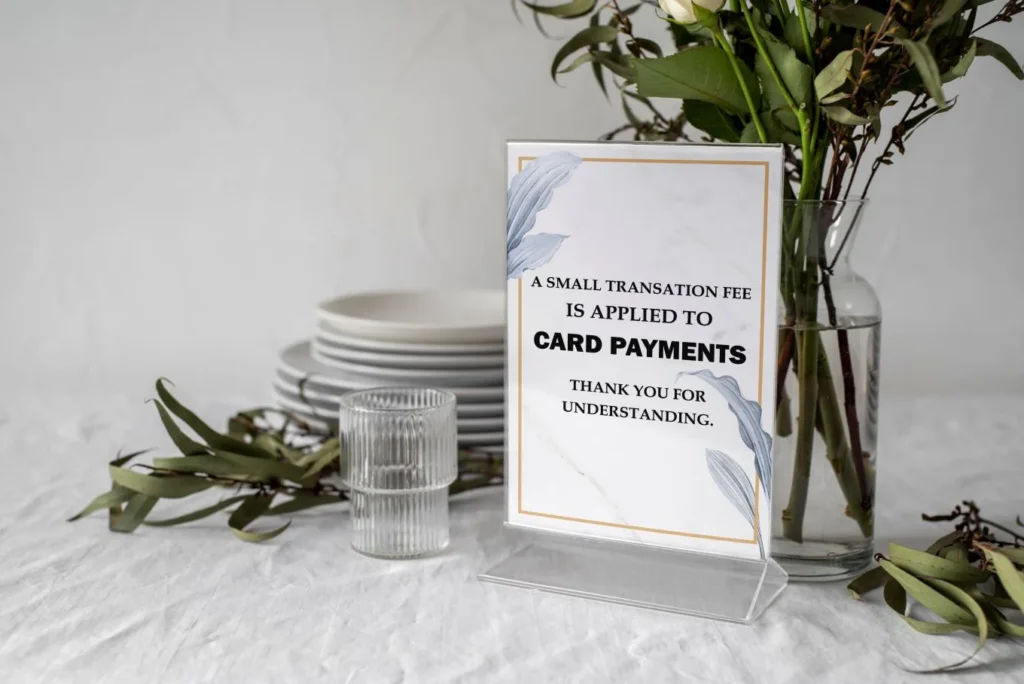
12. Payment, deposit and cancellation policy
A sign near checkout should list the payment methods you accept and any policies a client needs to know before paying: card minimums where allowed, cash discounts, tipping methods and gift card rules. If you offer a cash discount or add a card surcharge, the wording must follow card network rules and state law; our article on cash discount vs surcharge explains the difference. Write your cancellation and late policy in the same friendly tone, and make sure it matches the policy on your booking page. Our guide to a salon cancellation policy includes wording you can adapt.
13. Gift card and membership displays
Gift cards sell when people see them. A small display at checkout with sample cards, a sign that says "Gift cards available in any amount" and, in the weeks before holidays, a larger poster in the window will remind clients who are looking for a present. Printed plastic gift cards or gift certificates with your logo look far better than a handwritten note. See our salon gift card program guide for pricing and tracking ideas.
Wayfinding, rooms and staff
Wayfinding signs are rarely exciting, but they make a salon feel organized and save staff from answering "Where is the restroom?" all day.
14. Restroom, room and exit signs
Label the restroom, treatment rooms and staff-only areas with consistent signs in your brand colors. Permanent room signs, such as restroom signs, fall under the ADA Standards for Accessible Design, which set requirements for tactile characters, braille, contrast and mounting location; the Department of Justice publishes the 2010 ADA Standards online, and a sign company can make compliant signs. A friendly "Treatment in progress, please knock" sign on a waxing or lash room door protects privacy.
15. Name tags for every technician
Name tags make it easy for clients to remember who did their nails, ask for that person next time and mention them by name in a review. A first name and, if helpful, the languages the technician speaks ("English, Tiếng Việt, Español") is enough. Clean, matching tags also make a team look professional.
Postings the law may require
Some signs are not optional. Requirements vary by state, but most salons need to think about three groups.
- License displays. Many state boards require the establishment license and each licensed professional's license to be displayed where clients can see them, often at the workstation or in the reception area. Frame them neatly instead of taping them to a mirror.
- Labor law posters. Businesses with employees must display certain federal and state workplace posters, such as minimum wage and job safety notices. The Department of Labor's workplace posters page explains which federal posters apply; your state labor department lists state posters.
- Industry notices. Some states have notices specific to salons; New York, for instance, has a Nail Salon Workers' Bill of Rights poster. Your state board and labor department explain what applies to you.
Check these requirements when you open, when you hire your first employee and whenever you move, and replace posters when the official versions are updated.
Seasonal and event signage
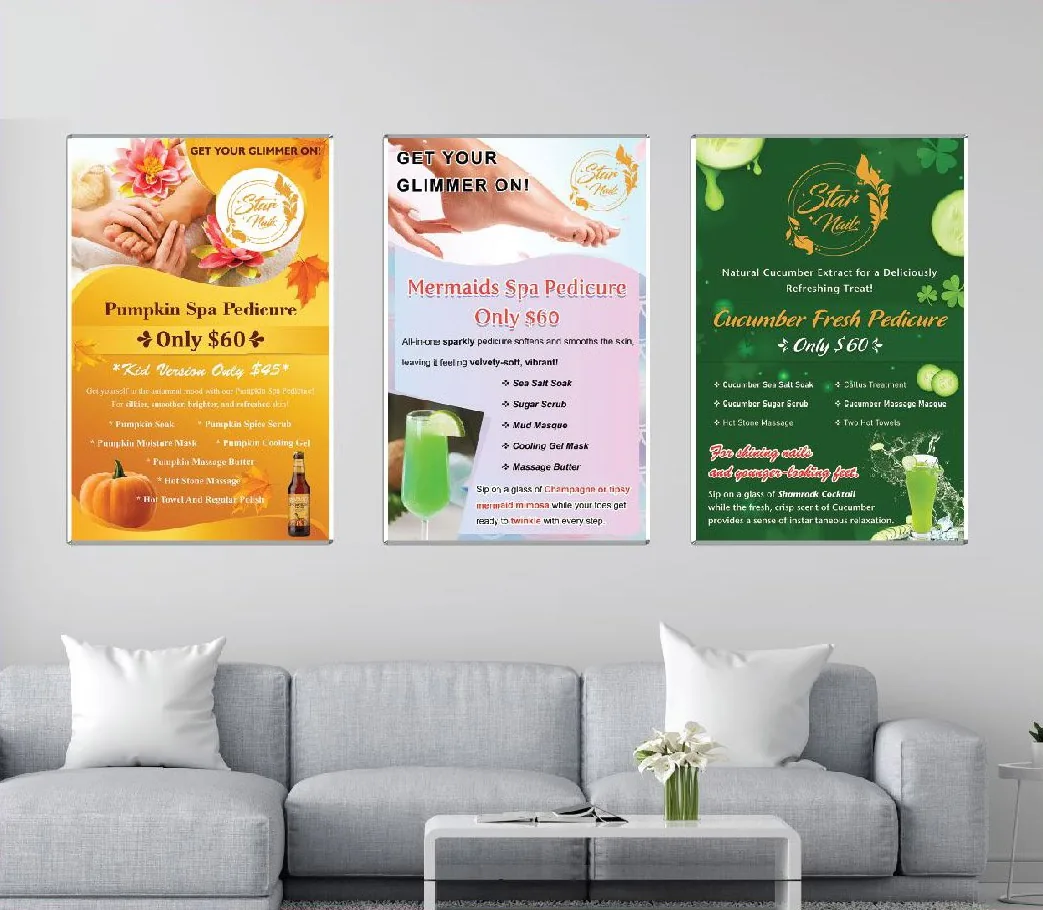
Seasonal signs keep a salon looking current and remind clients of services that fit the moment. Plan a simple calendar: Valentine's Day designs in late January, Mother's Day gift cards in April, prom and wedding packages in spring, back-to-school in August, Halloween art in October and holiday gift cards from mid-November. Our nail salon holiday marketing guide has a full year of ideas. Order seasonal pieces a few weeks ahead so they are up when people start planning, and take them down the day the season ends.
A photo wall clients want to share
A branded photo spot, a wall in your accent color with your logo or a short phrase in a light-up sign, gives clients a reason to take a picture of their new nails before they leave. When they post it and tag you, their friends see your name and your work. Place it near natural light or add a ring light, keep it clean and uncluttered, and add a small sign with your Instagram handle so tags are easy.
Design rules for readable signs
A beautiful sign that nobody can read is wasted money. A few rules keep salon signage legible:
- Size letters for distance. A common sign-industry rule of thumb is about one inch of letter height for every ten feet of viewing distance. A sign meant to be read from 50 feet needs letters around five inches tall.
- Contrast is everything. Dark text on a light background or light text on a dark background. Avoid pale pink on white or gold on beige for text, however elegant they look on a screen.
- Two fonts at most. One for headings, one for details, and the same pair on every sign, menu and card.
- Fewer words. Outdoor messages should be readable at a glance; seven words or fewer is a good target.
- Readable scripts only. If your logo uses a script font, keep it for the logo and set everything else in a clean sans serif.
- Consistent details. The same name, phone number, website and hours everywhere, matching your online profiles.
Choosing materials
| Sign | Common material | Where | Notes |
|---|---|---|---|
| A-frame | Plastic or metal frame with printed inserts | Outdoor | Choose a weighted base; replace inserts each season |
| Banner | Vinyl with grommets | Outdoor | For temporary messages; check local time limits |
| Yard sign | Corrugated plastic with a wire stake | Outdoor | Light and inexpensive; for short campaigns |
| Door decal | Cut or printed vinyl | Glass | Easy to update when hours change |
| Roll-up standee | Printed film on a retractable stand | Indoor | Portable; good for one strong message |
| Desk stand | Acrylic with a printed insert | Indoor | Durable and easy to clean |
| Wall menu | Rigid board, PVC or a framed print | Indoor | Plan for price updates |
| Name tag | Plastic or metal with a pin or magnet | Indoor | Magnets do not damage clothes |
Your printer can recommend thickness and finish for your space. Glossy surfaces can reflect light in bright rooms, while matte finishes read better under salon lighting.
Bilingual signs
Many salons serve clients who speak different languages, and many owners and technicians speak Vietnamese, Spanish or Korean at home. Bilingual signs can be welcoming, but keep the main message in the language most clients read and add the second language in smaller type. Never rely on a machine translation for printed signs; ask a native speaker to check the wording before printing, because a mistake on a sign stays on the wall for years.
Keep signs and online profiles consistent
Clients often see your signs and your online profiles on the same day: they spot the salon from the car, search your name on Google Maps, then walk in. When the name, hours, phone number and services match everywhere, people trust you. When the sign says one thing and Google says another, they hesitate. Each time you update a sign, update your Google Business Profile, website and booking page too.
Where to start on a small budget
If you cannot do everything at once, start with the signs that answer the most questions:
- A door decal with hours, phone and a booking QR code.
- A wall menu or price list that is current and easy to read.
- An A-frame for walk-in traffic.
- A desk stand with booking and review QR codes.
- Name tags for the team.
- A payment and policy sign at checkout.
Banners, roll-up standees and seasonal pieces can follow as your calendar fills. Keep the design files so updates are quick and inexpensive.
Mistakes to avoid
- Handwritten paper signs taped to the door or mirror.
- Too many signs competing for attention, so none is read.
- Outdated hours, prices or promotions left up for months.
- Different fonts and colors on every piece.
- Tiny text that only works when you stand a foot away.
- Negative wording such as "NO REFUNDS!!!" when a calm, clear policy would do.
- Signs blocking walkways or doors.
- Spelling mistakes in English or any other language.
How Dreamer helps
Dreamer designs and prints salon signage for nail salons, spas, lash studios and restaurants: A-frames, banners, door and window decals, wall menus, desk stands, roll-up standees and name tags. We keep every piece consistent with your logo, menus and business cards through our design and printing service, and we can add QR codes that lead to your website and booking page. Send us your measurements and a few photos of your space, and we will prepare a proof before anything is printed.
Frequently asked questions
What signs does a new nail salon need first?
A door decal with hours and phone, a readable price list or wall menu, a sidewalk A-frame and name tags cover the most common questions. Add a desk stand with a booking QR code and a payment sign at checkout.
How big should the letters on a salon sign be?
A common rule of thumb is about one inch of letter height for every ten feet of viewing distance. For signs read from a car, go larger and use fewer words.
Do I need a permit for an A-frame or banner?
Many cities regulate sidewalk signs and temporary banners. Check with your city and your landlord before placing them.
Should prices be on the window?
Usually not. Prices change, and long lists are hard to read from the sidewalk. Put a few service words on the window and the full price list inside.
How often should salon signage be updated?
Update hours and prices as soon as they change, seasonal pieces each season, and replace anything faded, scratched or peeling.
Can I put a review QR code on my counter?
Yes, as long as you ask all clients equally and never offer anything in exchange. Yelp does not allow businesses to ask for reviews, so link the code to Google or to your booking page instead.
The best salon signage ideas are simple ones done consistently: a readable storefront, hours on the door, a current menu, clear policies and friendly guidance inside. Walk your client's path, fix the gaps one sign at a time and keep every piece matching your brand and your online profiles. Clients will find you more easily, feel welcome when they arrive and discover services they did not know they wanted.