To hire nail technicians who do great work and stay for years, you need more than a "Now hiring" sign. Skilled technicians have choices: they compare pay, steady clients, how turns are shared, how clean and safe the salon is and how the owner treats people. A salon that hires carelessly ends up hiring again every few months, losing clients each time someone leaves. A salon with a clear, fair hiring process builds a team that clients ask for by name.
This guide walks through ten steps, from defining the role to the first week on the job. It covers where to find candidates, how to check licenses and skills, which interview questions to avoid, what to put in a written offer, the paperwork the law requires and the habits that keep good technicians from leaving. Employment law varies by state, so confirm details with an accountant or employment attorney.
In this article
- Step 1: Define the role before you post anything
- Step 2: Decide the pay structure and classification
- Step 3: Write a job post that attracts the right people
- Step 4: Look in the right places
- Step 5: Screen candidates and check licenses
- Step 6: Run a paid skill test
- Step 7: Ask good interview questions
- Step 8: Make a clear written offer
- Step 9: Complete the paperwork
- Step 10: Onboard and train in the first week
- Red flags during hiring
- When to start hiring
- Hiring for a bilingual team
- How to keep good technicians
- Mistakes to avoid
- How Dreamer helps
- Frequently asked questions
Step 1: Define the role before you post anything
Write down exactly what you need. A salon that needs a pedicure specialist for weekends and a salon that needs a nail artist for structured gel and hand-painted designs are looking for different people, and a vague post attracts neither.
- Services: manicures and pedicures, acrylic, gel, dip, structured gel, gel-X, nail art, waxing.
- Experience: entry level with training, or experienced with a portfolio.
- Schedule: days and hours, especially weekends and evenings, full time or part time.
- Languages: which languages your clients and team speak.
- Extras: taking photos for social media, helping with the front desk, training juniors.
Step 2: Decide the pay structure and classification
Pay is the first thing candidates ask about, so decide it before posting. Common structures include commission on services, hourly wages plus commission, a daily guarantee with commission above it, and booth or station rent. Each has legal consequences: employees must receive at least the minimum wage and overtime where it applies, and calling someone an independent contractor does not make them one if the salon controls their schedule, prices and methods. Read our guides to 1099 vs W-2 nail technicians and booth rent vs commission before deciding, and ask your accountant to confirm.
Be specific about tips, product charges and how turns are assigned. Technicians leave salons over unclear rules as often as over low pay.
Step 3: Write a job post that attracts the right people
A good post sells your salon as much as it describes the job. Include:
- The salon: name, location, atmosphere, the clients you serve and what makes the salon a good place to work.
- The role: services, schedule and experience needed.
- Pay: structure and range. Several states and cities, including Colorado, California, Washington and New York, require a pay range in job postings for many employers, so check your local rules.
- What you offer: steady clients from online booking and marketing, fair turns, clean and well-ventilated stations, quality products, training, paid time off if offered.
- How to apply: phone, text, email or a short online form.
Avoid wording that suggests a preference for age, gender, national origin or other protected traits. "Young team" or "female only" in a post can create legal problems; describe the job and the skills instead.
Step 4: Look in the right places
Experienced technicians often find jobs through people they know, so start there, then widen the search:
- Your own team: ask for referrals and consider a referral bonus paid after the new hire stays for a set period.
- Beauty schools: nail technology programs welcome visits and job postings, and new graduates are eager to learn your standards.
- Community groups: many Vietnamese nail technicians look for work through Facebook groups, community newspapers and word of mouth.
- Instagram and TikTok: search local nail art hashtags to find artists whose style fits your salon.
- Job sites: general job boards reach technicians outside your network.
- Your website and Google profile: a careers page on your website and a post on your Google Business Profile reach people who already know the salon.
- The salon itself: a "Now hiring" banner or window sign with a QR code to a short application. Our guides to salon signage ideas and QR codes for salons explain how to set this up.
New graduates or experienced nail technicians?
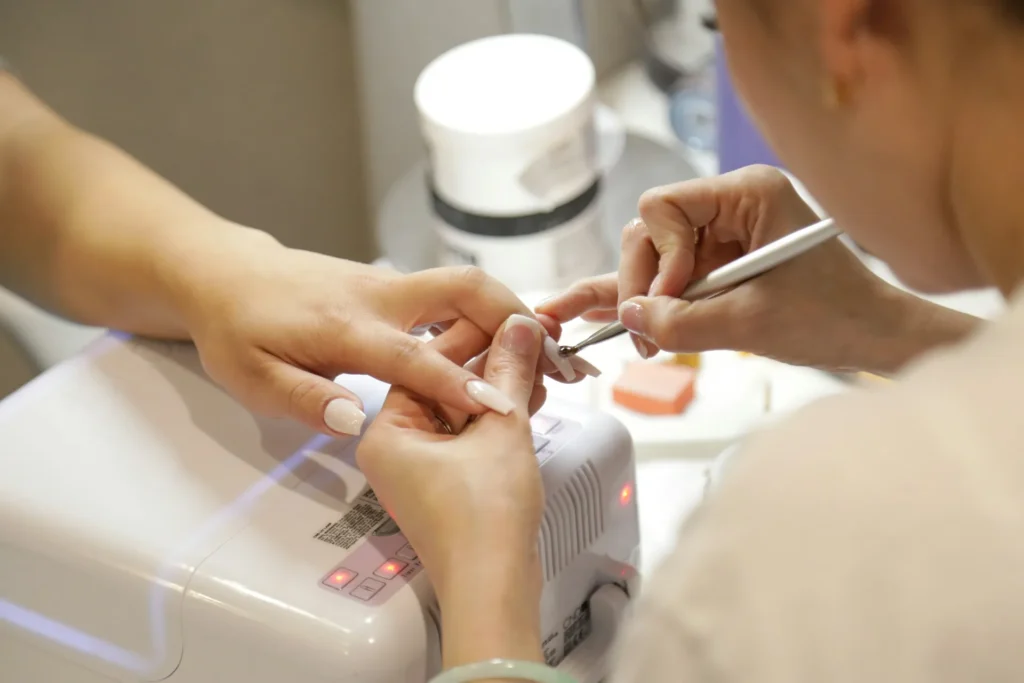
Both can be the right choice, depending on what your salon needs now.
| New graduates | Experienced nail technicians | |
|---|---|---|
| Speed | Slower at first | Usually fast and steady |
| Habits | Learn your standards from the start | May bring habits from other salons, good or bad |
| Clients | No following yet | May bring loyal clients |
| Pay expectations | Lower at the start | Higher, especially with a following |
| Training needed | More | Less, mostly your systems and policies |
Many salons hire a mix: experienced technicians to handle demand and new graduates trained under a senior technician who earns something for mentoring.
Step 5: Screen candidates and check licenses
Before inviting anyone for a trial, do a short phone or video call to confirm the basics: services, availability, pay expectations and when they can start. Ask for photos of recent work or an Instagram account.
Then check the license. Most state boards have an online license lookup where you can confirm that a license is valid, active and in the right category, for example nail technician or cosmetologist. Never let someone work on clients without a valid license; the fines and risks fall on the salon as well as the technician. Our guide to nail salon license requirements explains the different license types.
Step 6: Run a paid skill test
A practical test shows what a résumé cannot: speed, quality, hygiene habits and how the candidate talks to clients. Plan the test carefully:
- Choose services that match the role, such as a gel manicure and a full set, or a pedicure for a pedicure specialist.
- Use a model or a willing team member, not a paying client who expects your usual quality.
- Pay for the trial time. If the candidate performs real work, especially on clients, the time may count as work under wage laws; paying a fair rate is also simply respectful.
- Watch the whole process: cleaning and disinfecting tools before starting, hand washing, using new files and buffers, how they protect the skin, how they handle the client's questions, and how they clean up afterward.
- Time the service against your menu times.
Score each candidate on the same checklist so decisions are fair and consistent.

Step 7: Ask good interview questions
Good questions reveal how a technician works and whether they will fit your team:
- Which services do you enjoy most, and which do you want to improve?
- How do you clean and disinfect your tools between clients?
- Tell me about a client who was unhappy with her nails. What did you do?
- How do you handle a client who wants a design you think will not last?
- How long does your gel manicure take, from greeting to cleanup?
- What made you leave your last salon?
- How do you feel about taking photos of your work for our social media?
- What schedule works best for you?
- What do you expect from the salon owner?
- Where do you want to be in two years?
Some questions should not be asked before an offer, because they can suggest discrimination even if you do not intend it: age, marital status, pregnancy or plans for children, religion, national origin, citizenship, disability or medical conditions. Ask instead whether the candidate can work the required schedule and perform the job. The Equal Employment Opportunity Commission explains these limits on its page about prohibited employment practices.
Step 8: Make a clear written offer
A written offer prevents misunderstandings that later drive good people away. It should state:
- Position, start date and schedule.
- Pay structure, commission rates, how and when pay is calculated and paid.
- How tips are collected and paid out.
- Whether products and tools are provided, and any charges.
- How walk-ins and turns are assigned, and how requested clients are handled.
- Policies on lateness, time off, fixes and remakes.
- Any trial period and what happens after it.
Avoid broad non-compete clauses, which many states restrict or ban. A reasonable confidentiality clause about client information is more defensible, but ask an attorney before relying on any restriction.
Step 9: Complete the paperwork
For employees, the main federal steps are Form I-9 to verify identity and work authorization, completed after the offer is accepted, with the employer's section finished within three business days of the first day of work; Form W-4 for federal tax withholding; and your state's withholding form and new hire report. USCIS explains the process on its Form I-9 page. Add the new employee to payroll, workers' compensation and any benefits. For a true independent contractor, collect Form W-9 and issue a 1099 at year end, but only if the relationship really meets the legal tests. Keep a copy of every technician's license on file and check renewal dates.
Step 10: Onboard and train in the first week
The first week decides whether a new technician feels welcome or starts looking elsewhere. Plan it:
- Day one: tour of the salon, introductions, locker and break area, where supplies are, how to clock in and out.
- Sanitation: walk through your nail salon sanitation checklist and watch them follow it.
- Menu and prices: service names, what each includes, add-ons and how to talk about prices. Our guide on how to price nail services explains the logic behind your menu.
- Systems: booking, check-in, POS and how tips are recorded.
- Turns: how walk-ins and requests are shared; our nail salon turn system guide explains fair options.
- Photos: how to take good photos of their work for your social media; see our guide on how to photograph nails.
Check in at the end of the first week and the first month. Ask what is going well and what is confusing, and fix small problems before they grow.
Red flags during hiring
- No license, an expired license or reluctance to show it.
- Skipping hygiene steps during the skill test, such as reusing a file or not disinfecting tools.
- Speaking badly of every former salon and every former coworker.
- Pressure to be paid in cash or to avoid paperwork.
- Unrealistic promises about bringing a large client list.
- Rudeness to the model or the front desk during the trial.
One red flag is not always a reason to say no, but ask about it directly and listen to the answer.
When to start hiring
Do not wait until a technician leaves or the busy season starts. Hiring and training take weeks, so start recruiting six to eight weeks before the periods when you need more hands, such as prom season, summer pedicure season and the holidays. When opening a new salon, begin about two months before the opening date. Keep a short list of good candidates you met but could not hire yet; when a chair opens, you can call them first instead of starting from zero.
Hiring for a bilingual team
Many salons have Vietnamese-speaking technicians and English-speaking clients, and that mix works well when communication is planned. Teach every new technician the key phrases for your services: greeting, asking about shape and length, confirming colors and prices, checking comfort and explaining aftercare. Keep a short phrase sheet at each station. A bilingual front desk person or manager helps with difficult conversations. Respect matters in both directions: technicians should never discuss clients in another language in a way that makes them uncomfortable, and clients should feel welcome to ask questions.
How to keep good technicians
Hiring is expensive; keeping people is cheaper. Technicians stay where they earn well, feel respected and see a future:
- Steady clients. A full book is the best retention tool. Online booking, a strong Google profile and active social media keep chairs full; Dreamer's Social Marketing helps salons bring in new clients every week.
- Fair turns and transparent pay. Disputes over turns and commissions drive people away.
- A clean, safe workplace. Good ventilation, quality products and proper equipment show you care about their health. See our guide to nail salon ventilation.
- Growth. Training in new techniques, senior technician levels with higher prices and opportunities to train others.
- Recognition. Share their work on your social media with credit, and thank them when clients praise them.
- Respect for time. Publish schedules in advance and pay on time, every time.
Mistakes to avoid
- Hiring the first available person because the salon is busy this week.
- Skipping the license check.
- Unpaid trial days on paying clients.
- Vague pay promises that change after the technician starts.
- Misclassifying employees as contractors.
- No training, expecting new hires to guess your standards.
- Favoritism in turns and requests.
How Dreamer helps
Dreamer helps salons attract technicians the same way we help them attract clients. We design "Now hiring" posts for your social media and Google Business Profile, add a careers page with a short application form to your website, and print banners, window signs and flyers with a QR code to apply through our design and printing service. A salon that looks busy and professional online is also more attractive to the best technicians.
Frequently asked questions
Where is the best place to find nail technicians?
Referrals from your own team usually bring the best fits. Beauty schools, community groups, Instagram and job sites widen the search.
Should I pay technicians for a trial?
Yes. If a candidate performs work, the time may count as working time under wage laws, and paying fairly also makes a good first impression.
Can I hire technicians as independent contractors?
Only if the relationship truly meets the legal tests for independence. If the salon controls schedules, prices and methods, technicians are likely employees.
What should I check before a technician starts?
A valid, active license in the right category, a completed Form I-9 and tax forms for employees, and a signed offer letter with pay and policies.
What questions should I avoid in interviews?
Questions about age, marital status, pregnancy, children, religion, national origin, citizenship, disability and medical conditions. Focus on skills, schedule and how the person works.
How do I keep good technicians from leaving?
Keep their books full, pay transparently and on time, share turns fairly, provide a clean and safe workplace and give them room to grow.
The best way to hire nail technicians is to treat hiring like any other part of the business: define what you need, offer clear and fair pay, check licenses and skills, ask good questions, put everything in writing and train people well from the first day. Do that, and keep the chairs full, and good technicians will want to join your salon and stay.