Nail salon ventilation decides what your team breathes for eight or ten hours a day and what clients smell the moment they open the door. Acrylic liquid, polish, removers, glues and disinfectants release vapors, and filing creates fine dust. A salon that handles them well feels fresh and professional; a salon that does not gives technicians headaches and irritated eyes, and gives clients a reason to write "the smell was too strong" in a review.
This guide explains how ventilation works in three layers, what the Occupational Safety and Health Administration recommends for nail salons, how to improve an existing salon step by step, which daily habits reduce fumes and dust, when masks help and when they do not, and how to plan air flow for a new salon. It is general guidance; for design and code requirements, work with an HVAC contractor or engineer who knows your local rules.
In this article
- Why ventilation matters
- What is in the air
- The three layers of nail salon ventilation
- Direction of air flow
- Improving ventilation in an existing salon
- Daily habits that reduce fumes and dust
- Masks and respirators
- Choosing products with ventilation in mind
- A maintenance schedule
- Signs your ventilation is not working
- Planning ventilation for a new salon
- Pedicure areas need air too
- Winter, summer and energy costs
- Questions to ask an HVAC contractor
- Ventilation and your team
- Showing clients a fresh, healthy salon
- Mistakes to avoid
- How Dreamer helps
- Frequently asked questions
Why ventilation matters
OSHA's guide for nail salon workers, Stay Healthy and Safe While Giving Manicures and Pedicures, states it plainly: ventilation is the best way to lower the level of chemicals in the salon. Chemicals in nail products can cause headaches, dizziness, breathing problems, asthma and irritated eyes, nose, throat and skin, and some are linked to more serious long-term effects with repeated exposure. Technicians are exposed every working day, so small improvements add up over a career.
Ventilation also matters for business. Clients notice smell immediately, and many choose a salon partly because it feels clean and fresh. Technicians notice too: a salon with good air is easier to hire for and easier to stay in.
What is in the air
| Source | What it releases | Main control |
|---|---|---|
| Acrylic liquid and powder | Methacrylate vapors and dust | Source capture at the station, lids closed |
| Polish, top coat, hardener | Solvent vapors such as toluene and ethyl acetate; formaldehyde in some hardeners | General ventilation, small bottles, closed lids |
| Removers and acetone | Solvent vapors | Small containers, closed lids, covered trash |
| Glues and primers | Vapors that irritate eyes, nose and skin | Source capture, careful handling |
| Filing and e-files | Fine dust from natural nails and products | Source capture, cleaning with a vacuum |
| Disinfectants | Vapors from some products | Mix as directed, keep covered |
| Soaked cotton and wipes | Continuing evaporation | Metal trash can with a self-closing lid |
The three layers of nail salon ventilation
Good air in a salon comes from three layers working together. One layer alone is rarely enough.
1. General ventilation: bring in fresh air
General ventilation replaces salon air with outdoor air through the HVAC system, doors and windows. OSHA's guide recommends opening doors and windows when possible, keeping any ceiling vent on, and, if the salon has no separate exhaust system, keeping the HVAC system running during work hours with the thermostat fan switch set to "on" rather than "auto", so air keeps moving even when heating or cooling is off. Ask your HVAC contractor whether your unit actually brings in outdoor air; some systems mostly recirculate the same indoor air.
2. Exhaust: push contaminated air out
An exhaust system pulls salon air out of the building, which lets fresh air replace it. OSHA's guide says to keep the salon's exhaust system on at all times during work. If you rely on fans, place them near open doors or windows so they pull air in at one end of the salon and push it out at the other, moving vapors away from technicians' faces rather than across them.
3. Source capture: catch fumes and dust at the station
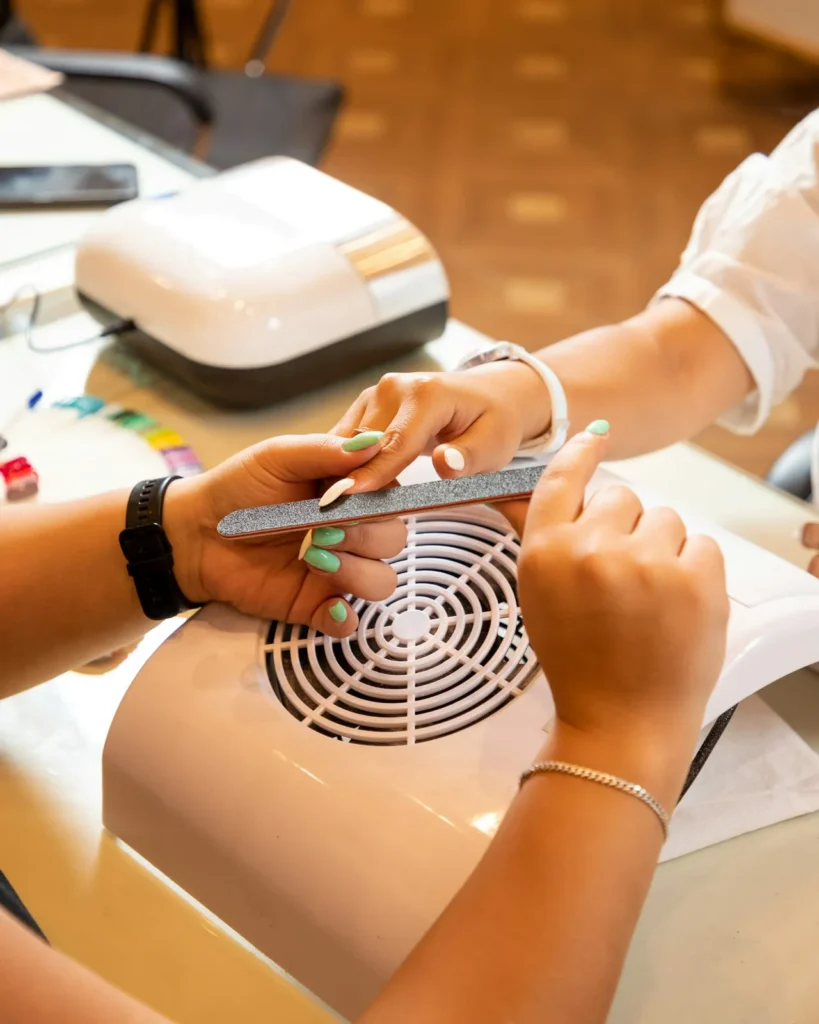
Source capture removes vapors and dust right where they are created, before they reach the technician's breathing zone. Options include ventilated manicure tables with built-in extraction and portable units placed close to the work. Units that vent outdoors remove the contaminants from the building; recirculating units filter air and return it to the room, so their filters matter. OSHA's guide recommends keeping ventilated tables turned on, changing charcoal filters at least once a month and cleaning out the catch basin at least once a week.
Direction of air flow
Where air enters and leaves matters as much as how much air moves. The goal is for clean air to pass the technician first and carry vapors away from her face toward an exhaust point. A fan or open door that blows vapors from the station into the technician's face makes things worse, even though air is moving. When you plan the layout, place stations so that air flows from the clean side of the room, across the work area and out, and keep acrylic work away from the front door if the door is where fresh air enters.
Improving ventilation in an existing salon
You do not need to rebuild the salon to breathe better. Work through these steps in order:
- Turn on what you have. Exhaust fans, ventilated tables and portable units only help when they are running.
- Set the HVAC fan to "on" during working hours, and ask a contractor to check that the system brings in outdoor air.
- Service the HVAC system. OSHA's guide says the owner should have a contractor clean the system and replace the filters at least once a year.
- Add or upgrade exhaust so contaminated air leaves the building.
- Add source capture at the stations that do acrylic and heavy filing first, then the rest.
- Rearrange stations so air flows from clean areas past the work and out.
- Reduce what goes into the air with the habits below.
If you are not sure how much is enough, OSHA's On-Site Consultation Program offers free and confidential safety and health advice to small businesses, separate from enforcement.
Daily habits that reduce fumes and dust
Ventilation removes what gets into the air; habits keep less from getting there in the first place. Following OSHA's recommendations:
- Use small bottles with small openings for daily work, labeled with the manufacturer's information.
- Close bottles tightly whenever they are not in use.
- Use only the amount of product you need for each service, and keep extra stock away from the station.
- Use metal trash cans with tight, self-closing lids, put soaked cotton and wipes in immediately, empty them often and take trash outside at the end of each day.
- Never pour used chemicals down the sink or toilet; follow disposal instructions.
- Clean dust with a damp cloth or a vacuum rather than dry sweeping, which puts dust back in the air.
- Keep food and drinks away from work areas, and wash hands before eating or drinking.

Masks and respirators
Many technicians wear paper or cloth medical masks, but OSHA's guide warns that these do not protect against harmful gases, vapors or dusts, even when stuffed with tissues. NIOSH-approved filtering facepiece respirators, such as N95s, help protect against dust when filing or buffing artificial nails or using acrylic powders, but they do not protect against vapors. Half-mask respirators with chemical cartridges protect against vapors and may be needed for tasks such as transferring chemicals to smaller bottles or cleaning large spills; when an employer requires them, OSHA requires a respiratory protection program with fitting, training and a cartridge change schedule.
Respirators are a backup, not a substitute for ventilation. A salon with good general ventilation, exhaust, source capture and careful habits may not need them at all.
Choosing products with ventilation in mind
Ventilation works best when there is less to remove. Read the Safety Data Sheets for the products you use, which employers must keep available under OSHA's hazard communication rules, and compare alternatives. Many salons choose polishes made without certain ingredients, such as formaldehyde or toluene, though labels like "3-free" or "5-free" are marketing terms, so check the ingredient list. Never use liquid methyl methacrylate (MMA) monomer, which many states ban. Our guide to nail salon license requirements explains how state rules cover products and tools.
A maintenance schedule
| How often | Task |
|---|---|
| Every day | Turn on exhaust, tables and portable units; take trash outside; wipe dust |
| Every week | Clean catch basins of ventilated tables; check fans and vents for dust |
| Every month | Change charcoal filters in ventilated tables, or as the manufacturer directs |
| Every few months | Check and replace HVAC filters as your contractor recommends |
| Every year | Have an HVAC contractor clean and service the system |
Keep a simple log of filter changes and service visits. It shows inspectors and insurers that you take air quality seriously and reminds you when the next change is due.
Signs your ventilation is not working
- A strong chemical smell that builds up during the day.
- Dust settling on shelves, chairs and polish bottles.
- Technicians with frequent headaches, dizziness or irritated eyes that improve on days off.
- Clients commenting on the smell, in person or in reviews.
- Fans that move air but blow vapors toward technicians.
If you notice these, start with the improvement steps above and ask a professional to assess the system.
Planning ventilation for a new salon
Ventilation is far easier and cheaper to plan before construction than to add later. Before signing a lease, confirm with the landlord that you may install exhaust that vents outside and where ducts and fans can go. Hire an HVAC contractor or engineer who has designed salons, and ask which local building and mechanical code requirements apply; many codes include specific rules for nail stations, and some states, including New York, have adopted their own ventilation rules for nail salons. Place stations, exhaust points and fresh air inlets together in the floor plan. Our guides on how to open a nail salon and the cost to open a nail salon explain where ventilation fits in the plan and budget.

Pedicure areas need air too
Pedicure areas produce fewer vapors than acrylic stations, but polish, removers, disinfectants for the basins and the moisture from foot baths all affect the air. Keep pedicure chairs away from the heaviest acrylic work if you can, make sure the area is covered by general ventilation and exhaust, and watch humidity: warm water running all day can make the air damp, which is uncomfortable and can encourage mold around basins and walls. Your HVAC system should handle the moisture, and basins should be cleaned and dried as your state requires.
Winter, summer and energy costs
Ventilation is hardest when the weather is extreme. In winter, doors stay closed and some owners turn off exhaust to save heat; in summer, air conditioning may recirculate indoor air to stay cool. Both make vapors build up. Rather than switching systems off, ask your contractor about equipment that brings in fresh air efficiently, such as energy recovery ventilators, which transfer heat between outgoing and incoming air. The extra energy cost of running ventilation all day is small compared with the cost of sick days, staff turnover and clients who leave because of the smell.
Questions to ask an HVAC contractor
- Does our system bring in outdoor air, and how much?
- Where does the exhaust go, and does it run during all open hours?
- Which local code requirements apply to nail stations in our area?
- Should we add source capture at each station, and should it vent outside?
- How often should filters be changed for a salon our size?
- Can the system handle humidity from the pedicure area?
- What will the system cost to run each month?
Ask for answers in writing with the quote, so you can compare contractors fairly.
Ventilation and your team
Talk with your technicians about ventilation. Explain how the system works, ask them to keep units running and lids closed, and listen when they report symptoms; OSHA notes that employers must follow up on reports of health problems from workers. Include ventilation habits in your training and your nail salon sanitation checklist. A salon that clearly cares about its team's health has an advantage when it is time to hire nail technicians.
Showing clients a fresh, healthy salon
Once your air is good, let clients see it. Photos of clean stations and ventilated tables on your Google Business Profile and website, a short paragraph about your hygiene and air quality, and a salon that smells fresh at the door all build trust. Describe what you do honestly, such as "ventilated tables at every station" or "exhaust running during all open hours", without health claims you cannot support.
Mistakes to avoid
- Buying ventilated tables and leaving them switched off.
- Never changing filters, so carbon is saturated and catches nothing.
- Relying on medical masks for protection against vapors.
- Fans that blow fumes into technicians' faces.
- Open trash cans full of soaked cotton.
- Large open containers of acetone or monomer at the station.
- Planning ventilation after construction, when ducts are expensive to add.
How Dreamer helps
Dreamer does not install HVAC systems, but we help salons show the care they put into hygiene and air quality. We photograph and present your clean stations on your website and Google Business Profile through Social Marketing, write honest hygiene pages, and print signs and menus through our design and printing service, so new clients know what to expect before they arrive.
Frequently asked questions
What is the best ventilation for a nail salon?
A combination of general ventilation with outdoor air, an exhaust system that moves air out of the building and source capture at each station, plus habits that keep vapors and dust low.
Do ventilated nail tables work?
Yes, when they are switched on and maintained. OSHA's guide recommends changing charcoal filters at least once a month and cleaning the catch basin at least weekly.
Do masks protect against nail salon fumes?
Medical masks do not. N95 respirators help against dust but not vapors. Respirators with chemical cartridges protect against vapors and require fitting and training when required by the employer.
Should the HVAC fan be on or auto?
OSHA's guide recommends "on" during work hours if the salon has no separate exhaust system, so air keeps moving even when heating or cooling is off.
How often should HVAC filters be replaced?
At least once a year, according to OSHA's guide, and more often if your contractor recommends it for a busy salon.
Can I get free help assessing my salon's air?
OSHA's On-Site Consultation Program offers free, confidential advice to small businesses, separate from enforcement.
Nail salon ventilation is not one machine but a system: fresh air in, contaminated air out, capture at the source and habits that keep vapors and dust low. Turn on what you have, maintain it, improve it step by step and plan it carefully in any new space. Your technicians will feel better at the end of the day, and clients will notice the difference the moment they walk in.