Nail salon insurance is the part of the business owners think about least until the day they need it. A client slips on a wet pedicure floor, a reaction to a product leaves a client with swollen fingers, a pipe bursts overnight and ruins the pedicure chairs, a technician hurts her back moving equipment, or a hacker gets into the computer at the front desk. Each of these can cost more than a year of profit, and the right policies turn a disaster into a claim.
This guide explains the coverage most nail salons carry, what each policy usually covers and excludes, which coverage the law or your landlord may require, how booth renters fit in, how to buy with a good agent and what to do when something goes wrong. Insurance is regulated by each state and every policy is different, so read your own policy and ask a licensed agent about your situation.
In this article
- Why salons need insurance
- The core coverage most salons carry
- General liability
- Professional liability
- Product liability
- Commercial property
- Business interruption
- Workers' compensation
- Other coverage worth considering
- Booth renters and insurance
- What the lease and lenders may require
- Choosing limits
- Buying an existing salon
- Keep your insurance paperwork organized
- How premiums are set
- Exclusions to read carefully
- How to buy salon insurance
- Reduce risk before it becomes a claim
- If something goes wrong
- Talk to your team about coverage
- Mistakes to avoid
- How Dreamer helps
- Frequently asked questions
Why salons need insurance
Salons combine several kinds of risk in one small space: clients on wet floors, chemicals and sharp tools, warm water and electrical equipment, employees doing repetitive work, expensive furniture and a constant flow of card payments and personal data. Even a careful salon can face a claim, and even a claim without merit costs money to defend. Insurance also matters to other people: landlords usually require it in the lease, lenders may require it for loans, and some clients and partners ask for proof.
The core coverage most salons carry
| Coverage | What it usually protects against | Example |
|---|---|---|
| General liability | Injuries and property damage to others that are not caused by your professional service | A client trips over a cord in the waiting area |
| Professional liability | Claims that a service caused injury or harm | A client says an infection or burn came from a pedicure |
| Product liability | Harm from products you use or sell | A client reacts to a cuticle oil bought at your counter |
| Commercial property | Your equipment, furniture, inventory and improvements | A fire or burst pipe damages chairs and stock |
| Business interruption | Lost income and ongoing expenses after covered damage closes the salon | The salon closes for a month after a fire next door |
| Workers' compensation | Medical costs and lost wages for employees injured at work | A technician develops a work-related injury |
Many small businesses buy general liability, property and business interruption together in a business owner's policy, often called a BOP, and add professional liability for services. Ask whether professional and product liability are included or need to be added; some policies designed for salons combine them.
General liability
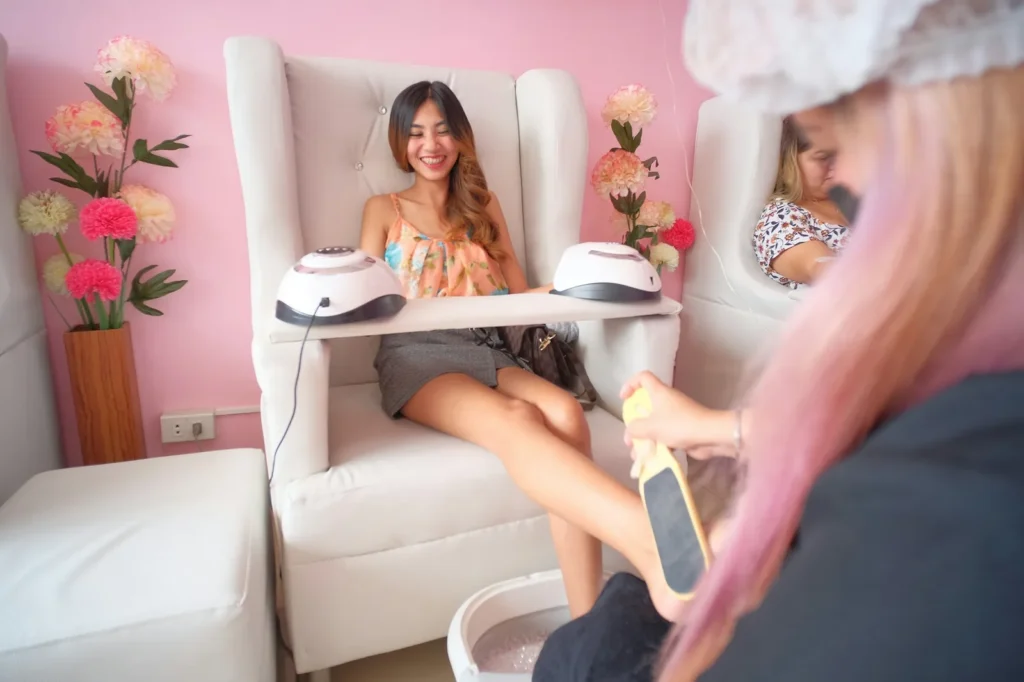
General liability covers injuries to clients, visitors and vendors that are not caused by the service itself, along with damage to other people's property. The classic salon example is a slip on a wet floor near the pedicure area. It typically pays for medical costs, legal defense and settlements up to the policy limit. Landlords almost always require it, often at a specific limit, and usually ask to be named as an additional insured.
Professional liability
Professional liability, sometimes called malpractice or errors and omissions coverage, covers claims that your service caused harm: an infection after a pedicure, a cut, a chemical burn, an allergic reaction or damage to the natural nail. For a nail salon, this is often the most important coverage, because it addresses the risks that come from the work itself. Check two details carefully:
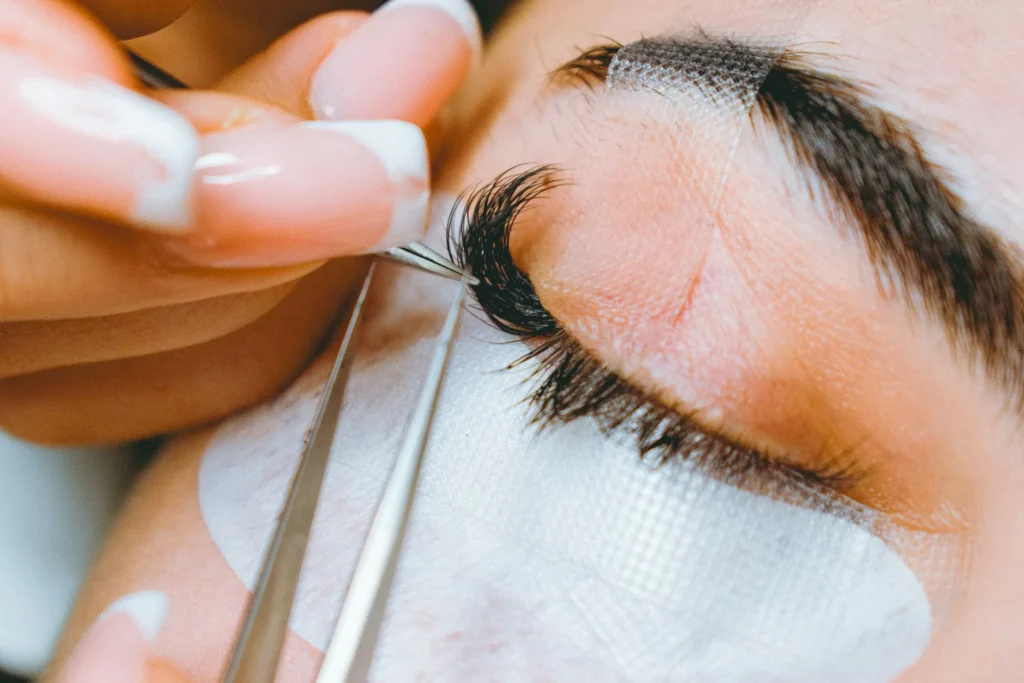
- Which services are covered. Some policies list covered services and exclude others, such as lash extensions, microblading, laser treatments or injections. If you add services, tell your agent before offering them.
- Who is covered. Employees are usually covered under the salon's policy; independent booth renters usually need their own.
Product liability
Salons use and sell products every day. Product liability covers claims that a product caused harm, such as an allergic reaction to a polish or lotion. It is often included in general or professional liability for salons, but confirm it, especially if you sell retail products or private-label items with your name on them.
Commercial property
Property coverage protects what you own inside the salon: pedicure chairs, tables, lamps, the reception desk, computers, inventory and often the improvements you paid to build, such as flooring, lighting and plumbing. Make sure the limit reflects what it would cost to replace everything today, not what you paid years ago. Ask whether coverage pays replacement cost or actual cash value after depreciation, and check whether your storefront glass and outdoor sign are covered or need separate coverage.
Many property policies exclude floods and earthquakes. If your area is at risk, ask about separate policies.
Business interruption
If a fire, storm or burst pipe forces the salon to close, business interruption coverage can pay lost income and ongoing expenses, such as rent and loan payments, while you repair. Some policies also cover a closure caused by damage to a neighboring property or loss of access. Ask how long the coverage lasts, whether there is a waiting period before it starts and how lost income is calculated; good records of past sales make claims much easier.
Workers' compensation
Workers' compensation pays medical costs and part of lost wages when employees are injured or become ill because of work, such as a back injury, a repetitive strain injury or a skin condition from chemicals. Most states require employers to carry it once they have employees, sometimes above a minimum number; Texas is a well-known exception where it is optional for most private employers. The Small Business Administration's guide to business insurance notes that businesses with employees must carry certain coverage, such as workers' compensation and unemployment insurance, and that states may require more. Check your state's rules; penalties for not carrying required coverage can be severe.
Workers' compensation applies to employees, not to true independent contractors. If you classify technicians as contractors who are legally employees, you may face uninsured injury claims as well as wage and tax problems; our guide to 1099 vs W-2 nail technicians explains the difference.
Other coverage worth considering
- Cyber liability: salons store client names, phone numbers, emails, birthdays and sometimes card data. Cyber coverage helps with the cost of a data breach, notifications and recovery.
- Employment practices liability: covers claims from employees or applicants about discrimination, harassment or wrongful termination, which can arise even in small salons.
- Crime coverage: protects against theft of money by employees or outsiders.
- Equipment breakdown: covers sudden mechanical or electrical failure of equipment such as pedicure chair pumps, water heaters and HVAC units.
- Commercial auto: needed if the salon owns a vehicle or uses one for business, such as deliveries or events.
- Umbrella liability: extra limits above your general liability and other policies for very large claims.
Booth renters and insurance
Booth renters run their own businesses, so they usually need their own professional and general liability insurance. Your booth rent agreement should require them to carry it, show you a certificate of insurance and keep it current, and many owners ask to be named as an additional insured on the renter's policy. Your own policies should still cover the salon itself. Our guide to booth rent vs commission explains what else the agreement should include.
What the lease and lenders may require
Read the insurance section of your lease before signing. Landlords typically require general liability at stated limits, property coverage for your improvements and contents, the landlord named as an additional insured, a waiver of subrogation, and proof of coverage before you get the keys. Lenders may require property coverage on financed equipment and name themselves as loss payee. Share these requirements with your agent so the policy matches them exactly.
Choosing limits
Liability policies have two important limits: the most they pay for one claim, called the per-occurrence limit, and the most they pay during the policy period, called the aggregate. Start with the limits your lease and lenders require, then ask your agent what a serious claim in your area could cost. Raising limits often costs less than owners expect, and an umbrella policy can add extra protection above several policies at once. For property, base the limit on the cost to replace everything today, including improvements you paid for.
Buying an existing salon
The seller's policies do not transfer to you. Arrange your own coverage to start on the day you take over, with no gap, and ask the seller about past claims, because claims history affects your premiums and may reveal problems with the space or equipment. Make an inventory of the equipment you are buying, with photos and values, so your property limit is accurate. Our guide on how to open a nail salon includes a checklist of documents to request when buying.
Keep your insurance paperwork organized
Keep copies of every policy, certificates of insurance, renewal dates and your agent's contact details in one place, together with your licenses. Add an equipment list with photos, receipts and serial numbers; after a fire or theft, it makes a property claim far faster. Put renewal dates on your calendar a month ahead, so you have time to compare quotes instead of renewing automatically.
How premiums are set
Insurers price salon policies based on factors such as:
- Location and the condition of the building.
- Size of the salon, number of stations and annual revenue.
- Payroll and number of employees, for workers' compensation.
- Services offered; some services carry more risk.
- Claims history.
- Limits and deductibles you choose.
- Safety practices, such as written sanitation procedures, training and licenses.
Higher deductibles lower premiums but increase what you pay when you claim. Choose a deductible you could pay comfortably from savings.
Exclusions to read carefully
Every policy has exclusions. Ask your agent to explain them, and pay special attention to:
- Unlisted services, such as lashes, microblading, chemical peels or anything outside your licenses.
- Unlicensed work; claims involving an unlicensed technician or an expired license may be denied.
- Communicable disease exclusions, which may limit coverage for infections.
- Flood and earthquake in property policies.
- Intentional acts and certain types of abuse claims.
- Claims-made versus occurrence wording in professional liability: a claims-made policy covers claims reported while the policy is active, so a gap in coverage can leave you exposed.
How to buy salon insurance
- List your risks: services, number of staff, equipment value, lease requirements, data you store.
- Find an agent who knows salons. An independent agent can compare several insurers; a specialist program for beauty businesses can also be a good option.
- Ask for quotes on the same coverage so you can compare prices fairly.
- Read the policy, not just the summary. Check covered services, limits, deductibles and exclusions.
- Confirm required wording for your landlord and lender.
- Keep certificates of insurance in your inspection binder with your licenses.
- Review every year, and whenever you add services, staff, equipment or a location.
Our guides on how to open a nail salon and the cost to open a nail salon show where insurance fits in your opening plan and budget.
Reduce risk before it becomes a claim
Insurance pays after something goes wrong; good habits keep things from going wrong in the first place, and insurers notice them.
- Follow a written nail salon sanitation checklist and keep logs.
- Keep every license current and displayed; see our guide to nail salon license requirements.
- Use client intake forms that ask about allergies and health conditions relevant to services.
- Do not work on skin with cuts, sores or visible infections.
- Keep floors dry, cords out of walkways and wet floor signs ready.
- Maintain pedicure chairs, water heaters and electrical equipment.
- Ventilate well; our nail salon ventilation guide explains how.
- Protect client data with strong passwords, updated software and limited access.

If something goes wrong
- Take care of the person first. Offer help, and call emergency services if needed.
- Document everything: what happened, when, who was involved, witnesses, photos of the area and products used.
- Keep evidence, such as product containers and tools, without changing them.
- Notify your insurer or agent promptly, following the policy's instructions.
- Be kind, but do not admit fault or promise payment before speaking with your insurer.
- Respond to reviews calmly if the client posts online; our guide on how to respond to negative reviews helps.
Talk to your team about coverage
Technicians should know what to do when something goes wrong: how to help a client, who to call, what to write down and what not to say. Include a short incident procedure in your training, keep an incident form at the front desk and review any incident together afterward, without blame, to prevent the next one.
Mistakes to avoid
- Buying the cheapest policy without reading what it excludes.
- Not telling the insurer about new services such as lashes or waxing.
- Underinsuring property, so a total loss pays only part of the cost to rebuild.
- Assuming booth renters are covered by the salon's policy.
- Skipping workers' compensation where your state requires it.
- Letting a policy lapse, especially claims-made professional liability.
- Never reviewing coverage as the salon grows.
How Dreamer helps
Dreamer does not sell insurance, but we help salons look and operate professionally, which supports everything else. We build websites with online booking and client intake details, manage your Google Business Profile and reviews through Social Marketing, and print signs, policy notices, intake forms and station checklists through our design and printing service.
Frequently asked questions
What insurance does a nail salon need?
Most salons carry general liability, professional liability, product liability, commercial property and business interruption, plus workers' compensation if they have employees and their state requires it. Cyber and employment practices coverage are worth considering.
Is workers' compensation required for nail salons?
Most states require it once you have employees, sometimes above a minimum number. Texas makes it optional for most private employers. Check your state's rules.
Do booth renters need their own insurance?
Usually yes. Booth renters run their own businesses and typically need their own professional and general liability policies. Require proof in the agreement.
What is a business owner's policy?
A package that usually combines general liability, property and business interruption coverage for small businesses, often at a lower price than buying each separately.
Does salon insurance cover lash extensions?
Only if the policy lists them. Ask your agent before offering lashes or any new service.
How often should I review my coverage?
Every year, and whenever you add services, staff, equipment or a location.
Nail salon insurance works best when it is chosen as carefully as your products and your team: the right coverage for your services, limits that match your real risks, a policy you have actually read and habits that prevent claims in the first place. Review it every year with an agent who understands salons, and your business will be ready for the day something goes wrong.