The cost to open a nail salon depends less on the nail industry than on three local facts: the rent in your area, the condition of the space you lease and how many stations you want on day one. Taking over a former salon with working plumbing and ventilation can cost a fraction of building a new one from an empty unit, and a three-station studio in a small town has little in common, financially, with a twenty-chair nail spa in a big city. That is why the numbers you see online vary so much, and why none of them can replace a budget built from your own quotes.
This guide breaks the startup costs of a salon into thirteen categories, explains what drives each one, and gives you a worksheet to fill in. It also lists the hidden costs owners forget and practical ways to lower the total without cutting corners on safety or quality.
In this article
- Three ways to start, three very different budgets
- 1. Lease, deposits and rent before opening
- 2. Build-out and construction
- 3. Ventilation
- 4. Furniture and equipment
- 5. Opening inventory and supplies
- 6. Licenses, permits and professional fees
- 7. Insurance
- 8. Technology
- 9. Brand and signs
- 10. Website and online setup
- 11. Grand opening marketing
- 12. Hiring and training before opening
- 13. Working capital
- A budget worksheet you can copy
- When each cost hits
- Questions to ask before you accept a quote
- Monthly costs after opening
- What makes the cost go up
- Ways to lower the cost without cutting corners
- Hidden costs owners forget
- Paying for it
- How Dreamer helps
- Frequently asked questions
Three ways to start, three very different budgets
Before pricing anything, decide which path you are taking. Each one changes almost every line of the budget.
| Path | Upfront cost | Time to open | Control | Main risk |
|---|---|---|---|---|
| Renting a salon suite or booth | Lowest | Weeks | Limited to your own space | Income depends on your own clients |
| Buying an existing salon | Medium to high | Weeks to a few months | Inherit the space, staff and reputation | Hidden problems in finances, lease or equipment |
| Building a new salon | Highest | Several months | Full control of concept and design | Construction delays and costs |
Owners with a strong personal client base sometimes start in a suite, build savings and open a full salon later. Owners buying an existing salon pay for goodwill, equipment and an operating location, and should review the paperwork carefully; our guide on how to open a nail salon includes a checklist for buying. The rest of this guide focuses on opening a full salon, new or taken over.
1. Lease, deposits and rent before opening
Rent is usually quoted per square foot per year. Your monthly base rent is the square footage times the annual rate, divided by twelve, plus shared costs, often called CAM, for maintenance, taxes and insurance of the property. Before opening, you will typically pay a security deposit, the first month's rent and rent during construction unless you negotiate a free rent period. Ask the landlord exactly when rent starts, what shared costs include and how much they rose in recent years.
2. Build-out and construction
Build-out is often the largest and least predictable line. What drives it:
- The starting condition. A "second-generation" space that was already a salon may only need paint, flooring and new fixtures. An empty shell may need walls, ceilings, restrooms, plumbing, electrical and HVAC.
- Plumbing for pedicures. Water supply, drains and enough hot water for busy weekends.
- Electrical. Circuits for lamps, drills, dryers, towel warmers and air conditioning.
- Accessibility. Restrooms, entrances and paths that meet accessibility requirements.
- Finishes. Flooring, lighting, cabinetry and decor, from simple to luxurious.
- Design and permits. Drawings, permit fees and inspections required by your city.
Get at least two or three detailed quotes from licensed contractors, based on the same drawings, and ask what is excluded. A landlord's tenant improvement allowance can cover part of this line, so negotiate it before signing the lease.

3. Ventilation
Nail services create dust and chemical vapors, and good ventilation protects your team and clients. Budget for an exhaust system that moves air outside the building, plus source capture at the stations, such as ventilated tables or portable extractors. The cost depends on the building, the number of stations and how far ducts must run, so ask the contractor or an HVAC company to quote it separately. Our guide to nail salon ventilation explains the options.
4. Furniture and equipment
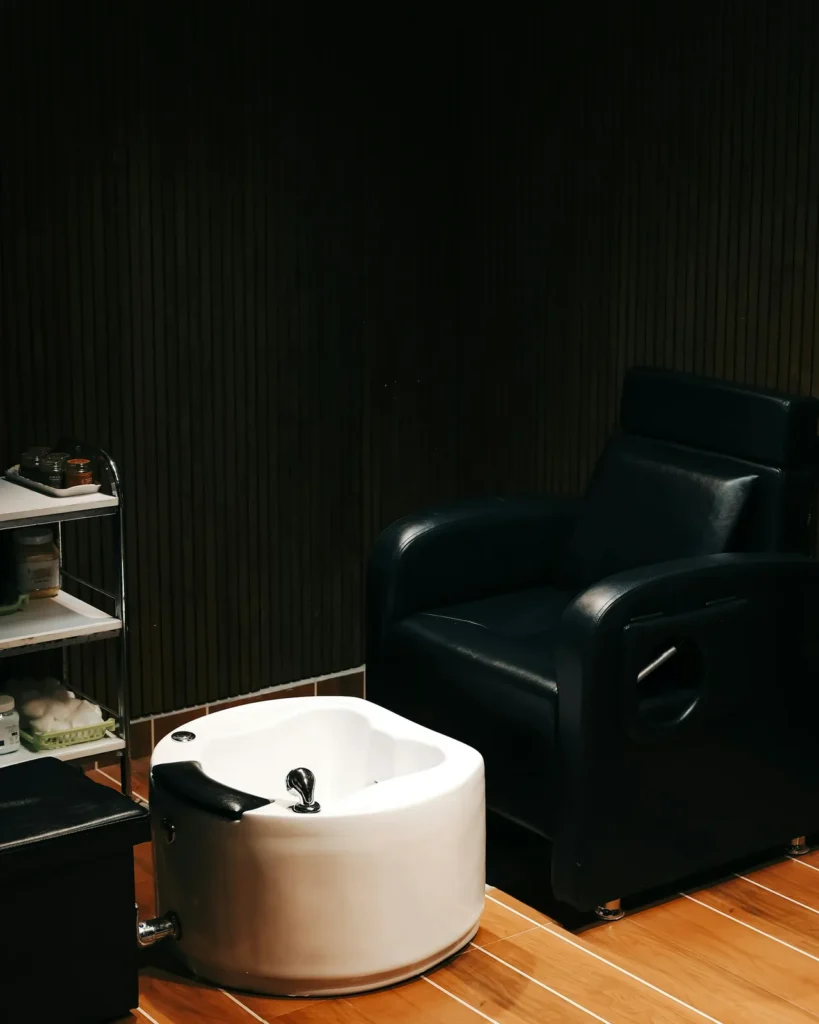
List every item by area and get supplier quotes. The big decisions are the number of stations and the type of pedicure chairs.
| Item | What drives the price |
|---|---|
| Pedicure chairs or benches | Basic bench vs full spa chair, massage functions, pipeless jets, plumbing requirements |
| Manicure tables | Built-in ventilation, storage, materials |
| Client and technician chairs | Comfort, durability, how easy they are to clean |
| Lamps, drills and dust collectors | Number of stations, brand and warranty |
| Sterilization and disinfection | Containers, disinfectant, and equipment if you sterilize metal tools |
| Reception desk and waiting area | Custom or standard, size |
| Polish wall and retail display | Size, materials, lighting |
| Towel warmer, washer and dryer | Whether you launder towels on site |
Used furniture can save money, but inspect pedicure chairs carefully; worn pumps and pipes are hard to clean and expensive to repair. Ask about warranties and delivery and installation fees, which are easy to forget.
5. Opening inventory and supplies
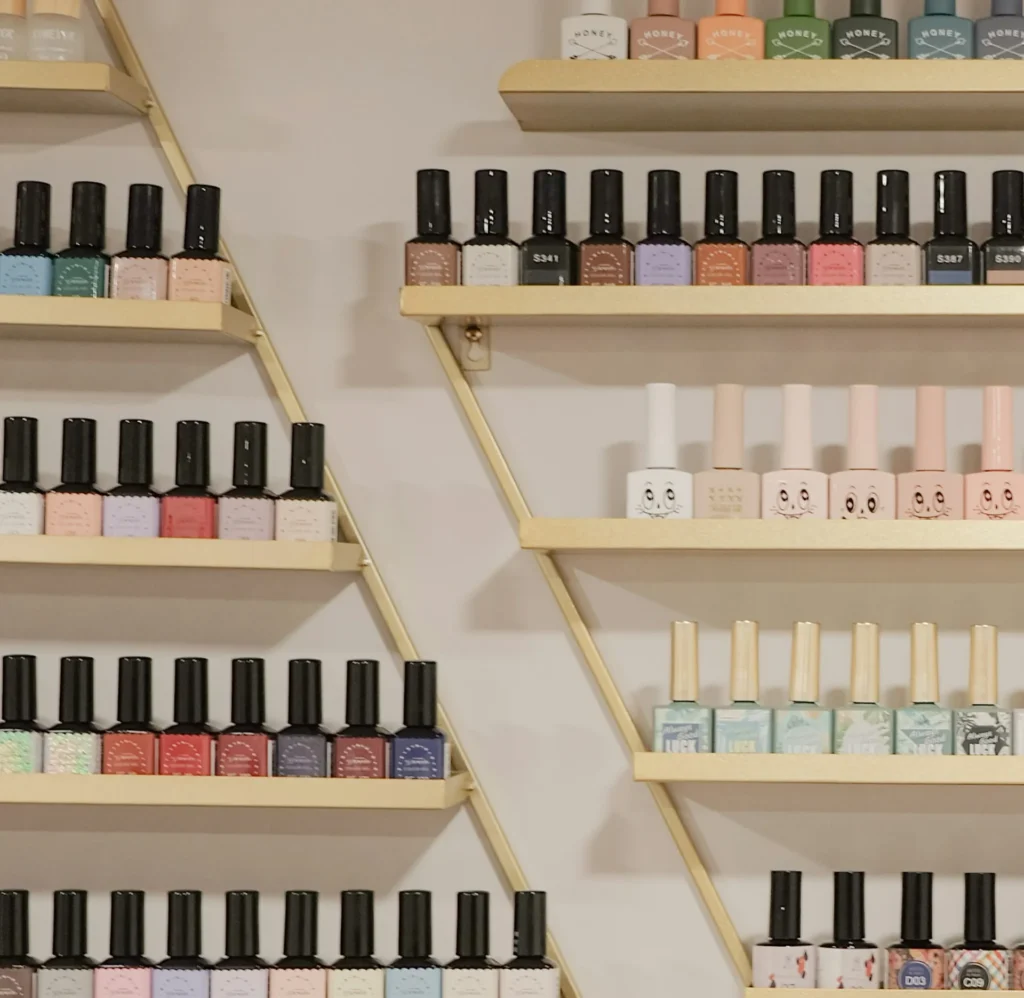
Estimate how many services you expect in the first four to six weeks and stock enough products and disposables to cover them: polish, gel, acrylic, dip and structured gel systems, tips, files and buffers, gloves, masks, towels, liners, cleaning products and nail art supplies. Add retail products if you plan to sell them. Start lean on colors and specialty items; you will learn quickly what your clients actually choose.
6. Licenses, permits and professional fees
Expect fees for business registration, a trade name, your salon establishment license, local business licenses, the certificate of occupancy, sign permits and building permits. Each fee is usually modest compared with construction, but together they add up, and some require inspections that can delay opening. Our guide to nail salon license requirements explains the main licenses. Budget for professional help too: an attorney to review the lease and any purchase agreement, and an accountant to set up the business, payroll and taxes.
7. Insurance
Most salons carry general liability, professional liability and property coverage, and most states require workers' compensation once you have employees. Your landlord will likely require proof of insurance before you get the keys, so the first premiums or deposits belong in the startup costs. Our nail salon insurance guide explains each policy.
8. Technology
Plan for a POS system with card terminals, a receipt printer, an online booking system, a computer or tablet for the front desk, a phone line, internet, Wi-Fi for guests and, if you want them, security cameras. Some costs are one-time purchases, others are monthly subscriptions or per-transaction fees. Ask processors for a written quote; our guide to credit card processing fees for salons explains how to compare them.
9. Brand and signs
Your logo, storefront sign, window graphics, business cards, menus and gift cards make the first impression. The storefront sign is usually the most expensive piece and needs landlord approval and often a permit. Everything else is modest but important: a consistent design across signs, menus and cards makes a new salon look established. Our guides to nail salon logo design and salon signage ideas explain what to prepare.
10. Website and online setup
Your Google Business Profile is free, and so are Apple Maps and Yelp listings. A professional website with online booking is a small line compared with construction, and it brings clients from the first week. Dreamer builds salon websites from $200 for the first year without booking, or $300 with online booking, including domain and hosting; from the second year, renewal is $129 per year. See our website design page for details.
11. Grand opening marketing
Budget for a grand opening banner, flyers, social media posts, possibly some paid ads and the cost of your opening offer, since discounts reduce revenue. Start marketing before opening: post construction updates, create your Google profile early and collect interest from neighbors. If you prefer a team to handle Google and social media from the start, Dreamer's Social Marketing plans start at $55 per month.
12. Hiring and training before opening
If you hire technicians or a front desk person before opening, budget for wages during training days, recruiting ads and uniforms or name tags. A few days of paid training on sanitation, service standards and your booking and POS systems prevents many costly mistakes in the first month. Our guide on how to hire nail technicians explains the process.
13. Working capital
Working capital is the money that keeps the salon running until it earns enough to pay its own bills, and it is the line new owners underestimate most. A simple way to estimate it: add up your monthly fixed costs, such as rent, insurance, software, loan payments and the minimum payroll, and multiply by the number of months you expect before the salon breaks even, then add a buffer for surprises. Many advisers suggest planning for several months of expenses. Our guide to a nail salon business plan shows how to forecast sales and break-even.
A budget worksheet you can copy
Fill in this worksheet with real quotes. Getting at least two quotes for large items shows you the realistic range and gives you room to negotiate.
| Category | Quote 1 | Quote 2 | Budget | Notes |
|---|---|---|---|---|
| Deposit and rent before opening | ||||
| Build-out and permits | ||||
| Ventilation | ||||
| Furniture and equipment | ||||
| Opening inventory and supplies | ||||
| Licenses and professional fees | ||||
| Insurance | ||||
| Technology | ||||
| Brand and signs | ||||
| Website and online setup | ||||
| Grand opening marketing | ||||
| Hiring and training | ||||
| Working capital | ||||
| Contingency |
Add a contingency line on top. Construction, permits and equipment deliveries rarely go exactly as planned, and a reserve keeps a delay from becoming a crisis. The SBA's guide to calculating startup costs walks through the same process for any small business.
When each cost hits
Startup costs do not arrive all at once, and timing matters as much as the total. The security deposit, legal fees and design costs come first, often months before opening. Construction is usually paid in stages as work is completed. Equipment suppliers may ask for a deposit when you order and the balance on delivery, and some chairs take weeks to arrive. Insurance, licenses and technology come in the last weeks, followed by opening inventory, training wages and grand opening marketing. Map these payments on a calendar next to your budget so you know how much cash you need each month, not just in total.
Questions to ask before you accept a quote
- What exactly is included, and what is excluded?
- Are delivery, installation, permits and taxes in the price?
- How long is the warranty, and who handles repairs?
- What is the payment schedule?
- How long will the work or delivery take, and what happens if it is late?
- Can you share references from other salons?
Monthly costs after opening
Opening is only the first bill. Once the salon is running, plan for:
- Fixed costs: rent and shared costs, insurance, software subscriptions, loan payments, utilities, phone and internet, accounting.
- Variable costs: technician pay, products and supplies, card processing fees, laundry, marketing campaigns.
- Periodic costs: license renewals, equipment repairs, replacing worn chairs and tools, seasonal decor and printing.
Knowing these numbers lets you set prices that cover costs. Our guide on how to price nail services shows how.
What makes the cost go up
- Starting from an empty shell instead of a former salon.
- Big-city rent and long construction periods before opening.
- Many stations on day one instead of growing into the space.
- Premium pedicure chairs and custom furniture.
- Design changes during construction, which are expensive.
- Delays in permits, inspections or deliveries while rent is due.
Ways to lower the cost without cutting corners
- Look for second-generation salon space with plumbing, drains and ventilation already in place.
- Negotiate the lease: a tenant improvement allowance, free rent during construction and a reasonable start date.
- Open with fewer stations, and design the layout so you can add more later.
- Buy quality used furniture where it makes sense, but inspect pedicure chairs and buy hygiene equipment new.
- Lease or finance equipment to spread the cost, after comparing the total you will pay.
- Use free channels early: Google Business Profile, Apple Maps, Instagram and TikTok cost nothing but time.
- Add services in phases, such as lashes or waxing, once the nail side is busy.
Never save money on ventilation, sanitation or licensed professionals. Those are the costs that protect your clients, your team and your license.
Hidden costs owners forget
- Utility deposits and connection fees.
- Sign permits and landlord design approvals.
- Card terminal fees, monthly minimums or early termination fees in processing contracts.
- Payroll taxes on top of wages.
- Sales tax on retail products and, in some states, on services.
- Equipment delivery, assembly and installation.
- Rent and wages during a delayed opening.
- The first slow months, when revenue is lower than expenses.
Paying for it
Most owners combine several sources: personal savings, family or partners, a bank loan, an SBA-backed loan, equipment financing and the landlord's tenant improvement allowance. The SBA explains its loan programs and what lenders look for. A clear budget and business plan make every conversation with a lender or landlord easier. Ask your accountant how startup costs are treated for taxes; some can be deducted or amortized, which affects your first-year numbers.
How Dreamer helps
Dreamer helps new salons with the parts of the budget that bring clients: a logo, menus, business cards, banners and signs through our design and printing service, a website with online booking, POS systems and Google and social media marketing. Our prices are published, so you can put real numbers in your budget, and one team handles everything, with the same name, colors and details on every piece.
Frequently asked questions
How much does it cost to open a nail salon?
It depends mostly on rent, the condition of the space and the number of stations. The reliable way to know is to fill in each category of the worksheet above with real quotes from contractors, suppliers and insurers in your area.
What is usually the biggest expense?
Build-out and equipment are often the largest one-time costs, especially in an empty space. Rent and payroll are the largest ongoing costs.
Is it cheaper to buy an existing salon?
Often the upfront cost is lower than a full build-out, and you open faster, but you pay for goodwill and may inherit problems. Review the finances, lease and equipment carefully.
How much working capital do I need?
Enough to cover fixed costs until the salon breaks even, plus a buffer. Calculate it from your own monthly costs and a realistic forecast.
Can I open a nail salon on a small budget?
Yes, by starting in a salon suite or booth, taking over a former salon space, opening with fewer stations and using free online channels. Do not cut costs on ventilation, sanitation or licensing.
How much does a salon website cost?
At Dreamer, websites start at $200 for the first year, or $300 with online booking, including domain and hosting.
The cost to open a nail salon is not a number you find online; it is a budget you build from your own quotes. Choose your path, price each of the thirteen categories, add working capital and a contingency, and look for savings in the lease and the space rather than in safety. With an honest budget in hand, you can negotiate better, borrow with confidence and open without running out of money in the first slow months.