In this article28 sections
A nail salon equipment list is one of the first documents you need when planning a new salon, and one of the easiest to get wrong. Some owners overspend on beautiful pedicure chairs and forget ventilation; others order everything for the stations but discover on inspection day that they lack the right disinfectant, a first aid kit or a covered trash can. A complete list, organized by area, keeps your budget realistic and your opening on schedule.
This guide gives you a complete nail salon equipment list organized by area: manicure stations, pedicure area, ventilation and air, lighting, electric tools and lamps, implements, sanitation and disinfection, consumables, front desk and waiting area, retail, technology, laundry, safety and signage. You will also find tips on buying new or used equipment, budgeting, maintenance and a checklist to review before opening. Always confirm specific requirements with your state board and local health department, because rules differ by location.
Manicure stations
Each manicure station typically needs:
- Manicure table with storage drawers, ideally with built-in or attached source-capture ventilation.
- Technician chair with adjustable height and back support.
- Client chair that is comfortable and easy to clean.
- Task lamp with even, neutral light.
- Power outlets within reach for the e-file, lamp and dryer.
- Hand rest or cushion that can be cleaned or covered.
- Trash can with a lid for each station.
- Storage for implements: clean and dirty containers clearly separated.
Plan stations around plumbing, power and ventilation, not only around how they look. Our guide to nail salon interior design explains layout and zones.
Pedicure area
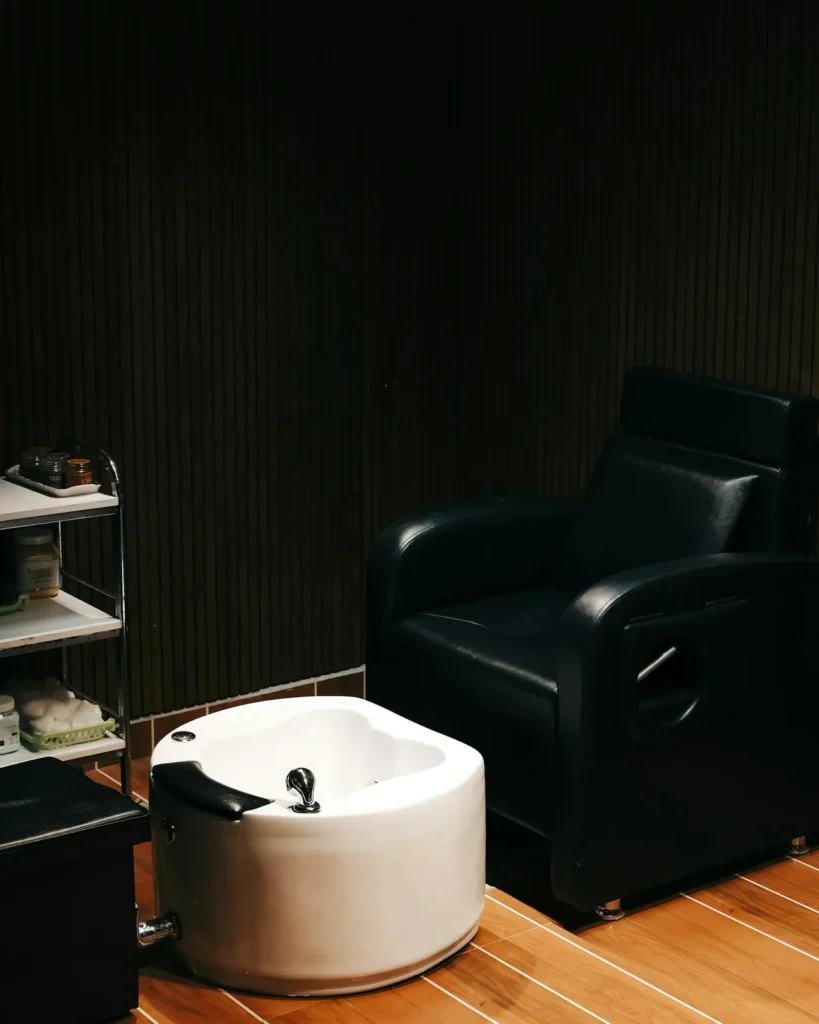
- Pedicure chairs or spa thrones with basins, plumbing and drains. Pipeless jets or liners make cleaning and disinfection easier.
- Technician stools with wheels and back support.
- Foot rests and towel storage.
- Portable pedicure basins as an alternative where plumbing is limited.
- Pedicure carts for tools and products.
Pedicure chairs are the largest single equipment purchase in most salons. Compare warranties, parts availability and how easy the basin is to clean between clients.
Ventilation and air quality
- Source-capture ventilation at stations: vented tables or portable units that pull vapors and dust away from the breathing zone.
- General ventilation that brings fresh air in and exhausts air outside.
- Exhaust fans in the back room and restroom.
- Air purifiers as a supplement, not a replacement for ventilation.
Good ventilation protects your team and clients and makes the salon pleasant to walk into. Our article on nail salon ventilation covers options and costs.
Lighting
- Ceiling lighting that is bright and even across work areas.
- Task lamps at each station with neutral light for true colors.
- Warmer ambient lighting in the waiting and pedicure areas.
- Mirror lighting at reception or a photo spot.
Electric tools and lamps
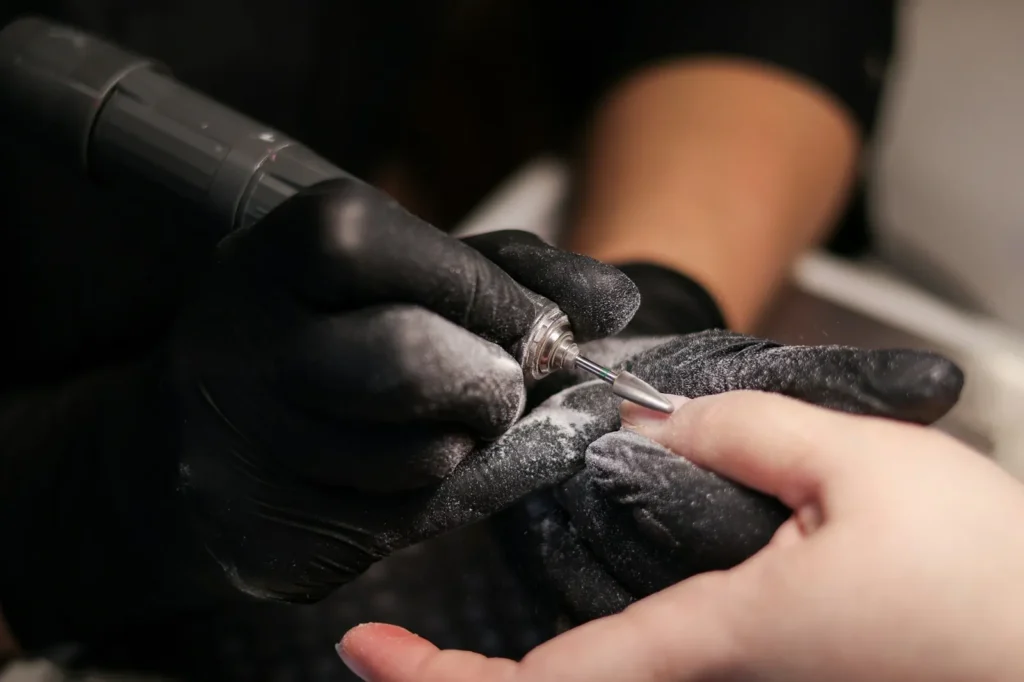
- Electric nail files (e-files) with a range of bits, one per technician.
- UV or LED curing lamps for gel, one per station or shared by two.
- Nail dryers for regular polish.
- Paraffin warmers if you offer paraffin treatments.
- Hot towel cabinet for spa pedicures and manicures.
- Wax warmers if you offer waxing, where licensing allows.
Buy professional-grade tools with warranties; cheap e-files and lamps often fail within months.
Implements
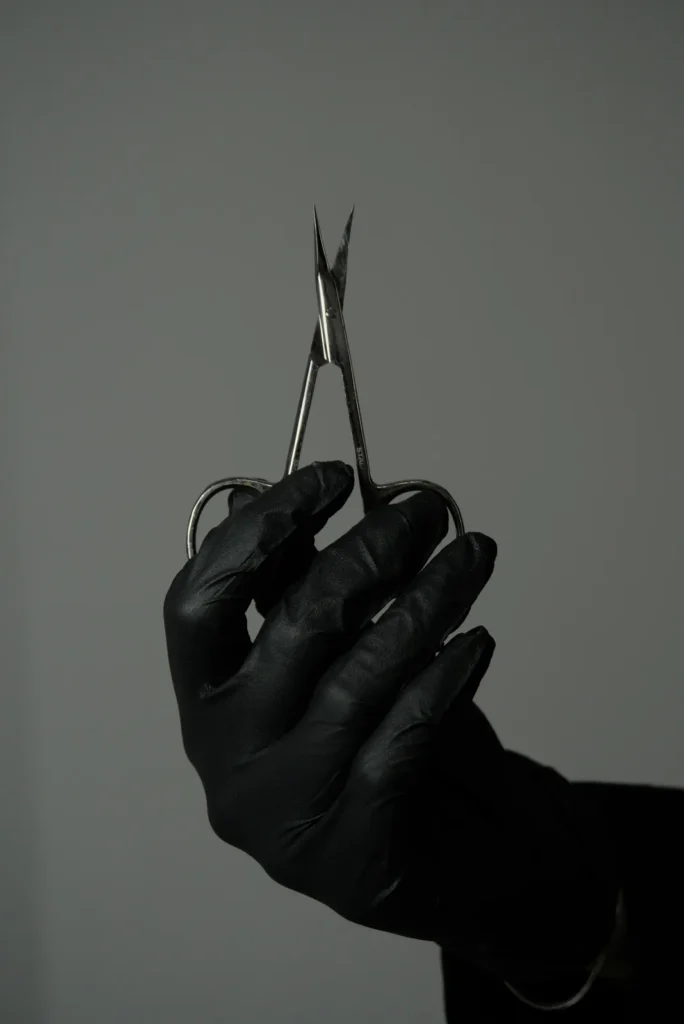
- Metal implements: cuticle nippers, pushers, clippers, scissors, tweezers.
- Multiple sets per technician so one set can be cleaned and disinfected while another is in use.
- Brushes for acrylic, gel and nail art.
- Dappen dishes and small containers.
- Single-use items such as files, buffers and orange sticks, used once and discarded or given to the client, depending on your state's rules.
Sanitation and disinfection
This part of your nail salon equipment list is where inspectors look first:
- EPA-registered disinfectant appropriate for salon use, with the contact time on the label. The EPA maintains lists of registered disinfectants for different uses.
- Disinfection containers large enough to fully immerse implements.
- Covered storage for clean implements, labeled.
- Separate container for used implements.
- Sterilization equipment such as an autoclave if your state requires it or you choose to sterilize.
- Cleaning brushes and soap for cleaning before disinfection.
- Pedicure basin cleaning supplies and a logbook if your state requires records.
- Gloves, masks and eye protection.
- Handwashing sink with soap and paper towels.
Ultraviolet "sanitizer" cabinets do not replace proper cleaning and disinfection. Our nail salon sanitation checklist explains daily routines.
Consumables and products
- Polishes, gel colors, base and top coats.
- Acrylic powders and liquids, dip powders, builder gels.
- Tips, forms and adhesives.
- Cuticle oils, lotions, scrubs, masks for spa services.
- Acetone, removers and lint-free wipes.
- Towels, paper towels, table covers, pedicure liners if used.
- Gloves, masks and cleaning supplies.
Start with a curated color selection rather than every shade; you can expand based on what clients choose. Track which colors and products run out fastest during the first months, and set minimum stock levels for each so the salon never runs out of a best-selling gel shade on a busy Saturday.
Front desk and waiting area
- Reception counter with storage and a lower section for accessibility.
- Waiting seating that is comfortable and cleanable.
- Polish display wall organized by color.
- Retail shelves for take-home products.
- Coat hooks, a small table and charging for client comfort.
Our guide to the nail salon waiting area covers layout and comfort.
Technology
- POS system with card terminal, receipt printer, cash drawer and reports by technician.
- Online booking and check-in for appointments and walk-ins.
- Tablet or computer at the front desk.
- Wi-Fi for the salon and a separate network for guests.
- Music system, with appropriate licensing for public performance.
- Security cameras in public areas, with notice posted.
Our article on salon POS features lists what to look for, and our guide to the salon check-in system explains walk-in management. Dreamer installs POS systems for salons.
Laundry and storage
- Washer and dryer, or a laundry service contract.
- Closed bins for used towels and covered shelves for clean ones.
- Back-room shelving for bulk supplies.
- Chemical storage away from heat and ignition sources, with Safety Data Sheets available.
Safety
- First aid kit and an eyewash station or bottle if required.
- Fire extinguisher inspected and accessible.
- Exit signs and emergency lighting as required by code.
- Safety Data Sheets for every chemical product, in a binder or digital system staff can access.
- Non-slip mats where floors get wet.
Signage and printed materials
- Storefront sign and window graphics.
- Door decal with hours and contact details.
- Wall price list and station menus. We print wall menus and laminated menus.
- Business cards, gift certificates and loyalty cards.
- License display frames for the salon and technician licenses.
Equipment for specialty services
If you offer more than classic manicures and pedicures, add equipment for each specialty:
- Nail art: fine brushes, dotting tools, stamping plates, foils, chrome powders, a small magnifier lamp for detail work.
- Extensions and soft gel tips: tip boxes, prep products, the right curing lamp for the system you use.
- Dip powder: dedicated containers and a way to avoid cross-contamination, such as pouring powder over the nail instead of dipping clients into a shared jar.
- Waxing: wax warmers, single-use applicators, pre and post-wax products, a treatment bed and privacy, where your license covers waxing.
- Spa add-ons: paraffin warmers, hot towel cabinets, masks and scrubs.
Check that each specialty is covered by your licenses and insurance before buying equipment for it.
How much equipment for your salon size
| Salon size | Manicure stations | Pedicure chairs | Shared items |
|---|---|---|---|
| Small (2 to 4 technicians) | 2 to 4 | 2 to 3 | One front desk, one laundry setup, shared lamps where practical |
| Medium (5 to 8 technicians) | 5 to 8 | 4 to 6 | More implement sets, larger disinfection area, more ventilation capacity |
| Large (9 or more technicians) | 9 or more | 6 or more | Dedicated back room, multiple check-in points, commercial laundry |
These ranges are illustrative; your service mix decides the balance. A salon that sells mostly pedicures needs more chairs than one focused on nail art.
Where to buy equipment
- Beauty distributors and salon supply stores: professional products, bulk pricing, local pickup.
- Manufacturers: pedicure chairs and ventilation units, often with installation and warranties.
- Trade shows: compare products side by side and meet suppliers in person.
- Online stores: convenient for consumables, but check that products are professional-grade and authentic.
Ask every supplier about warranties, delivery times, installation, spare parts and who to call when something breaks.
Equipment that improves the client experience
Some items do not appear on inspection checklists but shape how clients feel: comfortable client chairs, soft blankets in the pedicure area, a phone holder at each station, a charging station, warm towels and quiet ventilation. These details cost little compared with pedicure chairs, yet clients notice them on every visit and mention them in reviews.
Plan delivery and installation
Large equipment needs coordination with your contractor. Order pedicure chairs early, because delivery can take weeks; schedule plumbers and electricians for installation; and test every chair, lamp, e-file and ventilation unit before your health inspection. Keep manuals and warranty cards in one folder so the team knows where to find them.
New or used equipment?
| Item | New or used? | Why |
|---|---|---|
| Pedicure chairs | Usually new, or carefully inspected used | Plumbing and jets must be clean, sealed and supported by parts |
| Manicure tables | Either | Check ventilation fittings and surfaces |
| E-files and lamps | New | Reliability and warranties matter |
| Ventilation units | New | Performance and filters must meet your needs |
| Reception and waiting furniture | Either | Condition and cleanability matter more than age |
| Implements | New | Quality and condition affect safety and service |
Buying a salon with existing equipment can save money, but inspect everything, ask for maintenance records and budget for replacements.
Prioritize when the budget is tight
When money is limited, buy in this order:
- Safety and compliance: ventilation, disinfection supplies and containers, handwashing, first aid, fire extinguisher, Safety Data Sheets.
- Core service tools: stations, pedicure chairs, e-files, lamps, implements.
- Front desk essentials: POS, card terminal, booking and check-in.
- Comfort and experience: waiting seating, hot towel cabinet, paraffin, extra lighting.
- Decor and extras: feature wall, statement furniture, decorative lighting.
Starting with fewer stations of good quality and adding more as the client base grows is usually smarter than filling every corner on day one.
Common equipment mistakes
- Choosing pedicure chairs for looks without checking plumbing, cleaning and parts.
- Skipping source-capture ventilation to save money.
- Only one implement set per technician, which makes proper disinfection between clients impossible.
- Consumer-grade e-files and lamps that fail under daily use.
- No back-room storage plan, so boxes end up in the waiting area.
- Forgetting the small items inspectors check: labeled containers, covered trash cans, disinfectant contact times, first aid kits.
Equipment and your brand
Equipment is part of how clients see your salon. Matching stations, consistent lamp colors and tidy implement storage look professional; mismatched chairs and tangled cords look improvised. When choosing colors and finishes, follow the same style as your sign, wall menu and website, so the salon feels designed rather than assembled piece by piece.
Budgeting your equipment
Equipment is only part of opening costs, which also include build-out, permits, deposits, insurance and working capital. List every item with quantity and estimated cost, get quotes from more than one supplier and keep a contingency for surprises. Our guide to the cost to open a nail salon puts equipment in the context of the full budget, and the nail salon business plan shows how to present it to lenders.
Training your team on the equipment
New equipment only helps if everyone uses it correctly. When you open, walk every technician through the pedicure chair controls and cleaning steps, the ventilation units and filter changes, the disinfection routine with exact contact times, the e-file settings and bit care, and the POS and check-in screens. Write short instructions for each, post the cleaning steps near the disinfection area and keep manuals in one folder. A ten-minute refresher every few months prevents shortcuts that damage equipment or fail inspections.
Replacing equipment over time
Plan replacements instead of waiting for breakdowns. Implements and e-file bits wear out fastest, lamps and dryers need replacing after years of daily use, and pedicure chairs need new parts as jets and pumps age. Set aside a small amount each month for replacements, so a broken chair before a holiday weekend is an inconvenience rather than a crisis. Track purchase dates in a simple spreadsheet; it also helps with taxes and with valuing the salon if you ever sell it.
Maintenance
- Clean and disinfect according to label instructions and state rules.
- Service pedicure chairs regularly and replace worn parts.
- Change ventilation filters on schedule.
- Replace e-file bits and worn implements.
- Keep a maintenance log for major equipment.
Well-maintained equipment lasts longer, breaks down less on busy Saturdays and makes inspections smoother.
Nail salon equipment checklist before opening
- Stations with tables, chairs, lamps, outlets and trash cans with lids.
- Pedicure chairs installed, tested and cleanable.
- Source-capture and general ventilation working.
- E-files, lamps, dryers and warmers tested.
- Multiple implement sets per technician.
- EPA-registered disinfectant, containers and labeled storage.
- Consumables and products stocked.
- Front desk, POS, booking and check-in set up.
- Laundry plan and closed towel bins.
- First aid kit, fire extinguisher, Safety Data Sheets.
- Signs, price list and licenses displayed.
Frequently asked questions
What equipment do you need to open a nail salon?
Manicure stations, pedicure chairs, ventilation, lighting, e-files and lamps, implements, disinfection supplies, consumables, front desk and waiting furniture, POS and booking technology, laundry and safety items.
How many sets of implements does each technician need?
Enough so that one set can be cleaned and disinfected while another is in use; many salons keep several sets per technician.
Do I need ventilation in a nail salon?
Yes. Source-capture ventilation at stations plus general fresh air and exhaust protect staff and clients and keep the salon comfortable.
Should I buy used nail salon equipment?
Furniture can be bought used if in good condition. Pedicure chairs need careful inspection, and e-files, lamps, ventilation and implements are usually better bought new.
What disinfectant should a nail salon use?
An EPA-registered disinfectant suitable for salon use, applied for the full contact time on the label, following your state board's rules.
How do I keep equipment costs under control?
List every item, compare suppliers, prioritize safety, ventilation and core tools, buy furniture used when sensible and keep a contingency budget.
A complete nail salon equipment list protects both your budget and your opening date. Plan by area, prioritize ventilation, disinfection and reliable tools, buy new where safety and reliability matter, maintain everything on a schedule and check the list again before inspection day. When you are ready for signs, menus and a POS, Dreamer helps new salons open with everything in place.
No time to do this yourself? We can do it for you.
Send your business name and ZIP code. We review your Google Maps, Yelp and Facebook presence and call you back for free.