In this article26 sections
This pedicure chair buying guide exists because pedicure chairs are usually the largest equipment purchase a nail salon makes, and one of the hardest to change. They need plumbing, drains and power, they define the look of the salon, they affect how long each pedicure takes to clean and they decide how comfortable clients feel for forty-five minutes or more. A wrong choice can mean expensive plumbing changes, chairs that are hard to disinfect, technicians with sore backs and clients who never come back for a second pedicure.
This guide walks through fifteen checks before you buy pedicure chairs: understanding the main types, choosing a jet system, comparing basins, evaluating massage features, checking plumbing and electrical needs, making cleaning and disinfection easy, testing comfort for clients and technicians, planning spacing and layout, thinking about accessibility, comparing warranties and service, deciding on new or used, budgeting and financing, planning delivery and installation, and setting a maintenance routine.
1. Know the main types of pedicure chairs
| Type | How it works | Good for |
|---|---|---|
| Plumbed spa chair | Fixed chair with built-in basin connected to water and drain | Most full-service nail salons |
| Pipeless spa chair | Plumbed chair whose jets have no internal pipes holding water | Salons that want faster, easier disinfection |
| Bench or throne style | Raised seating, often several clients side by side, with basins below | Luxury and spa-style salons |
| Portable pedicure station | Chair with a separate portable basin filled and emptied by hand | Small salons, mobile services, limited plumbing |
| Hybrid chair | Chair usable for pedicures and other services | Multi-service beauty spaces |
Choose the type that matches your plumbing, your service style and the image you want. If you are unsure, visit two or three salons with different pedicure chairs and ask the owners what they would choose again.
2. Choose the jet system carefully
The jet system affects cleaning more than any other feature:
- Pipeless or magnetic jets: the jet unit can be removed and cleaned, and there are no hidden pipes where water sits. Cleaning between clients is faster and more thorough.
- Whirlpool jets with internal pipes: powerful, but water can remain in pipes, making cleaning and disinfection more demanding.
- No jets with disposable liners: simple and fast to clean, but without the whirlpool effect.
Many salons choose pipeless systems because they make it easier to follow state cleaning rules for every client.
3. Compare basins
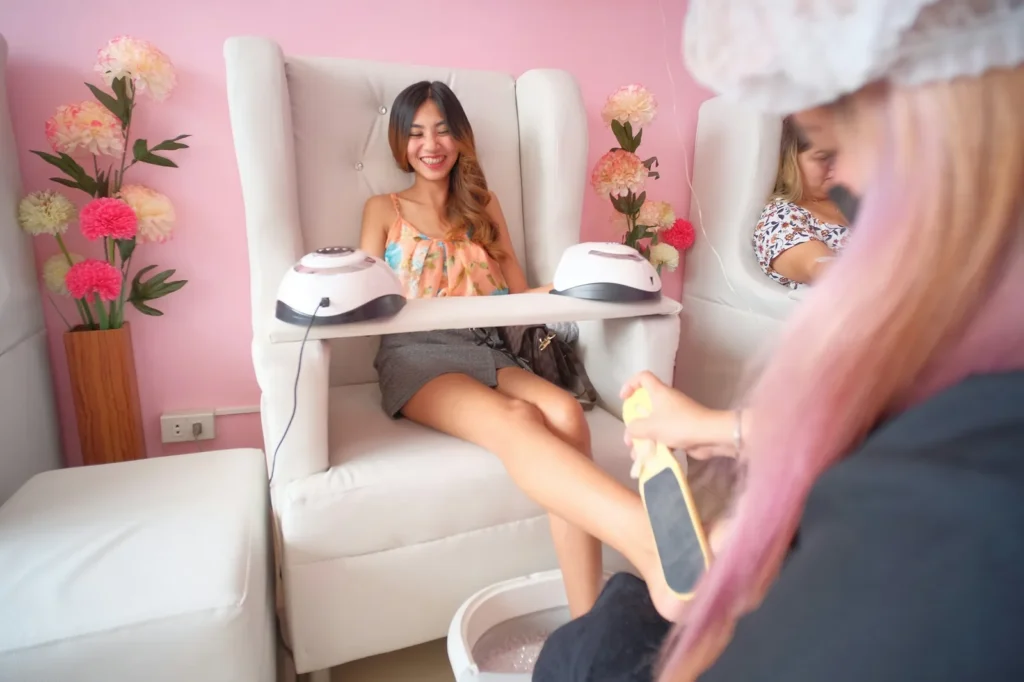
- Acrylic: common, light, available in many colors; can scratch over time.
- Glass: elegant and easy to see when clean; must be handled carefully.
- Porcelain or ceramic: classic look, durable surface, heavier.
- Stone or stone-look materials: luxurious, heavy, often expensive.
- Stainless steel: durable and easy to clean, more industrial look.
Check how easily the basin is cleaned, whether it resists stains and chemicals, and whether replacement basins are available.
4. Evaluate massage features
Massage backs range from simple vibration to programs with rollers, kneading and heat. Before paying more for advanced massage:
- Try the chair yourself for at least fifteen minutes.
- Check noise levels; a loud motor ruins a relaxing service.
- Ask about repair costs for the massage mechanism.
- Consider your clients: some love strong massage, others prefer gentle or none.
A comfortable seat with reliable basic massage is often better value than the most complex program, and it leaves more of the budget for the pedicure chair features that matter every day, such as easy cleaning and solid warranties.
5. Check plumbing requirements
Plumbed pedicure chairs typically need hot and cold water supply, a drain, and sometimes a pump if the drain is above the basin level. Before you buy:
- Ask a licensed plumber to review the space and the chair's installation manual.
- Check local plumbing codes and permits.
- Plan drain locations so chairs can sit where you want them.
- Confirm hot water capacity for several chairs running at once.
Plumbing often decides where chairs can go, so plan it before you design the rest of the salon.
6. Check electrical needs
Massage motors, pumps, lights and heaters need power, often on dedicated circuits. An electrician should confirm capacity, outlet locations and any ground-fault protection required near water. Electrical work near basins must follow code for safety.
7. Make cleaning and disinfection easy
State boards set rules for cleaning and disinfecting pedicure basins, often after every client and at the end of the day, sometimes with logbooks. California's Board of Barbering and Cosmetology, for example, has detailed pedicure spa cleaning requirements; your state may have similar ones. When comparing chairs, ask:
- How long does full cleaning take between clients?
- Can the jets be removed without tools?
- Are surfaces smooth with few crevices?
- Which disinfectants are compatible with the materials?
- Are liners available if you choose to use them?
A chair that is quick to clean properly protects clients and saves technician time all day. Our nail salon sanitation checklist covers daily routines.
8. Test comfort for clients
- Seat depth and back support for different body sizes.
- Armrests for getting in and out easily.
- Footrest position and adjustability.
- Recline and height controls that are easy to use.
- Upholstery that is comfortable and wipeable.
Sit in the chair, put your feet in the basin and imagine forty-five minutes there. Ask your regular pedicure clients what they like about current chairs.
9. Test comfort for technicians
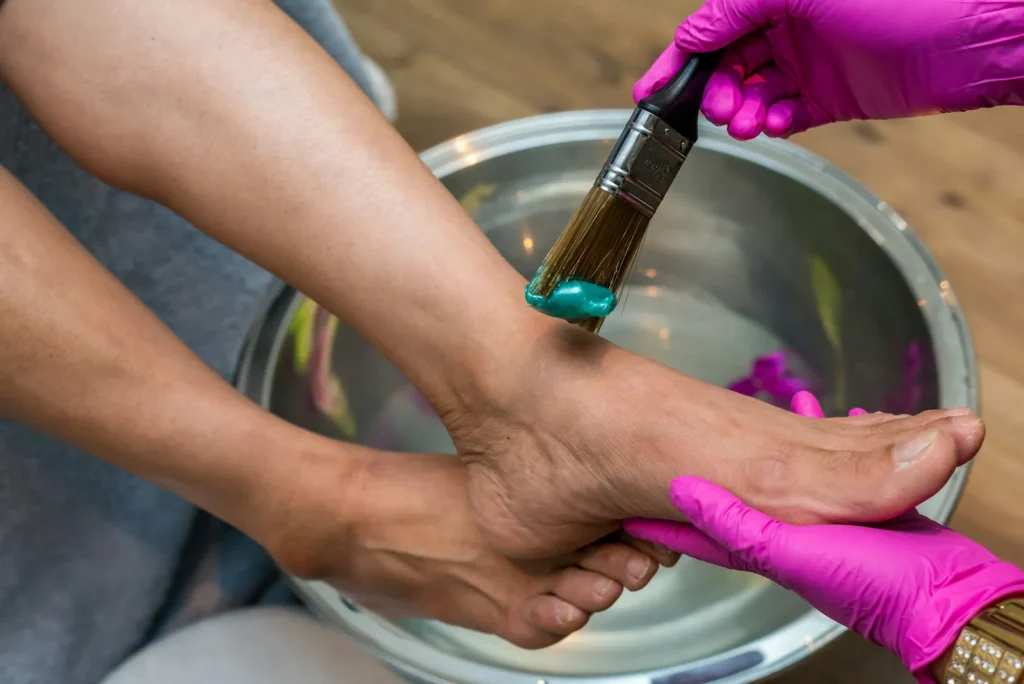
Technicians spend hours at each chair, so ergonomics matter:
- Basin height that suits the technician's stool.
- Footrest that adjusts to bring feet to a comfortable working height.
- Space for the technician's knees and cart.
- A good stool with back support and wheels.
Poor ergonomics lead to back and neck pain, slower work and higher turnover. Ask your technicians to test the shortlisted pedicure chairs too; they will notice details owners miss, such as where the drain lever sits or whether the footrest locks firmly.
10. Plan spacing and layout
Leave room for the technician's stool, a cart, clients stepping in and out and a clear walkway behind. Consider privacy dividers or a separate pedicure area for a calmer experience. Our guide to nail salon interior design covers layout and zones.
11. Think about accessibility
Some clients use wheelchairs or have limited mobility and cannot climb into a raised spa chair. Consider at least one option that works for them, such as a portable basin used with a standard chair or a chair with easier access, and keep a clear path to it.
12. Compare warranties and service
- Warranty length for the chair frame, massage mechanism, pump and basin.
- Who repairs it: local technicians or shipping parts.
- Parts availability for years to come.
- Response times when a chair stops working before a busy weekend.
A slightly more expensive chair with strong local support can cost less over its life than a cheap chair nobody can repair.
13. New or used?
Used pedicure chairs can save money, but inspect them carefully:
- Check plumbing parts, pumps and jets for wear and cleanliness.
- Look for cracks in basins and worn upholstery.
- Ask for maintenance records.
- Confirm parts are still available for that model.
- Budget for refurbishment and installation.
When buying an existing salon, include a review of the pedicure chairs in your inspection. Our guide on how to sell a nail salon shows the equipment questions buyers and sellers discuss.
14. Budget and financing
Pedicure chairs are a major line in the cost to open or renovate a salon. Get quotes from several suppliers, include delivery, installation, plumbing and electrical work, and ask about financing or leasing options and their total cost. Our guide to the cost to open a nail salon puts chairs in the context of the full budget, and our nail salon equipment list covers everything else you will need.
15. Plan delivery, installation and maintenance
- Order early; some models take weeks to arrive.
- Coordinate the plumber and electrician with the delivery date.
- Test every function before the first client.
- Train staff on controls and cleaning steps.
- Keep a maintenance schedule: inspect jets, pumps, drains and upholstery regularly and replace worn parts before they fail.

Pedicure chair buying guide: questions to ask suppliers
Before signing an order, ask every supplier the same questions so you can compare fairly:
- What jet system does the chair use, and how is it cleaned between clients?
- Which disinfectants are approved for the basin and upholstery?
- What are the plumbing, drain and electrical requirements, and is a pump needed?
- What exactly does the warranty cover, for how long, and who performs repairs locally?
- How quickly can replacement parts arrive?
- What is included in delivery and installation, and what is extra?
- Can you visit a salon that has used this model for a year or more?
- Is financing or leasing available, and what is the total cost?
Write the answers in a simple comparison table. The cheapest quote often looks different once installation, parts and service are added.
Match chairs to your salon style
Pedicure chairs set the tone of the room. Luxury salons often choose throne-style seating, rich upholstery and stone-look basins; family salons choose durable, easy-to-clean chairs in neutral colors; trendy nail bars use bright colors and bold shapes; minimal salons choose clean lines and white or wood tones. Choose finishes that match your sign, wall menu and website so the salon feels designed as one.
Total cost of ownership
The purchase price is only the beginning. Over the life of a chair, add installation, plumbing, electrical work, liners or cleaning supplies, replacement parts, service calls and downtime when a chair is out of order on a busy day. A chair that costs more up front but cleans quickly and rarely breaks can cost less over five years than a bargain chair that needs constant repair.
What clients notice
Clients rarely know the brand of a pedicure chair, but they notice a lot: whether the basin looks spotless, whether the massage is pleasant or noisy, whether the seat is comfortable, whether the controls work and whether they can get in and out easily. They also notice when chairs look tired, with cracked upholstery or stained basins. These impressions appear in reviews, so chair condition is part of your marketing.
Upgrading chairs in an existing salon
If you are replacing old chairs, plan the upgrade in phases to keep the salon open: replace two chairs at a time on slower days, confirm plumbing connections match the new models and announce the upgrade to clients when it is complete. New chairs are a great reason for a social media post, a Google update and a small promotion for pedicure services.
Spa extras worth considering
Some features add real value to the pedicure experience: heated seats, built-in hand rests for manicure and pedicure at the same time, cup holders and phone shelves, colored basin lighting for a spa mood and easy-to-reach controls for the client. Choose extras that clients will use and that do not make cleaning harder.
Pedicure chair buying checklist
- Type chosen to match plumbing and service style.
- Jet system that is easy to clean and disinfect.
- Basin material durable and compatible with your disinfectant.
- Massage tested for comfort and noise.
- Plumber and electrician reviewed installation needs.
- Comfort tested by clients and technicians.
- Layout and spacing planned, with an accessible option.
- Warranty, local service and parts confirmed.
- Budget includes installation and plumbing.
Plan pedicure chair cleaning into your schedule
Even the best pedicure chair needs time between clients for draining, cleaning, disinfecting for the full contact time and refilling. Build that time into your booking system rather than squeezing it out on busy days. If cleaning takes longer than expected, it is a sign to review the chair's design or your process, not to skip steps. A realistic schedule protects clients, keeps you compliant with your state board and prevents technicians from rushing.
Portable stations as a complement
Even salons with plumbed pedicure chairs often keep one or two portable pedicure stations. They help on busy weekends, for clients who cannot climb into a spa chair, for group bookings such as bridal parties and for mobile services where allowed. A portable basin and a comfortable chair cost far less than a plumbed unit, need no plumbing work and can be cleaned thoroughly in the back room. Planning one portable station alongside your main pedicure chairs adds flexibility without a large investment.
Pedicure chairs and your marketing
Pedicure chairs are among the most photographed parts of a nail salon. Once new chairs are installed, take bright, clean photos for your Google Business Profile, website and social media, and mention features clients care about, such as pipeless jets or a private pedicure suite. Many people choose a salon for pedicures based on photos of the chairs and the space, so good pedicure chairs help fill the schedule as well as serve clients.
Frequently asked questions
What is the best type of pedicure chair for a salon?
For most salons, a plumbed chair with a pipeless jet system balances a spa experience with easier cleaning. Portable stations suit small salons or limited plumbing.
What does pipeless mean in a pedicure chair?
Pipeless jets have no internal pipes that hold water; the jet unit can be removed and cleaned, making disinfection between clients faster and more thorough.
Do pedicure chairs need special plumbing?
Plumbed chairs need hot and cold water, a drain and sometimes a pump. A licensed plumber should review the space and local code requirements.
How long do pedicure chairs last?
It depends on quality, use and maintenance. Regular cleaning, inspections and timely replacement of worn parts extend their life.
Should I buy used pedicure chairs?
Only after careful inspection of plumbing parts, jets, basins and upholstery, with confirmed parts availability and a budget for refurbishment.
How many pedicure chairs does a salon need?
It depends on your service mix and space. Look at how many pedicures you expect at peak times and leave room for comfortable spacing.
This pedicure chair buying guide comes down to a few priorities: chairs that are easy to clean, comfortable for clients and technicians, supported by local service and planned around your plumbing and space. Choose carefully and your pedicure area will stay busy, safe and beautiful for years. When the chairs are in, Dreamer can help you fill them with a website, online booking and a Google profile that show off your pedicure suite.
No time to do this yourself? We can do it for you.
Send your business name and ZIP code. We review your Google Maps, Yelp and Facebook presence and call you back for free.