Restaurant marketing for an independent restaurant is not about outspending the chains. It is about being the obvious choice for people nearby at the moment they get hungry. Independent restaurants compete with chains that have national ad budgets, and with delivery apps that sit between you and your guests. The good news is that most diners choose where to eat locally, on their phones, a few minutes before they get hungry. That is a game a well-run neighborhood restaurant can win.
Here are seventeen strategies that work for independent restaurants in the US and Canada, grouped by what they do, followed by a 90-day plan, a seasonal calendar and a simple way to tell which ones pay off. You do not need all of them at once; the first group matters most.
In this article
- How restaurant marketing works for independents
- Get found when people are hungry
- Social media marketing for restaurants
- Paid ads in restaurant marketing
- Community and catering
- Bring guests back
- Marketing for restaurants by type
- Turning first-time guests into regulars
- A 90-day restaurant marketing plan
- Restaurant marketing ideas by season
- Where the restaurant marketing budget goes
- Restaurant marketing mistakes to avoid
- Where to start
- Frequently asked questions
- How Dreamer can help
How restaurant marketing works for independents
Every guest goes through the same four steps: they discover you, they decide, they order or visit, and, if you are lucky, they come back. Good marketing for restaurants covers all four, in that order:
- Discover: Google Maps, Apple Maps, Instagram, a friend's recommendation, a flyer in the mailbox.
- Decide: photos, the menu and prices, reviews, opening hours.
- Order or visit: online ordering, reservations, a phone number that works, easy parking.
- Come back: a great meal first, then a loyalty card, an email or text list, a reason to return.
Most restaurants spend on step one and forget the others. Ads that bring people to a profile with old photos, or a website without online ordering, waste money. The strategies below follow the same order, so each one supports the next.
Get found when people are hungry
1. A complete Google Business Profile
For most restaurants, Google Maps is the biggest source of new guests. Fill in every part of your profile: the right primary category ("Vietnamese restaurant", "Pho restaurant"), hours including holidays, a menu link, ordering and reservation links, attributes such as dine-in, takeout and delivery, and plenty of real food photos. Post updates weekly: specials, new dishes, events. Google explains that local results depend on relevance, distance and prominence (how local ranking works), and a complete profile helps the first and the last.
2. Apple Maps, Yelp and the other listings
iPhone users often search in Apple Maps; claim your listing through Apple Business Connect. Many diners still read Yelp before choosing a restaurant. Keep your name, address, phone number and hours identical everywhere, and update holiday hours on every listing the same day.
3. A website with a real menu and online ordering
Your website is where people read the full menu, order for pickup and ask about catering. A text menu (not a PDF), an "Order online" button at the top, and hours that match Google. See 12 features of a restaurant website that drive orders.
4. A steady stream of reviews
Ask every table, with a QR code on the check presenter or the receipt, and reply to every review. Never pay for reviews or trade discounts for them; it breaks Google's policies and the FTC's rule on fake reviews in the US. Note that Yelp asks businesses not to request reviews at all, so ask for Google reviews and let Yelp reviews come on their own.
Social media marketing for restaurants
5. Short videos of food being made
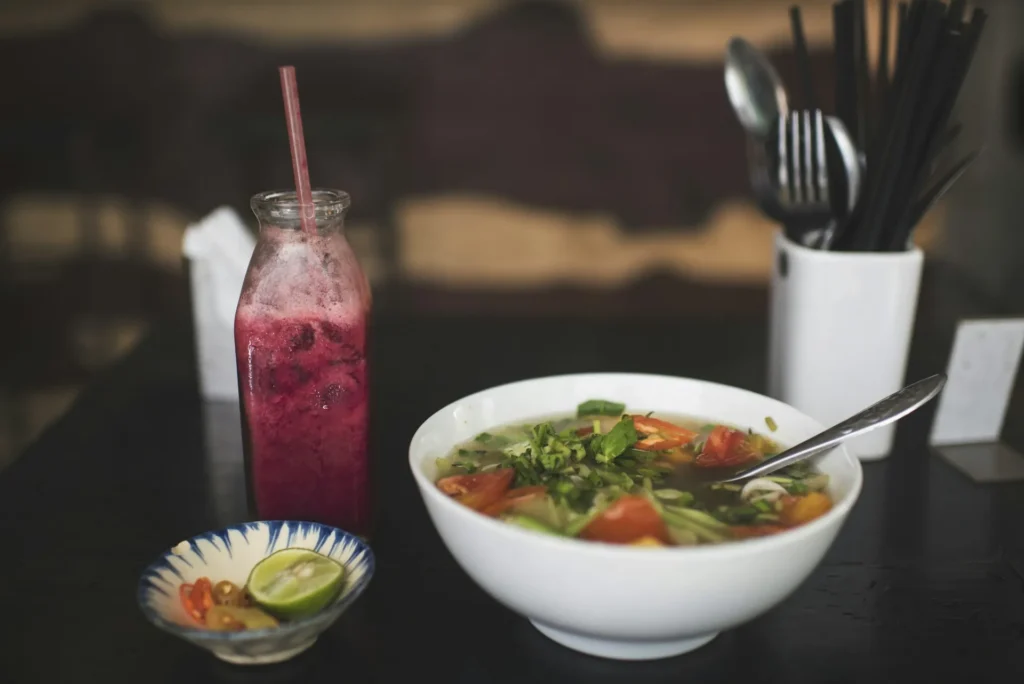
Broth simmering, noodles being pulled, a dish being plated: short vertical videos on Instagram and TikTok are what people stop scrolling for. Tag your location on every post so people nearby see it. Phone videos are enough; good light and a steady hand matter more than equipment.
6. Your guests' photos
Guests already photograph their food. Reshare the best ones (with permission), and make it easy with good lighting at the tables and a small sign with your handle. Ask before you repost, credit the guest by name or handle, and thank them in the comments.
7. Local food creators
A visit from a respected local food creator can bring a wave of new guests. Choose people whose followers actually live near you, and make sure paid or comped posts are clearly disclosed, as the FTC requires in its endorsement guidance.
8. Neighborhood groups
Local Facebook groups and Nextdoor are where neighbors ask "where should we eat tonight?". Join with your business page, answer genuinely and follow each group's rules.
A simple weekly photo and video routine
Content is the part of restaurant marketing that most kitchens give up on, because it feels like a second job. A small routine keeps it manageable:
- Shoot before service, when the kitchen is calm and the light is good. A window and a clean table are enough.
- One dish a day. A photo from above, a close-up, and a ten-second vertical video of the dish being finished.
- Film the moments guests never see: broth simmering, herbs being picked, bread coming out of the oven.
- Use each piece three times: on your Google profile, on Instagram or TikTok, and on the website menu.
- Keep a folder by dish, so a seasonal post or a new menu never starts from zero.
Thirty minutes a week is enough to post every few days, and after a month you have a library of real photos that no competitor can copy.
Paid ads in restaurant marketing
9. Social ads at meal times
Meta ads on Facebook and Instagram, aimed at people within a few miles, scheduled around lunch and dinner, with a mouth-watering photo and an "Order now" button that goes straight to online ordering.
10. Search ads for hungry searchers
Google Ads for searches like "pho near me" or "[your cuisine] delivery [city]", limited to your delivery or driving area and to your opening hours.
11. Delivery app promotions, carefully
Promotions inside delivery apps can boost visibility, but the app's commission plus the discount can leave little margin. Run them for a fixed period, with a clear goal, and check the numbers before renewing.

Community and catering
12. Catering for offices and events
Office lunches, school events and family parties bring large orders. Make a simple catering menu, put it on your website, and visit or email offices and schools nearby. Bring a small tasting tray; it is one of the most effective restaurant marketing ideas for weekday sales. After each catering order, send a thank-you note and ask whether they would like a menu for the next event.
13. Events and collaborations
A pop-up with a local bakery, a booth at a neighborhood festival, a holiday menu with a local brewery. Ask the partner to post about it too, and keep a sign-up sheet for your list on the table. Collaborations put you in front of another business's loyal customers, and they are restaurant marketing ideas that cost little beyond your time.
14. Printed menus that go home
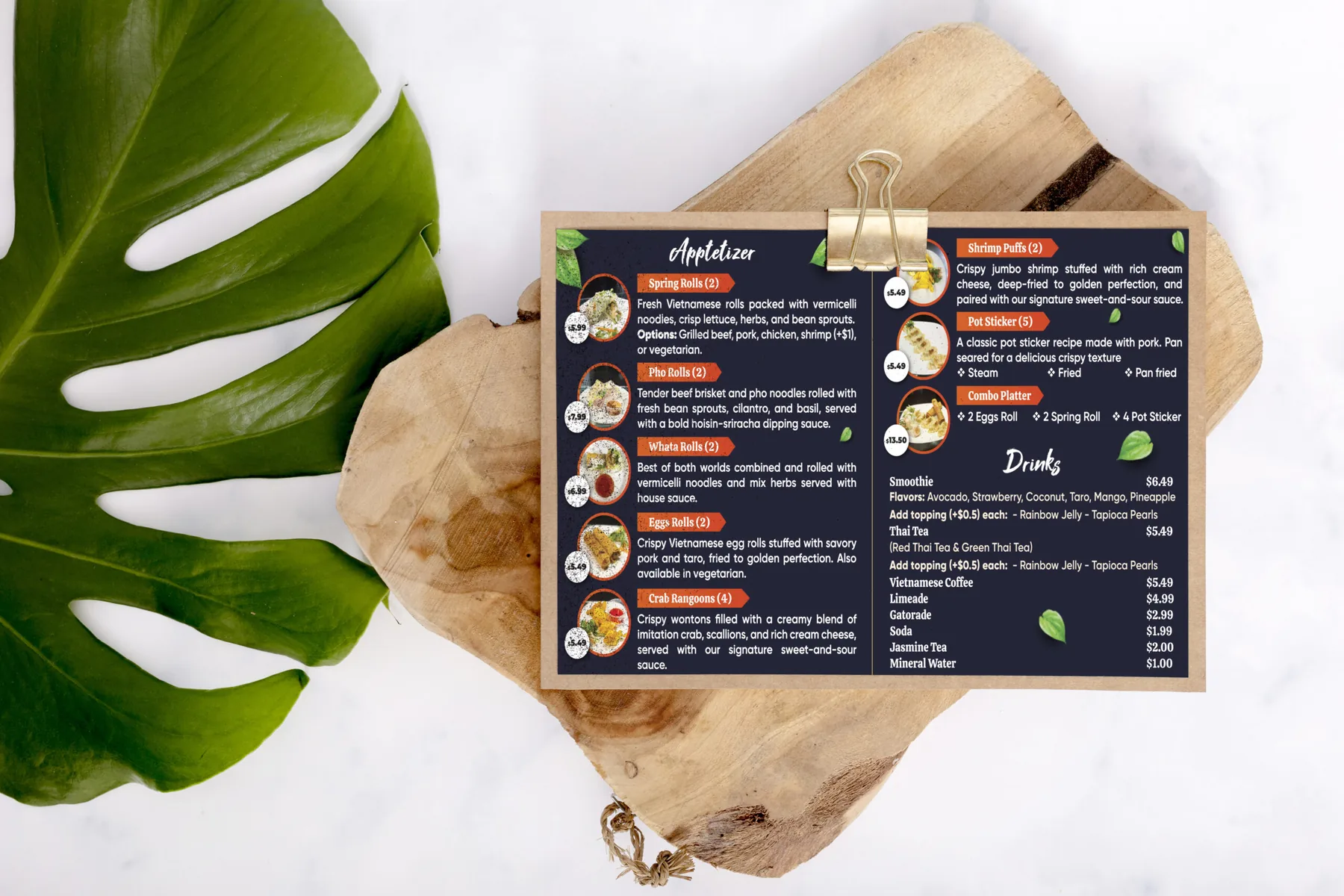
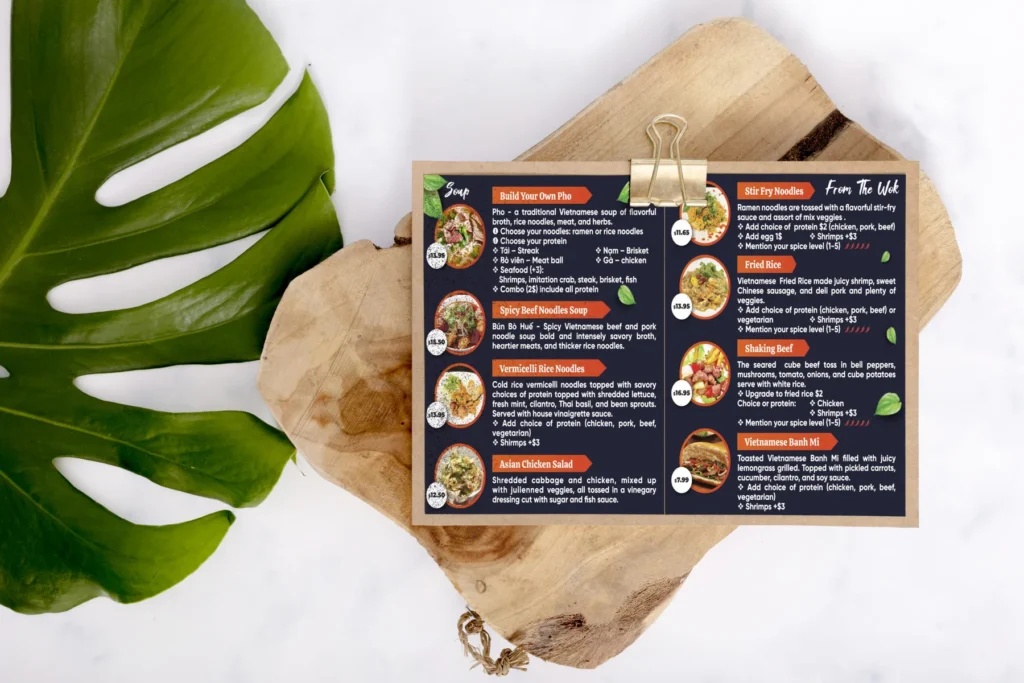
A take-out menu in every bag and a well-designed table menu keep you on the fridge and in the guest's mind. Add a QR code to your online ordering page.
Bring guests back
15. A simple loyalty program
A punch card or points in your POS: the tenth meal or a free drink after a few visits. Simple programs get used; complicated ones get forgotten.
16. Your own email or text list
Collect contacts with clear consent and send new dishes, seasonal menus and events, not daily discounts. The law requires consent: in the US, see the FCC's guide to unwanted texts; in Canada, CASL covers email and texts. It is the one channel no platform can switch off.
17. Measure what brings guests
Use your POS reports, a promo code per channel, the Google profile's monthly calls and direction requests, and a simple question to new guests: "How did you hear about us?". Drop what does not bring customers after a fair test.
Marketing for restaurants by type
The seventeen strategies apply to everyone, but each kind of restaurant leans on different ones.
Pho, noodle and quick-service shops. Lunch is the battle. Fast pickup ordering, photos of steaming bowls on Google Maps, and catering menus for nearby offices do most of the work. A lunch combo posted on Google every Monday keeps the profile fresh.
Family and sit-down restaurants. Reservations, large-party information and celebrations: birthdays, graduations, Mother's Day. A simple birthday club, with consent, brings families back every year.
Cafés and bakeries. Instagram, daily items and pre-orders. Seasonal boxes, such as mooncakes for the Mid-Autumn Festival or treats for Lunar New Year, can be planned and sold weeks ahead.
Food trucks. The schedule is the marketing. Post the week's locations every Monday, tag each location, and keep the same handle everywhere so fans can follow you.
Fine dining. Reservations, the chef's story, private dining and occasional press. Fewer posts, but each one carefully made.
Turning first-time guests into regulars
Bringing a guest back is usually cheaper than finding a new one, and regulars are the ones who recommend you. The most effective restaurant marketing for repeat visits is simple:
- Consistency first. The same great dish every time does more than any campaign.
- Remember people. Names, usual orders, the table they like.
- A bounce-back offer in the bag, valid on weekdays within the next month, to bring takeout guests back when you have room.
- A thank-you message after a first online order, with consent, inviting them to try a second dish.
- A birthday club with a small treat, for guests who sign up.
A 90-day restaurant marketing plan
Month 1: the foundation. Complete the Google profile, claim Apple Maps and Yelp, fix hours everywhere, and shoot twenty to thirty real photos of dishes, the room and the team. Put a review QR code on every check presenter.
Month 2: ordering and content. Put a text menu and online ordering on your website and link them from Google and Instagram. Post two or three short videos a week. Start collecting emails or phone numbers with consent at the register and online.
Month 3: reach out. Send the first message to your list, visit five nearby offices with a catering menu, and test one small ad campaign around lunch or dinner. Compare orders, calls and direction requests with month one.
After 90 days of restaurant marketing, you know which channels bring guests in your neighborhood, and you can put more time and money there.
Restaurant marketing ideas by season
| Month | Moments to plan for |
|---|---|
| January–February | New Year, Lunar New Year, Valentine's Day, Super Bowl takeout |
| March–May | Spring menu, graduation orders, Mother's Day |
| June–August | Father's Day, summer drinks, patio season, back-to-school lunches |
| September–October | Mid-Autumn Festival, Canadian Thanksgiving, Halloween |
| November–December | US Thanksgiving, office holiday parties, gift cards, New Year's Eve |
Plan each moment four to six weeks ahead: photos, a post on Google and Instagram, a message to your list, and a note on the printed menu or in the bag.
Where the restaurant marketing budget goes
There is no single right number, but there is a sensible order. First, the free foundation: listings, photos, reviews and your own list. Second, the fixed monthly costs that keep it running: your website, someone to post and reply every week, printed menus. Third, the test budget: ads and delivery app promotions, started small and kept only when the numbers say they work.
Choose an amount you can keep for at least three months. Marketing for restaurants works through repetition, and a campaign that stops after two weeks rarely shows what it could do.
Restaurant marketing mistakes to avoid
- Running ads before the basics are right. Ads that lead to old photos, wrong hours or a PDF menu waste money.
- Discounting all the time. Constant deals teach guests to wait for the next one. Use offers with a purpose and an end date.
- Stock photos. Guests want to see your food, not a picture from the internet.
- Ignoring reviews, or arguing with reviewers. A calm reply helps the next guest decide.
- Different hours on different sites. A guest who finds the door locked rarely comes back.
- Giving away account ownership. Your Google profile, social pages and domain should be in your restaurant's name.
- Counting likes instead of orders. Measure what reaches the register.
Where to start
If you can only do three restaurant marketing tasks this month: complete your Google profile (strategy 1), put a real text menu and ordering on your website (strategy 3), and start asking every table for a review (strategy 4). For promotion ideas to add on top, see 25 restaurant promotion ideas.
Frequently asked questions
How much should a restaurant spend on marketing?
There is no fixed rule. Start with the free foundation, add the fixed costs you can sustain every month, and keep a small test budget for ads. Judge every channel by orders and guests, not by likes.
What is the best restaurant marketing for a new restaurant?
A complete Google profile before opening day, real photos, a text menu online, and a soft opening for neighbors and nearby offices. Ask every early guest for a review; the first months set the tone of your profile.
Does social media really bring guests?
It does when posts show real food, tag your location and lead to a menu or an order button. It works best together with Google Maps: social media makes people want the dish, and the map tells them where to get it.
What are the cheapest restaurant marketing ideas that work?
The free ones: a complete Google profile, real photos, asking every table for a review, short videos, a take-out menu in every bag, and a list of regulars who agreed to hear from you. They cost time, not money, and they make every paid campaign work better.
How do I know if my marketing for restaurants is working?
Track orders, reservations, calls and direction requests every month, use a different promo code for each channel, and ask new guests how they heard about you. If a channel brings no guests after a fair test, stop it and move the time or money elsewhere.
Should I hire someone for restaurant marketing?
If the kitchen and the floor take all your time, yes, at least for the weekly routine: posts, photos, review replies and listings. Keep ownership of every account in your restaurant's name, and ask for monthly numbers you can check.
How Dreamer can help
Dreamer works with restaurants and cafés in the US and Canada: Google, Apple Maps and Yelp listings with weekly posts in our social marketing plans, restaurant websites with menus and ordering, and printed menus, flyers and signs from our design and print service.