A nail salon loyalty program rewards clients for coming back, and done well it is one of the cheapest ways to grow. Most of a salon's income comes from regulars, and a regular who comes every three weeks instead of every five is worth almost twice as much over a year. A loyalty program gives clients a reason to keep their routine with you rather than trying the new salon down the street.
Done badly, loyalty programs become one more discount that nobody understands. Punch cards get lost, points never seem to add up to anything, and the front desk forgets to mention the program at all. This guide walks through nine steps to build a program clients actually use, with rewards you can afford and tracking that works at a busy front desk.
In this article
- Why a nail salon loyalty program pays off
- Step 1: Decide what you want the program to change
- Step 2: Choose the type of loyalty program
- Step 3: Pick loyalty rewards that protect your margins
- Step 4: Set clear, simple rules
- Step 5: Decide how to track it
- Step 6: Launch the program with your team
- Step 7: Communicate with members, with permission
- Step 8: Measure what the program changes
- Step 9: Refresh it once a year
- Loyalty program ideas that work well in nail salons
- A quick cost check for your loyalty rewards
- Loyalty program examples for different salons
- What to say when clients ask about the program
- Loyalty and online booking
- Paper cards or digital tracking?
- Loyalty ideas for different services
- Wording for your menu, website and front desk
- Mistakes that make loyalty programs fail
- How a loyalty program fits with the rest of your marketing
- Frequently asked questions
Why a nail salon loyalty program pays off
Three reasons make loyalty programs work especially well for nail salons:
- Services repeat on a schedule. Gel, acrylic fills and pedicures have natural cycles of two to four weeks, so a small nudge keeps the cycle with you.
- Clients compare little on price once they trust you. A regular who loves her technician is not shopping around, unless something pushes her away.
- Rewards cost less than new clients. A free add-on costs a few dollars in supplies and a few minutes; winning a brand-new client usually costs far more in time, ads or discounts.
A loyalty program is not a fix for poor service or long waits. It works when clients already like your salon and simply need a reason to keep coming back on time.
Step 1: Decide what you want the program to change
Loyalty programs can do different jobs. Choose one main goal:
- More frequent visits: clients come every three weeks instead of every five.
- Bigger tickets: clients add services they do not usually buy.
- Fewer lost clients: regulars stay instead of drifting away.
- Slow-day traffic: rewards that apply only on certain days.
Your goal decides the reward. For more frequent visits, reward the visit itself. For bigger tickets, reward spending or offer upgrades as rewards.
Step 2: Choose the type of loyalty program
| Type | How it works | Best for |
|---|---|---|
| Punch card | A free reward after a set number of visits | Small salons, simple tracking |
| Points | Points for each dollar spent, redeemed for rewards | Salons with a POS that tracks points |
| Tiers | Higher levels unlock better perks | Salons with many very loyal clients |
| VIP club | A paid or invitation-only club with ongoing perks | Higher-end salons |
| Membership | A monthly fee for set services | Salons with steady, repeat services |
Most nail salons do best starting with a visit-based reward: easy to explain in one sentence, easy to track. If you are thinking about a monthly plan instead, read our nail salon membership program guide.
Step 3: Pick loyalty rewards that protect your margins
The reward is what clients remember, and what you pay for. Good rewards feel generous but cost little:
- Free add-ons: nail art on one or two nails, paraffin, a cuticle treatment, a longer massage.
- Upgrades: regular polish to gel, basic pedicure to a spa pedicure.
- A free service with a low cost: a polish change or a quick hand treatment.
- Priority booking: first choice of times during busy seasons.
- Birthday treats: a small gift during the birthday month.
Avoid making every reward a percentage discount. Discounts cut straight into your revenue and teach clients to think about price. Add-ons and upgrades show off services clients may start buying on their own.
Step 4: Set clear, simple rules
Write the rules in one or two sentences and keep them the same everywhere:
- How clients earn: per visit, per dollar, or per service.
- What they get and when.
- Whether rewards expire and when.
- Whether rewards combine with other offers.
- Whether rewards can be transferred to someone else.
A good example: "Every fifth visit, choose a free nail art accent or a paraffin dip. Rewards are valid for 90 days and do not combine with other offers."
Step 5: Decide how to track it
Paper punch cards
Cheap and familiar, but cards get lost and are easy to copy. If you use them, print them on sturdy stock with your logo and a unique stamp or punch shape.
Your POS or booking system
Many POS and booking systems track visits or points automatically by phone number. This is the most reliable option: the front desk sees the client's progress at checkout and clients never lose a card. If you are choosing a system, our guide to salon POS features lists what to ask for.
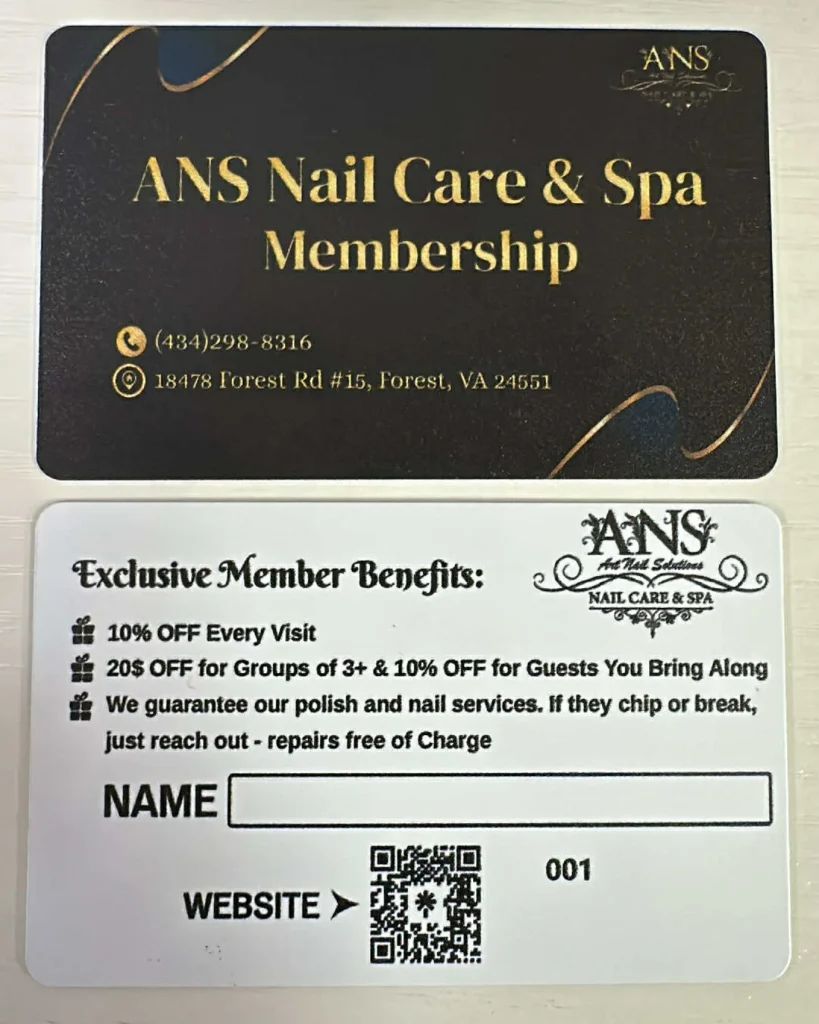
A card with a QR code
A printed card with a QR code linking to the client's account or your sign-up page combines the feel of a physical card with digital tracking.
Step 6: Launch the program with your team
The best loyalty program fails if nobody mentions it. Before launch:
- Explain the rules to every technician and the front desk.
- Write a one-line script for checkout: "You're on visit three of five; your next reward is on us."
- Put a small sign at the register and a line on your menu.
- Announce it on Instagram, Facebook and your Google Business Profile.
- Give your regulars a head start, such as their first stamp, so they feel valued from day one.
Step 7: Communicate with members, with permission
Texts and emails remind members of their progress and rewards. Only send them to clients who agreed to receive them, and make it easy to opt out. For email, the FTC's CAN-SPAM compliance guide explains the basic rules, and text messages have their own consent rules. Our guide to nail salon text message marketing covers them.
Good loyalty messages are short and useful:
- "You're one visit away from a free nail art accent."
- "Happy birthday! Enjoy a free paraffin dip any time this month."
- "Your reward expires on the 30th. Book your next visit here."
Step 8: Measure what the program changes
After two or three months, compare members with non-members:
- Visit frequency: do members come back sooner?
- Average ticket: do members add services?
- Retention: what share of first-time clients become members and keep coming?
- Reward cost: how much do rewards cost in supplies and time per month?
If members visit more often and the reward cost is small, the program is working. If nobody joins, the reward may be too far away or the team is not mentioning it.
Step 9: Refresh it once a year
Keep the core rules stable so clients trust the program, but refresh the rewards yearly. A new reward option, a seasonal bonus or a members-only preview of a new service keeps it interesting.
Loyalty program ideas that work well in nail salons
- The fifth-visit reward: simple and easy to remember.
- Double stamps on slow days: fills Tuesday afternoons.
- Pedicure club: a reward after a set number of pedicures, popular in summer.
- Referral stamps: an extra stamp when a member brings a friend. See our nail salon referral program guide.
- Anniversary perk: a small treat on the anniversary of the first visit.
- Early booking for members: first choice of holiday appointments.

A quick cost check for your loyalty rewards
Before you announce a reward, check it with your own numbers. This example uses made-up figures to show the method:
| Question | Example answer |
|---|---|
| How often does a regular visit today? | Every five weeks |
| How often might a member visit? | Every four weeks |
| Extra visits per member per year | About two |
| What does one extra visit bring in? | Your average ticket |
| What does the reward cost? | A few dollars in supplies and ten minutes |
If a member comes even two extra times a year, a reward that costs a few dollars every fifth visit pays for itself many times over. The math only fails when the reward is a big discount on an expensive service, or when the program attracts clients who would have come anyway and nothing changes.
Loyalty program examples for different salons
- A neighborhood nail salon: "Every 5th visit, choose a free accent nail or paraffin dip." Tracked by phone number in the POS.
- A busy pedicure-focused salon: "Pedicure club: your 6th pedicure includes a free foot mask and hot stones."
- An upscale nail spa: "Members get priority holiday booking, a birthday treatment and a complimentary drink every visit."
- A nail bar with younger clients: "Collect a sticker for each set; five stickers unlock a free art upgrade." Stickers on a fun card make it shareable.
- A salon with slow weekdays: "Double stamps Monday to Wednesday."
Each example has one clear reward and one clear rule. That is what makes a loyalty program easy to remember and easy for the front desk to run.
What to say when clients ask about the program
Give your team short answers:
- "How does it work?" "Every visit counts. On your fifth, you pick a free add-on."
- "Do I need an app?" "No, we track it with your phone number."
- "Can I use it with today's special?" "The reward is separate, so you get both on different visits."
- "What if I miss a visit?" "Your visits stay on your account; the reward is valid for 90 days once you earn it."
When everyone gives the same answer, clients trust the program.
Loyalty and online booking
If clients book online, your booking page can remind them of the program and their progress. Some systems show "you're one visit away from your reward" in confirmation emails. Even without that, a line on the booking page and in the confirmation ("Members earn a free add-on every fifth visit") keeps the program visible between visits.
Paper cards or digital tracking?
| Paper punch card | Digital (POS or booking system) | |
|---|---|---|
| Cost to start | Printing only | Often included in your system, sometimes an add-on |
| Lost cards | Common | Not an issue, tracked by phone number |
| Copying or fraud | Possible | Hard |
| Data on visits | None | Visit history, frequency, reward use |
| Feel for the client | Tangible, fun to collect | Convenient, nothing to carry |
Many salons combine the two: a nicely printed membership card for the feel of belonging, with visits tracked in the POS by phone number. The card reminds the client; the system keeps the count.
Loyalty ideas for different services
Not every client buys the same thing, so one reward may not fit everyone:
- Acrylic and gel regulars come every two to three weeks. A visit-based reward reaches them quickly and keeps the fill schedule with you.
- Pedicure regulars come less often, especially outside summer. A pedicure club with a seasonal bonus keeps them coming through the cooler months.
- Occasional clients come for events. A birthday perk or an anniversary treat gives them a reason to return between events.
- Nail art lovers like new designs. An early look at a new collection is a reward that costs you nothing.
Wording for your menu, website and front desk
Use the same short text everywhere so clients hear one message:
- Menu: "Loyalty: every 5th visit, choose a free accent nail or paraffin dip."
- Website and booking page: "Members earn a free add-on every fifth visit. Join at checkout with your phone number."
- Register sign: "Ask about our loyalty reward. It's free to join."
- Google Business Profile post: a photo of the reward add-on with one sentence on how to join.
Keep the wording friendly and specific. "Earn rewards" means nothing; "a free accent nail on your fifth visit" makes clients count their visits.
Mistakes that make loyalty programs fail
- Rewards too far away. If it takes twenty visits to earn anything, most clients give up.
- Complicated points math. Clients should know exactly how close they are.
- Rewards that feel cheap. A coupon for a few dollars off feels like a trick; a visible add-on feels like a gift.
- No tracking. Lost paper cards and forgotten stamps frustrate loyal clients.
- Silent staff. If the front desk never mentions the program, it does not exist.
- Changing rules without notice. Clients feel cheated. Give notice and honor earned rewards.
How a loyalty program fits with the rest of your marketing
A loyalty program keeps clients you already have. It works best alongside the things that bring new clients in: a strong Google Maps presence, honest reviews and an easy way to book. Our list of nail salon marketing ideas covers the full picture, and our guide on nail salon client retention goes deeper on keeping regulars.
Dreamer designs and prints membership and loyalty cards, helps salons choose a POS that tracks visits and points, and includes loyalty announcements in our Social Marketing plans.
Frequently asked questions
What is the best loyalty program for a small nail salon?
A visit-based reward, such as a free add-on on the fifth visit, tracked in your POS by phone number. It is easy to explain, easy to track and cheap to run.
Should loyalty rewards be discounts or free services?
Free add-ons and upgrades usually work better. They feel generous, cost little in supplies, and introduce clients to services they may buy later.
Do loyalty points need to expire?
Many salons set a reasonable expiration, such as 90 days for a reward, to keep the program active. Be clear about it, and check your state's rules if rewards could be treated like gift cards.
How do I get clients to join?
Mention it at every checkout, give a first stamp right away, and make joining as simple as giving a phone number.
What if a client loses her punch card?
If you track visits in your POS by phone number, a lost card does not matter. With paper only, decide in advance whether you will honor visits you can verify, and say so in the rules.
How many visits should a reward take?
Five to ten visits works for most nail salons. Fewer feels generous; more than ten feels out of reach, and clients stop paying attention.
Can I combine a loyalty program with promotions?
You can, but keep it simple. Many salons say rewards do not combine with other offers, so clients are never confused at the register.
A nail salon loyalty program does not need to be complicated to work. Choose one goal, a reward that feels generous but costs little, rules that fit in one sentence and tracking your front desk can handle on a busy Saturday. Then mention it to every client, every visit.