A nail salon sanitation checklist is the simplest tool for protecting clients, technicians and your license at the same time. Infections from poorly cleaned tools and foot spas are rare when salons follow the rules, and they are exactly what clients worry about when they choose a salon. A written routine, followed at every station by every technician, turns good intentions into habits that inspectors and clients can see.
This guide explains the key terms, then gives you checklists for opening the salon, between every client, pedicure spas, closing time and weekly and monthly tasks. The steps follow common state board rules and the Occupational Safety and Health Administration's guidance for nail salon workers, but your state board's rules are the ones that apply to you, so adjust the list to match them and keep a copy of those rules at the front desk.
In this article
- Why a written sanitation checklist matters
- Cleaning, disinfecting and sterilizing
- What can be disinfected and what must be thrown away
- Opening checklist
- Between every client
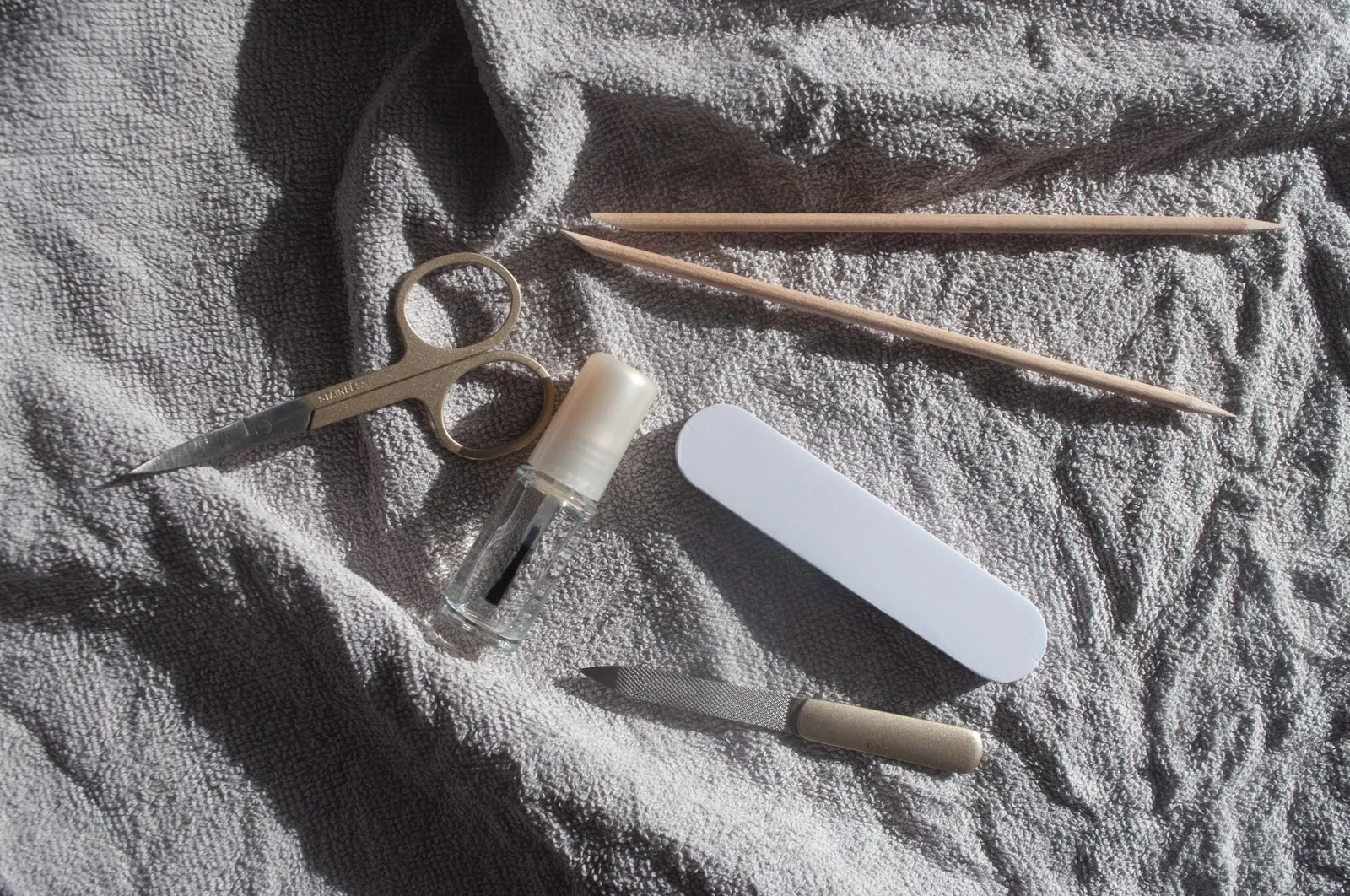
- How to clean and disinfect reusable tools
- Keep enough tool sets for busy days
- Brushes, dust collectors and nail art tools
- Pedicure spa checklist
- Towels and linens
- Products and containers
- If there is blood
- Technician hygiene
- Closing checklist
- Weekly and monthly tasks
- Post the checklist at every station
- Records and logs
- Training your team
- Show clients your routine
- Mistakes to avoid
- How Dreamer helps
- Frequently asked questions
Why a written sanitation checklist matters
Most technicians know how to clean tools. The problem in busy salons is consistency: one technician soaks tools for the full contact time, another pulls them out early when the waiting area fills; one opens a fresh file in front of the client, another reaches into a drawer. A written sanitation checklist sets one standard for everyone, makes training faster, gives managers something specific to check and shows inspectors that sanitation is part of the salon's system rather than each person's habit. It also protects you if a client ever questions a service, because you can show exactly what your salon does every time.
Cleaning, disinfecting and sterilizing
These three words are often mixed up, but they mean different things, and state rules use them precisely.
| Term | What it means | How it is done |
|---|---|---|
| Cleaning | Removing visible dirt, dust, product and debris | Soap or detergent, water and a brush |
| Disinfecting | Killing most harmful germs on hard, non-porous surfaces and tools | An EPA-registered disinfectant used exactly as the label directs, including contact time |
| Sterilizing | Killing all microorganisms, including spores | Equipment such as an autoclave, used as directed |
Cleaning always comes first: disinfectant cannot work through dust, product or oils. Most states require disinfection of reusable tools between clients, and some require sterilization for certain metal tools. The Environmental Protection Agency keeps lists of selected EPA-registered disinfectants, including products effective against bloodborne viruses.
What can be disinfected and what must be thrown away
A simple rule covers most cases: if an item is porous and cannot be disinfected, use it once and throw it away.
| Usually reusable after cleaning and disinfecting | Usually single-use |
|---|---|
| Metal nippers, pushers, clippers and scissors | Paper files, buffers and sanding bands, unless your state allows disinfecting specific types |
| Metal and glass bowls | Orange wood sticks |
| Drill bits made of metal | Cotton, gauze and wipes |
| Plastic tools labeled as disinfectable | Toe separators and flip-flops |
| Pumice stones and foot files that cannot be disinfected | |
| Disposable liners, gloves and towels designed for single use |
Check your state's rules for items such as metal files and certain foot files, which some states treat differently. Many states also prohibit razor-style callus tools altogether.
Opening checklist
Before the first client:
- Turn on ventilation: exhaust, ventilated tables and portable units. See our guide to nail salon ventilation.
- Mix fresh disinfectant according to the label, in labeled containers with lids.
- Check that every station has enough clean, disinfected tools stored in closed containers.
- Stock new single-use files, buffers, sticks, cotton and gloves.
- Place clean towels in closed storage.
- Wipe and disinfect tables, armrests, chairs and pedicure surfaces.
- Check restrooms: soap, paper towels and a clean sink.
- Empty and line trash cans; use metal cans with self-closing lids at stations.
- Confirm all licenses are current and displayed.
Between every client
The steps clients notice most happen in the few minutes between appointments.
Before the service:
- Wash your hands with soap and water.
- Ask the client to wash hands or use hand sanitizer.
- Look at the client's hands or feet. Do not work on skin with cuts, open sores, blisters or visible infection; many state boards prohibit it. Kindly suggest the client see a doctor and rebook.
- Put on new gloves if your salon uses them; nitrile gloves protect against many nail products, while latex or vinyl gloves are appropriate when handling acetone, according to OSHA's guidance.
- Open a fresh set of disinfected tools in front of the client.
- Use new single-use items.
- Use a clean towel.
After the service:
- Throw away all single-use items in a covered trash can.
- Put used reusable tools in a container marked "used", separate from clean tools.
- Remove gloves and throw them away, then wash your hands.
- Wipe and disinfect the table, armrests and lamp surfaces.
- Place the used towel in a covered laundry container.
How to clean and disinfect reusable tools
OSHA's guide for nail salon workers lists common steps, to be followed according to your state board's policies:
- Wear the right gloves while cleaning and handling disinfectants or tools soaked in disinfectant.
- Wash tools with soap and water, using a brush to remove all debris.
- Soak tools in an EPA-registered disinfectant for the time on the label, often 10 to 30 minutes, mixed exactly as the manufacturer directs.
- Rinse tools in clean water if the label or your state requires it.
- Dry tools with a clean cloth or towel.
- Store disinfected tools in a clean, covered container, labeled as clean.
Ultraviolet boxes are for storage only. OSHA's guide notes that UV sanitizing boxes do not disinfect tools; they can only store tools that are already cleaned and disinfected.
Change disinfectant as the label directs, and immediately if it becomes cloudy or contaminated. Electric file bits need the same care: remove debris with a brush, then disinfect as the manufacturer and your state require.
Keep enough tool sets for busy days
Disinfection takes time, so a station with one set of tools forces a choice between rushing the soak and making the next client wait. Keep at least three sets of metal tools per station on busy days: one in use, one in disinfectant and one clean and ready in its closed container. Label containers clearly as "used", "soaking" and "clean", and never let a set skip a step. Electric file bits deserve the same rotation, since they collect dust and debris in their grooves and need cleaning with a brush before disinfection.
Brushes, dust collectors and nail art tools
Gel and acrylic brushes should be cleaned with the product manufacturer's cleaner and stored covered, and they should never touch a client's skin. Empty and clean dust collector bags or trays as the manufacturer directs, wearing gloves and a mask suitable for dust. Dotting tools, striping brushes and other nail art tools follow the same rule as everything else: if it touches the client and can be disinfected, clean and disinfect it; if it cannot, keep it away from skin or throw it away after use.
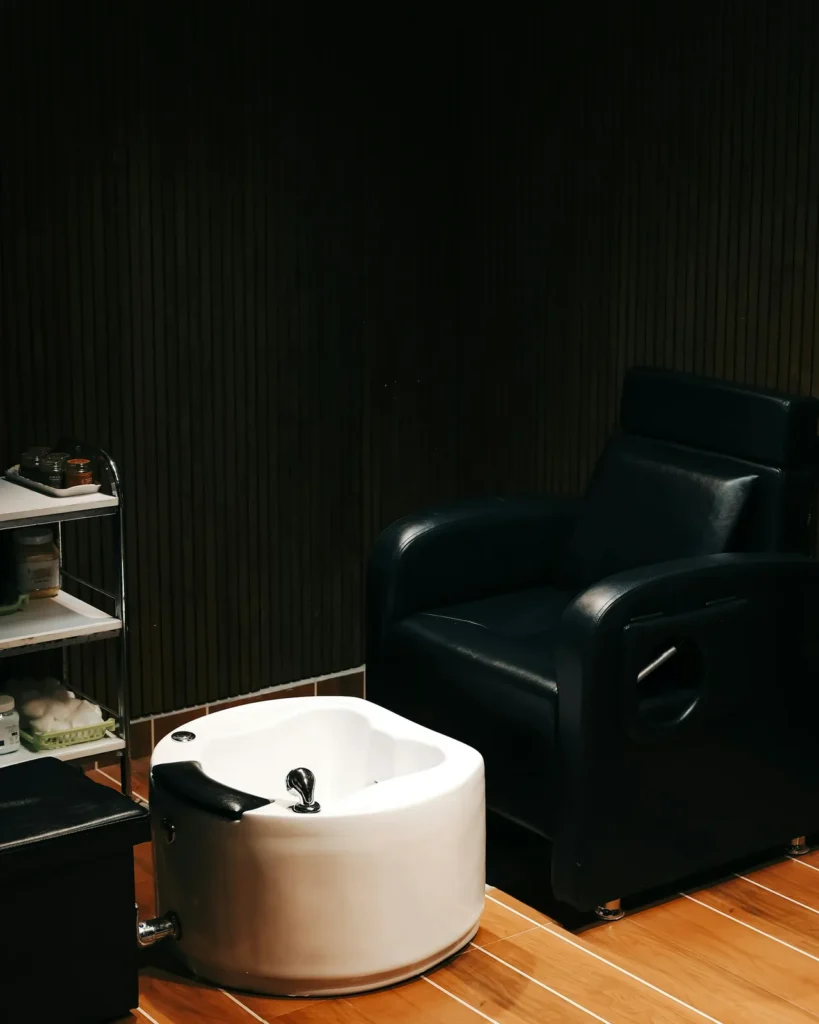
Pedicure spa checklist
Foot spas need special attention because water, skin and warm temperatures create the conditions germs like. OSHA's guidance says to disinfect foot basins and spas after each client and at the end of the day, following your state board's rules, which are often very specific.
After every client:
- Drain the water and remove any debris.
- Scrub the basin surfaces with a brush and soap or detergent, then rinse.
- Fill or wipe with EPA-registered disinfectant and leave it for the full contact time on the label; for whirlpool or jet spas, circulate it as your state requires.
- Drain, rinse and wipe dry.
- Replace disposable liners if you use them, and still disinfect any surface the liner does not cover.
- Record the cleaning in the pedicure log if your state requires one.
At the end of the day:
- Remove screens, jets or removable parts as the manufacturer directs, and scrub them and the areas behind them.
- Disinfect the basin and parts, then rinse and dry.
- Leave the basin clean and dry overnight.
Towels and linens
- Use a fresh towel for every client.
- Store clean towels in a closed cabinet or container.
- Put used towels in a covered container right away.
- Wash in hot water with detergent and dry completely; damp towels grow bacteria and mildew.
- Throw away towels that are stained or worn.
Products and containers
- Keep products in labeled containers with lids, closed when not in use.
- Never pour product back into the original bottle.
- Use a spatula or applicator to remove creams, scrubs and wax; never put used fingers or tools back into a jar.
- Never double-dip wax applicators.
- Throw away products that are expired, contaminated or have changed color or smell.
- Keep Safety Data Sheets for the products you use.
If there is blood
Small cuts can happen even with careful technicians. OSHA's guidance advises avoiding contact with blood: if someone is bleeding, do not touch the blood, ask the person to press a cotton ball or tissue to the cut and to throw it directly into the trash once the bleeding stops. Then:
- Stop the service and keep gloves on, or put on new gloves.
- Offer an antiseptic and a bandage for the client to apply, following your state's procedure.
- Put all items that touched blood in a sealed bag before throwing them away.
- Clean and disinfect tools and surfaces that touched blood with a disinfectant labeled effective against bloodborne pathogens.
- Remove gloves, wash your hands and record what happened if your salon keeps an incident log.
Keep a small blood exposure kit at the front desk. If technicians are likely to be exposed to blood, OSHA's bloodborne pathogens standard requires the employer to provide training, protective equipment and the hepatitis B vaccine at no cost.
Technician hygiene
- Wash hands before and after every client, before eating or drinking and after handling products.
- Keep nails clean and hair tied back.
- Cover cuts or cracks in your own skin.
- Wear clean clothing; long sleeves and knee-length bottoms protect skin from dust.
- Do not eat or drink at the station.
Closing checklist
- Clean and disinfect all tools used during the day and store them in closed containers.
- Clean pedicure spas and parts as required.
- Discard used disinfectant if the label requires daily replacement.
- Wipe and disinfect all stations, chairs, armrests and door handles.
- Vacuum or mop floors; avoid dry sweeping, which spreads dust.
- Start towel laundry or bag used towels for pickup.
- Take trash outside.
- Turn off equipment that should not run overnight.
Weekly and monthly tasks
| How often | Task |
|---|---|
| Weekly | Deep clean stations, drawers and storage; wash trash cans; clean ventilated table catch basins |
| Weekly | Check expiration dates and supply levels; restock gloves and single-use items |
| Monthly | Change charcoal filters in ventilated tables or as the manufacturer directs |
| Monthly | Review the logs and retrain anyone who skipped steps |
| Yearly | Service the HVAC system and replace filters |
Post the checklist at every station
Print a one-page sanitation checklist for each station and the pedicure area, with the between-client steps in large type and the languages your team reads, such as English and Vietnamese. Laminated cards or a small acrylic stand keep it clean and visible. Clients who notice it often mention it in reviews, and technicians use it as a reminder on the busiest days.
Records and logs
Keep simple records: pedicure spa cleaning logs if your state requires them, disinfectant mixing and change dates, training sign-offs for each technician, filter changes and any incidents. Store them in one binder with copies of your licenses and Safety Data Sheets. Our guide to nail salon license requirements explains what inspectors usually check.
Training your team
A checklist only works when everyone follows it. Train every new technician on the full routine during the first week, watch them do it, and check again after a month; our guide on how to hire nail technicians explains how to fit this into onboarding. Post a short version of the between-client checklist at each station, in the languages your team reads. Praise people who do it well, and correct missed steps privately and immediately.
Show clients your routine
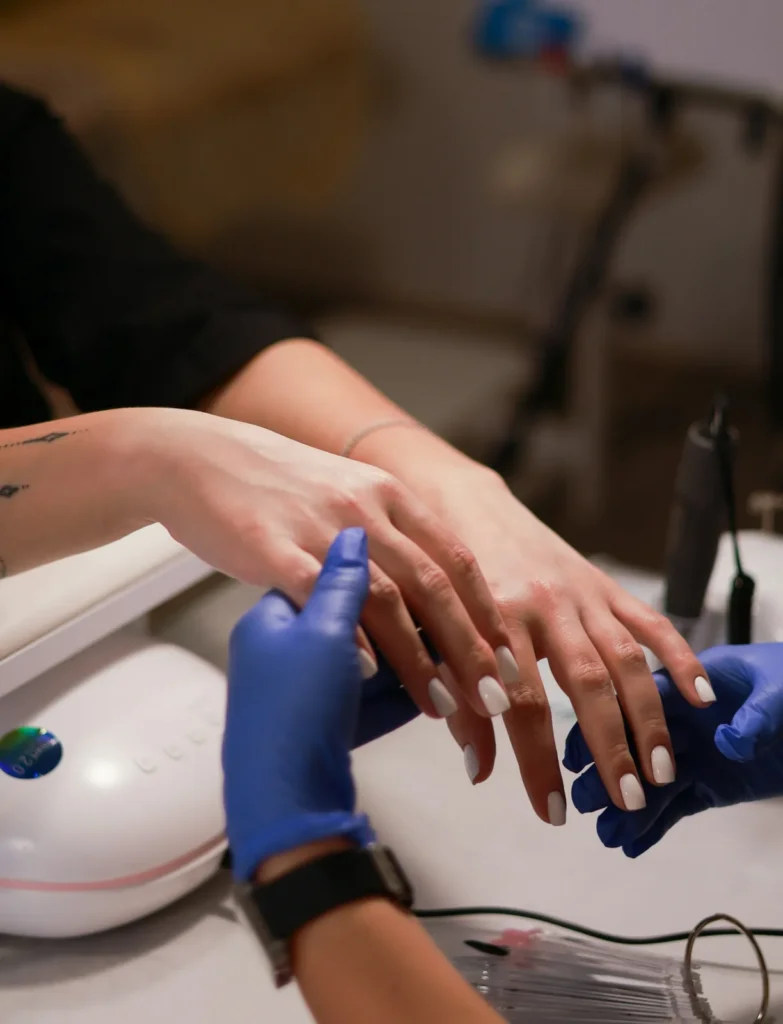
Clients cannot see your disinfectant label, but they can see you open a fresh set of tools, use a new file and wipe the table. Do these steps in front of them. Many salons also explain their sanitation routine on their website and Google Business Profile with photos of clean stations and sealed tool pouches, which reassures new clients before they book. Keep the wording factual: describe what you do, such as "new files for every client" and "tools disinfected after every service".
Mistakes to avoid
- Skipping the cleaning step and putting dirty tools straight into disinfectant.
- Shortening the contact time because the salon is busy.
- Reusing files and buffers that cannot be disinfected.
- Storing clean and used tools together.
- Treating UV boxes as disinfection.
- Rinsing pedicure spas with water only between clients.
- Damp, reused towels.
- No written routine, so every technician does it differently.
How Dreamer helps
Dreamer helps salons show their care for hygiene: we print checklists, station cards and signs through our design and printing service, add a clear hygiene section to your website, and share photos of clean stations and sealed tools on your Google Business Profile and social media through Social Marketing. Clients who see your routine before they arrive book with more confidence.
Frequently asked questions
What should be on a nail salon sanitation checklist?
Opening tasks, steps before and after every client, tool cleaning and disinfection, pedicure spa cleaning, towel handling, blood exposure steps, closing tasks and weekly and monthly maintenance.
How long should tools stay in disinfectant?
As long as the product label says, often 10 to 30 minutes. Clean tools with soap and water first, and follow your state's rules.
Do UV sterilizer boxes disinfect tools?
No. OSHA's guidance notes that UV boxes only store tools that have already been cleaned and disinfected.
Can nail files be reused?
Porous files and buffers that cannot be disinfected are single-use. Some states allow certain files to be disinfected; check your state's rules.
How often should pedicure spas be cleaned?
After every client and at the end of each day, following your state board's specific steps, with a log if your state requires one.
Should technicians wear gloves?
Gloves protect technicians from chemicals and blood. Use the right type for the product, replace torn gloves and throw them away after each client.
A nail salon sanitation checklist works when it is written down, posted, trained and followed every day by every technician. Clean before you disinfect, respect contact times, throw away what cannot be disinfected, give pedicure spas extra care and keep simple records. Your clients will feel the difference, inspectors will see it, and your salon's reputation will rest on something solid.