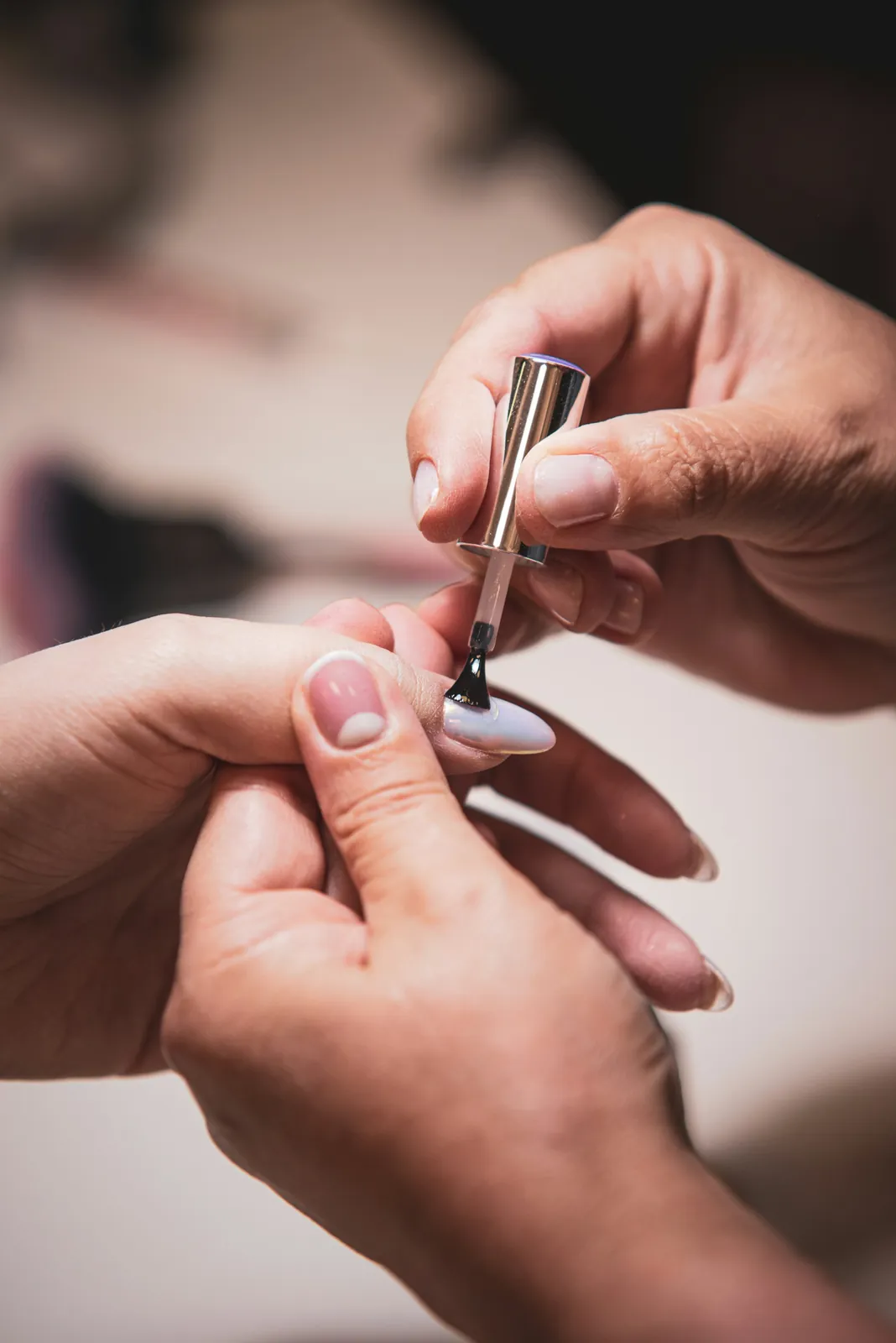
How you split tips at a nail salon says a lot about how you run it. Tips are the most sensitive money in the business: technicians count on them, clients expect them to reach the person who did their nails, and the rules around them come from federal labor law, tax law and often state law too. A few months of hand-counted mistakes, card fees taken out at the wrong rate, or tips held back for weeks is enough to lose good technicians, and in some cases to break the law.
This guide summarizes what federal guidance says about tips, based on the US Department of Labor and the IRS: who owns tips, when a tip pool is allowed, how card processing fees on tips work, and how tips are reported. Then come seven practical rules for a fair, transparent payout, examples of splitting tips between technicians, and how a POS system can do the math for you. It is general information, not legal advice; state laws can be stricter, and how your salon pays its team affects which rules apply.
In this article
- Who owns the tips?
- Tip credits and minimum wage
- When is a tip pool allowed?
- Card fees on tips
- Reporting tips to the IRS
- 7 rules to split tips at a nail salon fairly
- A short sample tip policy
- Examples: splitting tips between technicians
- Let your POS do the math
- A tip report technicians actually read
- Common tip mistakes that cause trouble
- Service charges are not tips
- Talking about tips with new technicians
- When clients complain about tipping
- How tips connect to the rest of your salon
- When to ask an accountant or attorney
- Frequently asked questions
Who owns the tips?
According to the Department of Labor's fact sheet on tipped employees, tips are the property of the employee. Employers may not keep any portion of employees' tips, directly or through a tip pool, and this applies even when the employer does not take a tip credit.
Three points matter most for salons:
- Owners and managers may not keep employees' tips. The guidance includes owners with at least a 20% stake who are actively engaged in managing the business.
- A manager may keep only the tips from clients they personally and solely served.
- Tips are not salon revenue. They cannot be used to cover supplies, breakage or a client who walked out without paying.
Put simply: when a client tips a technician, the tip goes to the technician.
Tip credits and minimum wage
Federal law allows an employer to count part of an employee's tips toward the minimum wage, called a tip credit, under strict conditions: a direct cash wage of at least $2.13 per hour, a maximum credit of $5.12 per hour (the difference up to the $7.25 federal minimum), advance notice to the employee, and the employer must make up any shortfall so the employee earns at least the minimum wage every workweek.
Two cautions. Many states have a higher minimum wage than the federal one, and some do not allow a tip credit at all. Where state and federal rules differ, the rule that is better for the employee generally applies. Talk to your accountant or your state labor agency before using a tip credit.

When is a tip pool allowed?
Some salons collect tips into a pool and share them among several people. The Department of Labor's guidance:
- If the employer takes a tip credit, a tip pool may include only employees who customarily and regularly receive tips.
- If every employee is paid the full minimum wage in cash (no tip credit), a tip pool may also include employees who do not customarily receive tips.
- Employers, managers and supervisors may never receive tips from the pool.
In most nail salons, clients tip the technician who served them, so splitting by technician is usually clearer than pooling. If you want to share part of the tips with assistants or front desk staff, review the conditions above and your state's rules first.
Card fees on tips
When a client tips by card, the salon pays a processing fee on the tip as well. Under the Department of Labor's guidance, an employer may deduct from the tip the percentage the card company charges, but no more than that, and the deduction cannot bring the employee's pay below the minimum wage. Some states prohibit these deductions entirely.
If your salon deducts card fees from tips, put the policy in writing, deduct only your actual effective processing rate, and show the team the numbers. Many salons choose not to deduct at all, which is simpler and builds trust.
Reporting tips to the IRS
According to the IRS page on tip recordkeeping and reporting:
- Employees keep a daily record of tips, and report cash tips to the employer in writing by the 10th of the following month, unless tips from that employer total less than $20 for the month. No particular IRS form is required for the employee's statement.
- Employers keep employees' tip reports, withhold income tax and the employee's share of Social Security and Medicare taxes based on wages and tips, pay the employer's share, and report tips on Form W-2.
- Mandatory service charges, such as an automatic charge for large parties, are not tips. They are the employer's income, and amounts paid to employees from them are wages.
Card tips are already in your system, so they are easy to record. Cash tips are where a daily habit matters.
7 rules to split tips at a nail salon fairly
1. Put your tip policy in writing
Say who tips belong to, how tips are shared when several technicians serve one client, whether card fees are deducted and at what rate, and when tips are paid. Give it to every technician to read and sign when they start.
2. Tips follow the service
Every ticket records which technician did which service. The tip on that ticket belongs to the technician who served the client.
3. Agree in advance on multi-technician tickets
A client gets a manicure from one technician and a pedicure from another: is the tip split by service value, split evenly, or as the client says? Pick one method, write it down and use it every time.
4. Record every tip in your system
Card tips are entered at checkout; cash tips are entered the same day. Do not rely on memory at the end of the week.
5. Pay tips on schedule
Pay tips on a fixed schedule, usually with payroll. Holding tips for weeks erodes trust, and some states have rules on how quickly wages must be paid.
6. Make no other deductions
Do not take money from tips for supplies, redos or clients who left without paying. Apart from the actual card fee (if your policy deducts it and your state allows it), tips are paid in full.
7. Show everyone the numbers
With each payroll, give each technician a breakdown by day: tickets, card tips, cash tips, card fees if any, and the total. Transparency prevents nearly every tip argument.
A short sample tip policy
Use this only as a starting point, adapt it to how your salon works and your state's rules, and have your accountant review it:
- Tips left by clients belong to the technician who performed the service.
- When several technicians serve one client, the tip is split in proportion to the value of each technician's services unless the client says otherwise.
- Card tips are recorded in the POS at checkout; cash tips are entered by the technician the same day.
- The salon makes no deductions from tips (or: the salon deducts only its actual card processing rate on card tips, where state law allows).
- Tips are paid with each payroll, with a daily breakdown.
- Questions about tips go to the manager within one week of receiving the breakdown.
Examples: splitting tips between technicians
A client gets a spa pedicure from Lan and a gel manicure from Mai, then adds one tip by card to the total. Three common approaches:
- By service value: the pedicure is the larger part of the ticket, so Lan receives the matching share of the tip and Mai the rest.
- Evenly: each technician gets half. Simple, but less fair when the services differ a lot in price.
- As the client directs: if the client says how much goes to whom, follow it exactly.
Any approach works if it is written in your policy and applied the same way every time. A POS that can split one tip across several technicians on a ticket does this automatically.

Let your POS do the math
Counting tips by hand every night is one of the slowest and most error-prone jobs in a salon. A POS built for nail salons can:
- Link each service on a ticket to the technician who performed it.
- Take tips on the card reader, with a screen where clients choose an amount, including custom and no tip.
- Split one tip across several technicians.
- Record cash tips.
- Export tip reports by technician, by day and by pay period.
When you compare systems, ask exactly how they handle tips. Our team helps salons choose a POS system that matches how they pay their technicians.
A tip report technicians actually read
A good report fits on one page and answers the questions technicians actually ask. For each day in the pay period, show:
| Day | Tickets | Card tips | Cash tips | Card fee deducted | Total |
|---|---|---|---|---|---|
| Mon | 9 | 96 | 20 | 0 | 116 |
| Tue | 7 | 74 | 15 | 0 | 89 |
Add a line at the bottom with the total for the period and the date it will be paid. If your policy deducts the card fee, show the rate used, so anyone can check the math with a calculator.
When technicians can see their card tips and cash tips day by day, they stop wondering and start trusting the system. It also makes mistakes easy to catch early, while everyone still remembers the day in question.
Common tip mistakes that cause trouble
- The owner keeps part of the tips "to share with everyone" while being one of the people who receives a share.
- A manager takes tips from the pool.
- Card fees deducted above the actual rate, or deducted in a state that prohibits it.
- Tips used to cover breakage, supplies or walkouts.
- Tips held for weeks before being paid.
- Cash tips not recorded, leading to incorrect tax reporting.
Service charges are not tips
Some salons add a mandatory service charge for large groups or bridal parties. Both the Department of Labor and the IRS treat a mandatory charge printed on the bill as the salon's revenue, not a tip. If you share it with technicians, it is paid as wages. Make clear to clients which part is a service charge and which is a voluntary tip.
Talking about tips with new technicians
The first day is the best time to explain how tips work:
- Hand over the written policy and walk through each point.
- Show how to enter cash tips in the system.
- Show a sample tip breakdown from a pay period.
- Explain when tips are paid and how to raise a question if something looks wrong.
Technicians who understand the rules from day one ask fewer suspicious questions, argue less and stay longer.
When clients complain about tipping
Occasionally a client writes a review about feeling pressured to tip, or about tip suggestions on the screen being too high. Keep "Custom" and "No tip" options on the card reader, and remind technicians never to comment on a client's tip. If a complaint appears, reply calmly and briefly, thank the client, and explain that tips are always up to them.
How tips connect to the rest of your salon
Tips are tied to everything else at the front desk. Gift certificates raise the question of whether a certificate can cover a tip; our guide to nail salon gift certificates suggests putting your policy on the back of the certificate. Online booking can record the technician a client chose, which makes the tip on that ticket easy to assign; see our comparison of a nail salon booking website and booking apps.

When to ask an accountant or attorney
Tips sit where labor law and tax law meet. Ask a professional when:
- You want to use a tip credit or a tip pool.
- You pay commission, a daily rate or another nonstandard arrangement.
- Some of your technicians work as independent contractors; worker classification affects which rules apply.
- You open a location in another state.
- A technician raises a complaint about tips.
An hour with an accountant who works with salons usually costs far less than a single claim.
Frequently asked questions
Can an owner who also does nails receive tips?
Under the Department of Labor's guidance, managers, including owners who manage the business, may keep only tips from clients they personally and solely served, and may not receive tips from employees' tip pool.
Do we have to deduct card fees from tips?
No. It is the salon's choice; if you deduct, you may not take more than the actual fee, and some states prohibit the deduction. Many salons skip it to keep things simple and keep their team.
Must cash tips be reported?
Yes. Under IRS rules, employees report cash tips to the employer in writing by the 10th of the following month when they total $20 or more in a month, and include them on their tax return.
How should we handle tips on gift certificate tickets?
Clients usually add the tip by card or cash. If your salon lets clients use a gift certificate toward the tip, write that in your policy and record the tip to the right technician.
Can we set a minimum tip?
Tips are voluntary. A required amount on the bill is a service charge, not a tip, and is treated as salon revenue.
Is this legal advice?
No. This article summarizes general federal guidance. State law, pay structures and worker classification can change the answer for your salon; ask an accountant or attorney about your specific situation.
What about technicians who rent a booth?
Booth renters usually run their own business inside the salon, collect their own payments and keep their own tips. The salon's tip policy then applies only to employees. Whether someone is truly a booth renter or an employee depends on how the work is actually arranged, so check with your accountant.
How often should we review our tip policy?
Review it once a year and whenever something changes: a new state law, a new POS, a new pay structure or a new location. A policy that matches how the salon actually works today prevents surprises.
Salons that split tips without arguments all do the same things: a written policy, tips that follow the service, every tip recorded the same day, payment on schedule and numbers everyone can see. Let a POS handle the math and keep your policy current, and tips stop being a source of stress for you and your team.