A salon cancellation policy is a promise in both directions. It tells clients how much notice you need when plans change, and it tells your team that their time is protected. Without one, the front desk improvises: one client pays a fee, the next is forgiven, and everyone feels it is unfair. With a clear, friendly policy, most clients simply respect it, and the few who do not know exactly what to expect.
This guide shows how to write a policy that works for nail salons, hair salons, lash studios and spas: what to include, how to set fair fees and deposits, how to handle late arrivals, six templates you can adapt, where to display the policy, how to enforce it kindly and what to do when a client disputes a charge. It is practical guidance, not legal advice; local consumer rules vary, so check yours.
In this article
- Why every salon needs a written policy
- What a good cancellation policy includes
- Choosing fair fees
- Deposits and card on file
- Late arrivals
- Six salon cancellation policy templates
- Three lengths of the same policy
- New clients and regulars
- When the salon has to cancel
- Refunds and redo policies
- A checklist before you publish
- Where to show your policy
- How to enforce the policy kindly
- Handling fee disputes
- Exceptions you should plan for
- Policies for groups and events
- Common policy mistakes
- Introducing a new policy
- How a policy fits with reminders and waitlists
- How Dreamer helps
- Frequently asked questions
Why every salon needs a written policy
- It reduces no-shows. Clients take an appointment more seriously when they know the rules.
- It protects income. A missed two-hour service is income you cannot sell again.
- It makes the team consistent. Everyone gives the same answer.
- It avoids arguments. A policy the client accepted at booking is easier to apply than a rule invented at the counter.
- It supports disputes. If a client disputes a fee with their bank, a clear, accepted policy is your best record.
What a good cancellation policy includes
- The notice period: for example, 24 hours for most services, 48 hours for long services.
- How to cancel or reschedule: online link, text or phone.
- Late cancellation fee: a fixed amount or a percentage of the service.
- No-show fee: often higher than a late cancellation fee.
- Late arrival rule: the grace period and what happens after it.
- Deposits: which services require them and how they apply to the bill.
- Exceptions: emergencies, weather, illness.
- How fees are charged: card on file, deposit kept, or added to the next visit.
Keep it short enough to read on a phone. Clients skip long legal paragraphs.
Choosing fair fees
There is no single right number. Consider:
- The service length and value: a 20-minute polish change and a two-hour sculpted set are not the same risk.
- Your clients: a neighborhood salon with many regulars may need lighter rules than a busy downtown studio with many first-time clients.
- Your competitors' norms: clients compare.
- Simplicity: "50% of the service price" or a flat fee per service category is easier to explain than a sliding scale.
Many salons choose a lower fee for late cancellations and a higher fee for no-shows. Some only charge for long services or peak days. Start reasonable; you can tighten later if needed.
Deposits and card on file
Fees only work if you can collect them. Two common methods:
Deposits
The client pays part of the service when booking. If they cancel in time, the deposit is refunded or moved to a new date; if they no-show, the salon keeps it. Deposits suit long services, new clients, group bookings and peak days.
Card on file
The client saves a card when booking, agreeing that a fee may be charged for no-shows or very late cancellations. It adds less friction than a deposit but requires clear consent at booking.
Either way, the policy must be shown before the client confirms, and the client should actively agree, for example with a checkbox.
Late arrivals
Late arrivals affect every appointment after them. Your policy should say:
- Grace period: often 10 to 15 minutes.
- After the grace period: the service may be shortened, rescheduled or treated as a late cancellation.
- Very late arrivals: for example, more than half the service time, may be treated as a no-show.
Explain it kindly: "To keep every client's appointment on time, we may need to shorten or reschedule your service if you arrive more than 15 minutes late."
Six salon cancellation policy templates
Adapt names, amounts and times to your salon.
1. Simple policy for a nail salon
"We understand plans change. Please cancel or reschedule at least 24 hours before your appointment using the link in your confirmation or by calling us. Cancellations within 24 hours may be charged 50% of the service price. Missed appointments without notice may be charged the full service price. If you are more than 15 minutes late, we may need to shorten or reschedule your service."
2. Policy with deposits for long services
"Full sets, nail art sets and services over 90 minutes require a $20 deposit when booking. The deposit goes toward your service. Cancel or reschedule at least 48 hours ahead and we will move your deposit to your new appointment. Cancellations within 48 hours or missed appointments forfeit the deposit."
3. Hair salon policy with color services
"Color, highlights and treatments of two hours or more require 48 hours' notice to cancel. Late cancellations are charged 50% of the scheduled service; missed appointments are charged 100%. A card is kept on file for these services and charged only under this policy."
4. Lash studio policy
"Lash appointments are reserved for you alone. Please give 24 hours' notice to cancel or reschedule. Late cancellations and no-shows forfeit the deposit. Fills require at least 40% of lashes remaining; if fewer remain, we will book a full set at the full set price. Arriving more than 10 minutes late may mean a shorter fill."
5. Spa and massage policy
"Spa services require 24 hours' notice to cancel; couples and group bookings require 48 hours. Late cancellations are charged 50% of the service; missed appointments are charged in full. Please arrive 10 minutes early to check in; late arrivals receive the remaining time of their booking at the full price."
6. Holiday and peak day policy
"For appointments on holiday weekends and the week before major holidays, a deposit is required and cancellations need 72 hours' notice. These dates fill quickly, and canceled times are offered to our waitlist."
Three lengths of the same policy
Clients meet your cancellation policy in different places, so write it in three lengths:
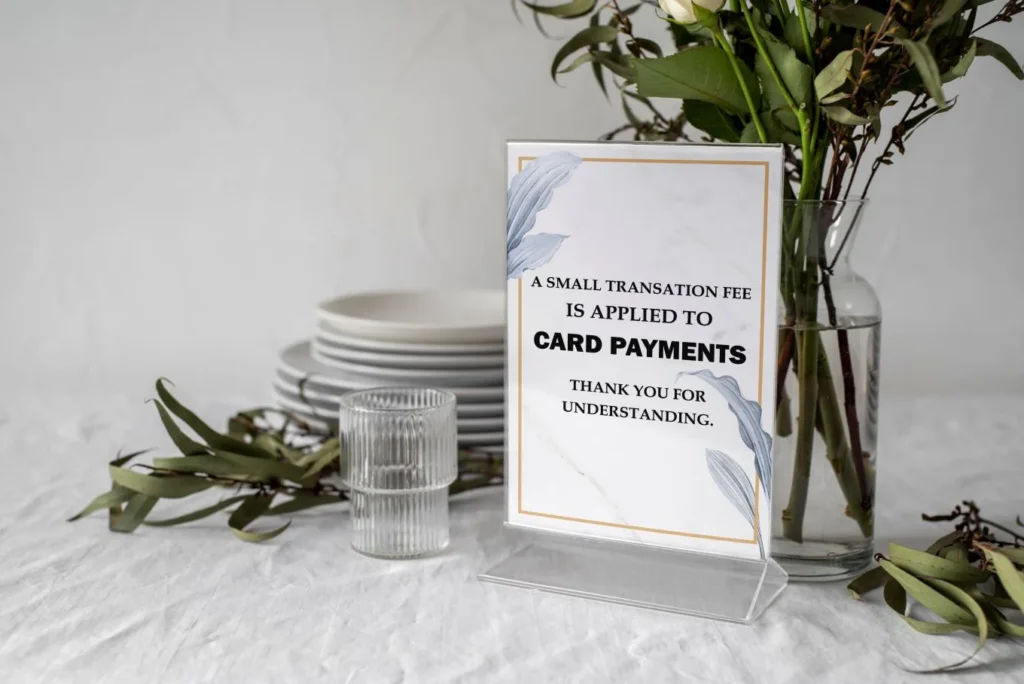
- One line for reminders and the counter sign: "Please give 24 hours' notice to cancel; late cancellations and no-shows may be charged."
- Three or four sentences for the booking page and confirmations: notice period, fees, late arrivals and how to reschedule.
- The full version for your website: every service category, deposits, exceptions, groups and how fees are charged.
All three must say the same thing. When the short and long versions disagree, clients quote the friendlier one.
New clients and regulars
Many salons apply the cancellation policy differently to first-time clients:
- First visit: deposit for longer services or for all online bookings.
- After three completed visits: no deposit, card on file only.
- After repeated no-shows: deposit required again, whatever the history.
This keeps the policy gentle for loyal clients and firm where the risk is highest. Write the tiers into your policy so the desk does not have to explain an exception every time.
When the salon has to cancel
Fairness works both ways. If a technician is sick or the salon closes unexpectedly:
- Contact the client as early as possible, by phone and message.
- Offer the first available time, or another technician they like.
- Refund or move any deposit immediately.
- Consider a small gesture for the inconvenience, such as a free nail art accent.
Clients accept your cancellation policy more easily when they see you hold yourself to the same standard.
Refunds and redo policies
A cancellation policy covers missed time; a service guarantee covers the result. Many salons pair them:
- Free fixes within a few days for lifting, chips or breaks caused by the service.
- Redo or adjustment if the color or shape is not what was agreed, raised before the client leaves or within a short window.
- Refunds only in clear cases, decided by the manager.
Put both policies on the same page of your website so clients see a fair, complete picture: you protect your time, and you stand behind your work.
A checklist before you publish
- The notice period is clear for each service category.
- Fees are stated as amounts or percentages, not "may be charged a fee".
- Late arrival rules include a grace period.
- Deposits say how they apply to the bill and when they are refunded.
- Exceptions and who approves them are written down.
- The same wording appears on the booking page, confirmations, website and counter sign.
- The team has practiced the script.
If every box is ticked, your salon cancellation policy is ready.
Where to show your policy
A policy only works when clients see it before they book:
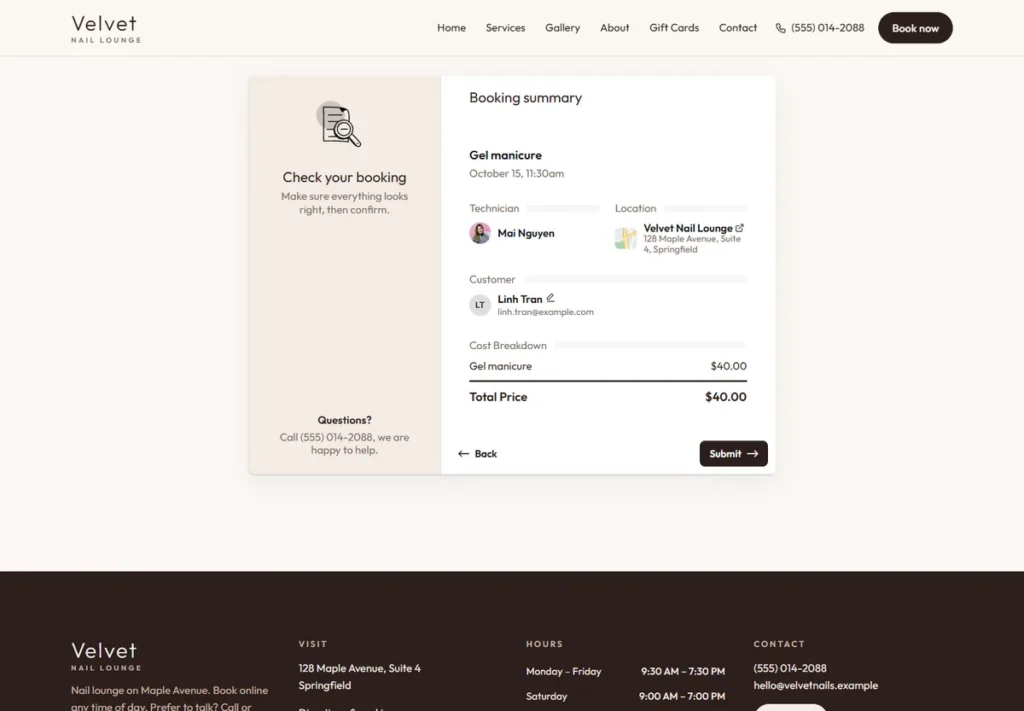
- Online booking page, before the confirm button, with a checkbox.
- Booking confirmation and reminders, in one or two sentences.
- Your website, on the booking or FAQ page.
- Front desk sign or counter card.
- Google Business Profile updates around peak seasons.
- Phone bookings: the desk reads a short version and sends the full text by email or text.
How to enforce the policy kindly
The tone matters as much as the rule:
- Remind before you charge. Reminders before the appointment prevent most problems.
- Use the same rule for everyone, with clear exceptions.
- Be generous with real emergencies, especially for good regulars; a one-time waiver builds loyalty.
- Charge promptly and send a short, polite message explaining the fee.
- Offer to rebook right away.
A script for the front desk:
"Hi Maria, we missed you today at 2:00. Per our cancellation policy, the no-show fee of $30 was charged to the card on file. We hope everything is okay, and we'd love to see you soon. Would you like to book a new time?"
Handling fee disputes
Clients can dispute card charges with their bank. The Consumer Financial Protection Bureau explains how consumers dispute a credit card charge, including sending a written notice within 60 days after the charge appeared on the statement. If a client disputes a fee:
- Respond through your payment processor with evidence.
- Include the policy the client accepted, the booking confirmation, the reminders and the appointment time.
- Keep messages factual and polite.
Clear records win more disputes than strongly worded policies.
Exceptions you should plan for
- Illness: many salons waive fees for clients who are sick, especially for close-contact services.
- Severe weather: if roads are unsafe, waive fees and reschedule.
- Family emergencies: use judgment; regulars deserve the benefit of the doubt.
- Salon-side problems: if your technician is sick or running very late, the client should never be charged.
Write down how exceptions are approved, for example by the manager only, so the team does not have to decide on the spot. Keep a short log of every waived fee with the reason. If the same client needs an exception every month, the log shows it, and the next conversation about the cancellation policy becomes easier and fairer for everyone involved.
Policies for groups and events
Bridal parties, birthdays and corporate events need their own rules: a deposit per person or a group deposit, a deadline to confirm the guest count, and what happens if fewer guests arrive. Send these terms in writing when the booking is made.
Common policy mistakes
- No policy at all, or one that lives only in the owner's head.
- Policies shown after booking, which feel like a trap.
- Fees so high that clients avoid booking.
- Inconsistent enforcement.
- Charging without a reminder or a message.
- Legal-sounding text that nobody reads.
Introducing a new policy
If you are adding fees for the first time:
- Announce it two to four weeks ahead on social media, by email to clients who agreed to hear from you and at the front desk.
- Explain why: protecting technicians' time and keeping appointments available for everyone.
- Start with a friendly grace period: first-time late cancellations get a warning.
- Train the team on the script and the exceptions.
Most clients understand. The ones who object are often the ones the policy is meant for. After the first month, look at how many fees you charged, how many you waived and whether no-shows fell. If the numbers barely moved, the policy may be too soft or too hidden; if regulars complain, it may be too strict for them.
How a policy fits with reminders and waitlists
A policy works best with good reminders and a waitlist. Reminders prevent most late cancellations; the waitlist fills the times that still open up. Our guide on how to reduce salon no-shows covers both, and our guide to the best booking app for nail salons lists features that make policies easy to apply.
How Dreamer helps
Dreamer's online booking websites show your services, prices and policy before clients confirm, and send an email confirmation for every booking, so clients know the rules from the start. We can also design a matching counter card or window sign with your policy through our design and printing service.
Frequently asked questions
How much notice should a salon cancellation policy require?
Twenty-four hours is common for most services; 48 hours is common for long services, color, lash sets and groups.
How much should a late cancellation fee be?
Many salons charge a percentage of the service price, often lower for late cancellations than for no-shows. Choose an amount that is fair for your services and clients.
Is it legal to charge cancellation fees?
Generally, clearly disclosed fees that the client agreed to are a normal business practice, but consumer rules vary by state and province. Check local rules and keep records of consent.
Should regular clients pay cancellation fees?
Apply the policy consistently, but use judgment for real emergencies. A one-time waiver for a loyal client can be good business.
How do I collect a no-show fee?
Through a deposit taken at booking or a card on file the client agreed to. Send a short message when you charge it.
Where should I display my cancellation policy?
On the booking page before confirming, in confirmations and reminders, on your website and at the front desk.
A good salon cancellation policy is short, fair, visible and applied the same way for everyone. Pair it with reminders, deposits where they matter and a waitlist, and your team will spend less time on empty chairs and awkward conversations, and more time with clients who show up.