Online booking for spas has to do more than show open times. A 90-minute deep tissue massage needs a therapist with the right skills, a free treatment room, cleanup time before the next guest and sometimes an intake form about injuries or pregnancy. A couples massage needs two therapists and one suite at the same time. A guest with a gift card wants to redeem it without calling. When the booking system handles all of that, the spa runs calmly and guests arrive relaxed instead of confused.
This guide explains what spa owners should expect from online booking: rooms and resources, therapist choice, couples and group bookings, intake forms, enhancements and packages, gift cards, deposits and policies, pre-visit messages, privacy, accessibility and a two-week setup plan. It applies to day spas, massage studios, facial and skin studios, foot spas and bathhouses.
In this article
- Why spas need online booking
- What makes spa booking different
- 1. Rooms and resources
- 2. Buffer and turnover time
- 3. Therapist choice
- 4. Couples and group bookings
- 5. Intake forms
- 6. Enhancements and add-ons
- 7. Packages and memberships
- 8. Gift cards online
- 9. Deposits and cancellation policy
- 10. Pre-visit messages
- 11. A booking page that sells calm
- 12. Privacy for health information
- 13. Accessibility
- 14. Reports that guide decisions
- Write treatment descriptions guests understand
- Guests from hotels and out of town
- Offer enhancements without pressure
- Phone and walk-in bookings in the same system
- Questions to answer on your booking page
- Seasons and special days
- Where to put your booking link
- A two-week setup plan
- Train the team before launch
- Mistakes spas make with online booking
- Online booking for different kinds of spas
- Measure the results
- How Dreamer helps spas
- Frequently asked questions
Why spas need online booking
- Guests book at night. Many people plan self-care after work or when the kids are asleep.
- Gift buyers shop online, especially before holidays.
- Travelers book from their hotel room, often for the same or next day.
- Phones interrupt treatments. Therapists cannot answer during a massage.
- Clear information reduces anxiety. First-time guests want to know exactly what to expect before they arrive.
A good booking page answers questions, takes the booking and sends instructions without anyone picking up the phone.
What makes spa booking different
| Spa need | What the booking system must do |
|---|---|
| Treatment rooms and suites | Book a room together with the therapist |
| Couples treatments | Two therapists and one suite at the same time |
| Cleanup between guests | Buffer time after each treatment |
| Therapist preferences | Choice by name or by preference, where you offer it |
| Health questions | Intake forms before the first visit |
| Enhancements | Add-ons like hot stones or aromatherapy that may add time |
| Packages and memberships | Redeem sessions online |
| Gift cards | Buy and redeem online |
1. Rooms and resources
The most common spa booking problem is a free therapist with no free room. Your system should treat rooms, couples suites, hydrotherapy tubs, saunas and special equipment as resources that are booked along with the service. If a facial needs the room with the steamer, the system should only offer times when that room is free.
2. Buffer and turnover time
Rooms need changing, linens need replacing and therapists need a moment between guests. Build buffer time into every service, for example 15 minutes after a massage, so the next guest is not waiting while the room is reset.
3. Therapist choice
Some guests have a favorite therapist; others care more about time. Offer both: book a specific therapist, or "first available". If your spa offers a preference, for example a therapist of a certain gender, make sure it is optional, respectful and easy to change later.
4. Couples and group bookings
Couples massages, bridal parties and birthday groups are valuable but complex. Look for:
- Booking two or more guests at the same start time.
- One suite reserved for couples, or side-by-side rooms for groups.
- One organizer paying a deposit for the group.
- Clear cancellation rules for groups.
If the system cannot handle groups well, offer an inquiry form and book groups manually.
5. Intake forms
Massage therapists and estheticians need to know about injuries, allergies, medications, pregnancy and skin conditions. Online intake forms:
- Save time at check-in.
- Give the therapist information before the guest arrives.
- Remind guests to arrive early if a form is incomplete.
Ask only what you need for safe treatment, store forms securely and limit access to the people who use them.
6. Enhancements and add-ons
Hot stones, aromatherapy, scalp massage, foot scrubs and masks are easy upsells when they are offered at booking with a clear price. If an enhancement adds time, the system must extend the appointment.
7. Packages and memberships
Guests who buy a package of massages or a monthly membership should be able to book with their remaining sessions automatically applied. This keeps the desk from tracking balances by hand.
8. Gift cards online
Spas sell many gift cards, especially before Valentine's Day, Mother's Day and the December holidays. Make it easy to:
- Buy a gift card online any time, with a printable or emailed card.
- Redeem the gift card during online booking.
- Check the remaining balance.
Gift cards are covered by consumer rules on expiration and fees; our guide to the salon gift card program explains the basics.
9. Deposits and cancellation policy
Long treatments, couples suites and weekend slots are costly to lose. Many spas ask for a deposit or card on file and require 24 to 48 hours' notice to cancel. Show the policy before the guest confirms. Our guide to the salon cancellation policy has templates you can adapt for spa services.
10. Pre-visit messages
A good confirmation does more than repeat the time:
- Arrival time, for example 15 minutes early for first visits.
- What to wear and bring.
- Parking and entrance directions, especially in hotels or malls.
- A link to the intake form.
- How to reschedule or cancel.
A reminder a day or two before helps guests arrive prepared and reduces no-shows.
11. A booking page that sells calm
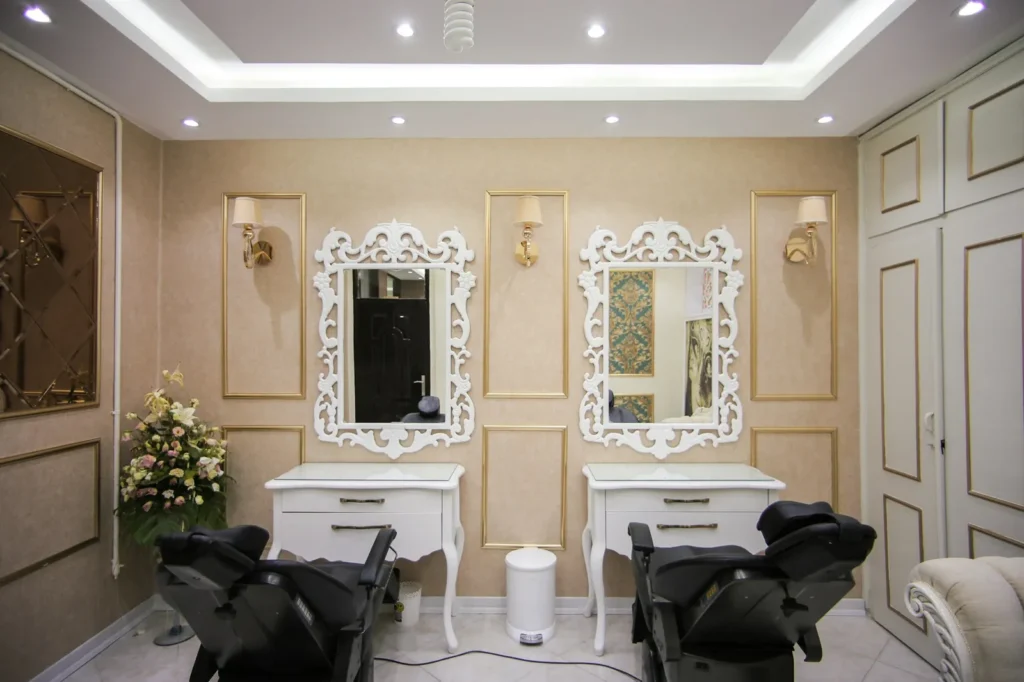
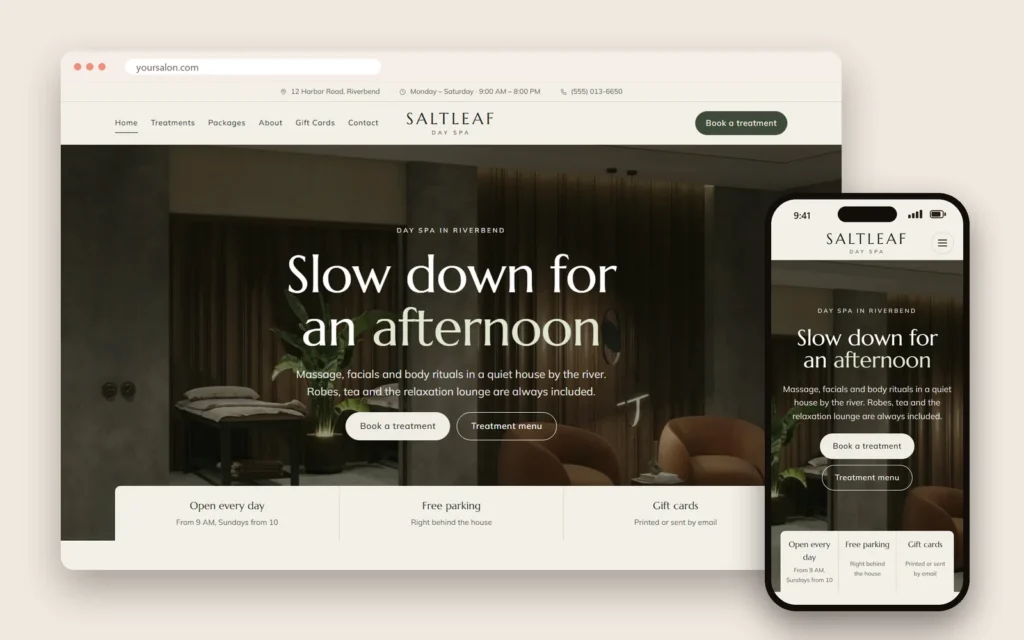
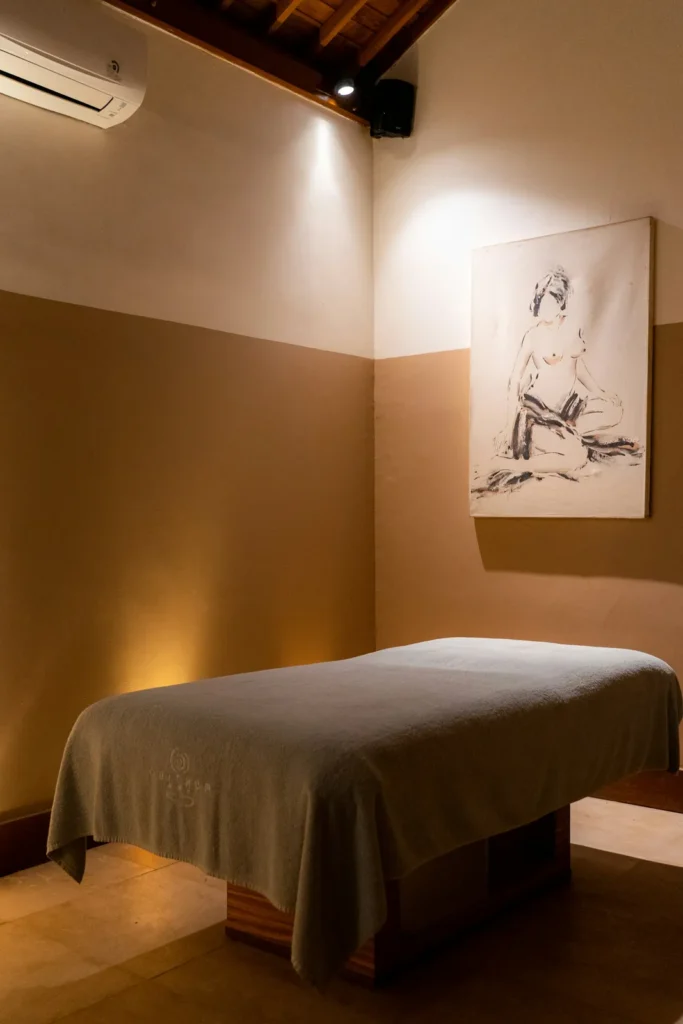
Your booking page is part of the experience. Use real photos of rooms and treatments, clear descriptions of what happens in each service, durations and prices, and a gentle tone. Avoid long menus of creative names without explanations; "Deep tissue massage, 90 minutes" is easier to choose than "Mountain Renewal Ritual".
12. Privacy for health information
Intake forms can include sensitive health details. Choose a system with secure storage, individual logins and limited access. If your spa provides medical treatments, additional privacy rules may apply; check with a professional. Never discuss a guest's health details in reviews or public replies.
13. Accessibility
Guests with disabilities book spa services too. An accessible booking page works with screen readers, large text and keyboards, uses clear labels and good contrast, and describes physical access to the spa. The U.S. Department of Justice's guidance on web accessibility explains why accessible websites matter for businesses open to the public.
14. Reports that guide decisions
Look for reports on room use, therapist utilization, popular services and enhancements, no-shows and online versus phone bookings. Room use is often the number that shows where a spa can grow. A suite that sits empty every weekday morning may be the perfect place for a weekday package, a membership perk or a quieter, lower-priced express treatment.
Write treatment descriptions guests understand
Each service on your spa booking page should answer four questions in two or three sentences: what happens, how long it takes, who it is for and what it costs. Examples:
- Swedish massage, 60 or 90 minutes: "Long, flowing strokes with light to medium pressure to relax the whole body. Good for first-time guests and stress relief."
- Deep tissue massage, 60 or 90 minutes: "Slower, firmer pressure focused on tight shoulders, back and legs. Tell your therapist about any injuries."
- Signature facial, 60 minutes: "Cleanse, gentle exfoliation, extractions if needed, a mask chosen for your skin and a relaxing face and neck massage."
- Couples massage, 60 minutes: "Two guests, two therapists, one private suite. Choose Swedish or deep tissue for each guest."
Clear descriptions reduce phone questions and help guests pick the right treatment the first time.
Guests from hotels and out of town
Travelers often book the same day from their hotel room or while walking nearby. Help them:
- Allow same-day online booking with a short notice window.
- Mention nearby hotels and landmarks in your directions.
- Show parking or transit options clearly.
- Accept common payment methods, including mobile wallets.
- Keep confirmations short and easy to read on a phone.
Spas near hotels can also offer a simple booking link or QR code for hotel concierge desks.
Offer enhancements without pressure
Guests enjoy choosing extras when they are presented gently:
- Show two or three popular enhancements right after the main treatment is chosen.
- State the price and added time clearly.
- Avoid pre-selected add-ons; let guests opt in.
- Remind therapists to mention enhancements naturally at check-in, not as a hard sell.
Honest, optional add-ons raise the average booking without hurting the relaxed experience guests came for.
Phone and walk-in bookings in the same system
Some guests will always call. Enter every phone and walk-in booking in the same online booking system, so the calendar, rooms and therapist schedules stay accurate. The front desk should send the same confirmation and intake link to phone bookings as to online ones. One calendar for every channel is what prevents double-booked suites.
Questions to answer on your booking page
- What should I wear, and do you provide robes and slippers?
- Can I choose my therapist?
- Is there a changing room and a shower?
- What if I am pregnant or have an injury?
- How early should I arrive?
- What is your cancellation policy?
- Can I use a gift card or package online?
Short, friendly answers make first-time guests far more likely to finish the booking.
Seasons and special days
Spa demand follows the calendar: Valentine's Day couples bookings, Mother's Day gift cards and pampering days, summer foot treatments and the December gift rush. Before each peak, open booking further ahead, add a deposit for couples suites, create a seasonal package and post it on Google and social media a few weeks early.
Where to put your booking link
- Google Business Profile and Apple Maps: the "Book" button guests see first.
- Your website: a booking button on every page.
- Instagram and Facebook: in the bio and booking button.
- Gift card emails and receipts: "Book your visit" link.
- Hotel and partner pages: if you partner with nearby hotels.
Our guide to local SEO for spas explains how a strong profile brings more guests to that button.
A two-week setup plan
Days 1–3: services and resources
- Rewrite service names in plain language with durations and prices.
- List rooms, suites and equipment, and link each service to what it needs.
- Set buffer times per service.
Days 4–6: therapists and schedules
- Add therapist profiles with photos, specialties and schedules.
- Block breaks and cleaning times.
- Decide which services can be booked online and which need a call.
Days 7–9: forms, policies and messages
- Create the intake form.
- Write the cancellation policy and deposit rules.
- Write confirmation and reminder messages with arrival instructions.
Days 10–12: gift cards and packages
- Set up online gift cards and redemption.
- Add packages and memberships.
Days 13–14: launch and check
- Add the booking link everywhere.
- Book test appointments for single, couples and gift card scenarios.
- Watch every booking in the first week and fix what confuses guests.
Train the team before launch
Online booking changes daily routines for therapists and the front desk. Before going live:
- Show therapists how to see their day, their guests' intake notes and any enhancements booked.
- Agree who checks new online bookings each morning and who calls guests with incomplete forms.
- Practice moving a booking, handling a late guest and redeeming a gift card.
- Decide how to handle a guest who books a service that needs a consultation first.
A short practice session prevents most first-week problems, and it helps the team feel confident about the new system instead of worried about it.
Mistakes spas make with online booking
- Booking therapists without rooms, causing double-booked suites.
- No buffer time, so rooms are not ready.
- Creative service names guests do not understand.
- Hidden policies that surprise guests with fees.
- Intake forms on paper only, slowing check-in.
- Gift cards that cannot be redeemed online.
- A booking page with stock photos that do not match the real spa.
Online booking for different kinds of spas
Day spas
Packages, couples suites, gift cards and longer stays; booking must handle multiple services in sequence for one guest.
Massage studios
Therapist choice, injury notes, session lengths and memberships matter most.
Facial and skin studios
Consultations, intake forms, product recommendations and series of treatments; some services may require a first consultation before booking online.
Foot spas
Quick bookings, walk-ins and clear prices; many guests decide the same day.
Saunas and bathhouses
Time slots with capacity limits, session rules, what to bring and how cold plunges or quiet rooms work, so first-time guests know what to expect before they arrive.
Measure the results
| Measure | What to look for |
|---|---|
| Share of bookings made online | Growing over months |
| Bookings outside business hours | Proof that online booking reaches new times |
| Room occupancy | Where capacity is unused |
| Enhancement add-on rate | Whether add-ons are offered well |
| No-show rate | Falling with deposits and reminders |
| Gift card sales and redemptions | Strong before holidays |
How Dreamer helps spas
Dreamer builds booking websites for spas where guests choose a treatment, a therapist and an open time, with real photos and prices, and the spa receives an email for every new booking. Our website design team builds calm, fast spa websites, and you can preview day spa, massage, skin studio, foot spa and bathhouse styles in our website templates.
Frequently asked questions
What should online booking for spas include?
Rooms and resources, therapist choice, couples bookings, intake forms, enhancements, gift cards, deposits, clear policies and helpful confirmation messages.
Can guests book couples massages online?
Yes, if the system can reserve two therapists and one suite at the same time. Otherwise, use an inquiry form for couples and groups.
Should spas ask for deposits?
Many spas require deposits or a card on file for long treatments, couples suites and weekends, with the policy shown before booking.
Are online intake forms safe?
They can be when stored securely with limited access. Ask only for information needed for safe treatment.
How early should spa guests arrive?
Many spas ask for 10 to 15 minutes before the appointment, longer for first visits. Say so in the confirmation.
Can guests use gift cards for online bookings?
They should be able to. Choose a system that sells and redeems gift cards online.
Online booking for spas works when it reflects how a spa really runs: rooms and therapists booked together, buffers for every treatment, forms before the visit, clear policies and calm, helpful messages. Set it up carefully, place the booking link everywhere guests look, and your rooms will fill with guests who arrive prepared and relaxed.